April 15, 2026


Remote employee engagement is the degree to which distributed employees feel connected to their work and the organization they work for. It measures whether remote employees feel recognized for their contributions, supported by their managers, and genuinely part of a company culture.
Most organizations can recognize when their remote teams aren't engaged, but very few understand why their efforts to fix it aren't working. The most common mistakes include:
- Assuming productivity means engagement: Remote employees can hit every deadline and attend every meeting while quietly disengaging. The output is still visible in a remote environment, but how someone actually feels about their work isn't. And many organizations miss this by only using performance numbers to gauge engagement levels.
- Making recognition entirely manager-dependent: In an office, appreciation can come from various sources, including colleagues, passing conversations, and visible wins. Remote work removes much of this and puts the entire recognition burden on one person. When that manager is busy or simply forgets, employees go weeks without acknowledgment and nobody notices.
- Digitizing office programs instead of building for remote work: Many organizations try to take what worked in a physical office environment and move it to a screen. That includes virtual happy hours, all-hands Zooms, and digital suggestion boxes, without stopping to ask whether any of it actually addresses what remote employees need.
Remote employee engagement improves when organizations start building systems around what distributed employees actually need. This includes consistent recognition, genuine connection, managers who stay close to their teams, and a culture strong enough to last regardless of where people are working from.
This guide gives HR leaders a practical framework for doing that. Here is what it covers:
- What drives engagement in remote teams: The cultural factors that shape how distributed employees experience their work, from recognition and belonging to leadership support and equity.
- Six ways to improve remote employee engagement: Proven strategies designed to reinforce engagement through consistent everyday experiences rather than one-off programs. Within each strategy, we share real-world examples from the Terryberry platform.
- How to sustain remote engagement with connected systems: How organizations use integrated recognition, listening, and reward programs to build a culture that holds across distributed teams, time zones, and roles.
What's Driving Employee Engagement in Remote Teams
Many organizations try to measure remote engagement through participation rates, survey scores, or meeting attendance. While those data points can be useful, they rarely explain why employee morale is declining or why engagement strategies that worked in an office setting aren't translating to a distributed environment.
That's because engagement in a remote environment isn't driven by any single experience. Employees don't disengage because of a single missed recognition moment or a difficult quarter. It builds over time, through a combination of daily experiences that either reinforce or quietly erode the feeling that work is meaningful and that the company genuinely values the people doing it.
Our experience working with thousands of organizations has shown us that remote employee engagement is driven by multiple cultural factors. People tend to care about similar things — feeling recognized, supported, connected, and valued — but the weight of those factors varies by team, role, and manager.
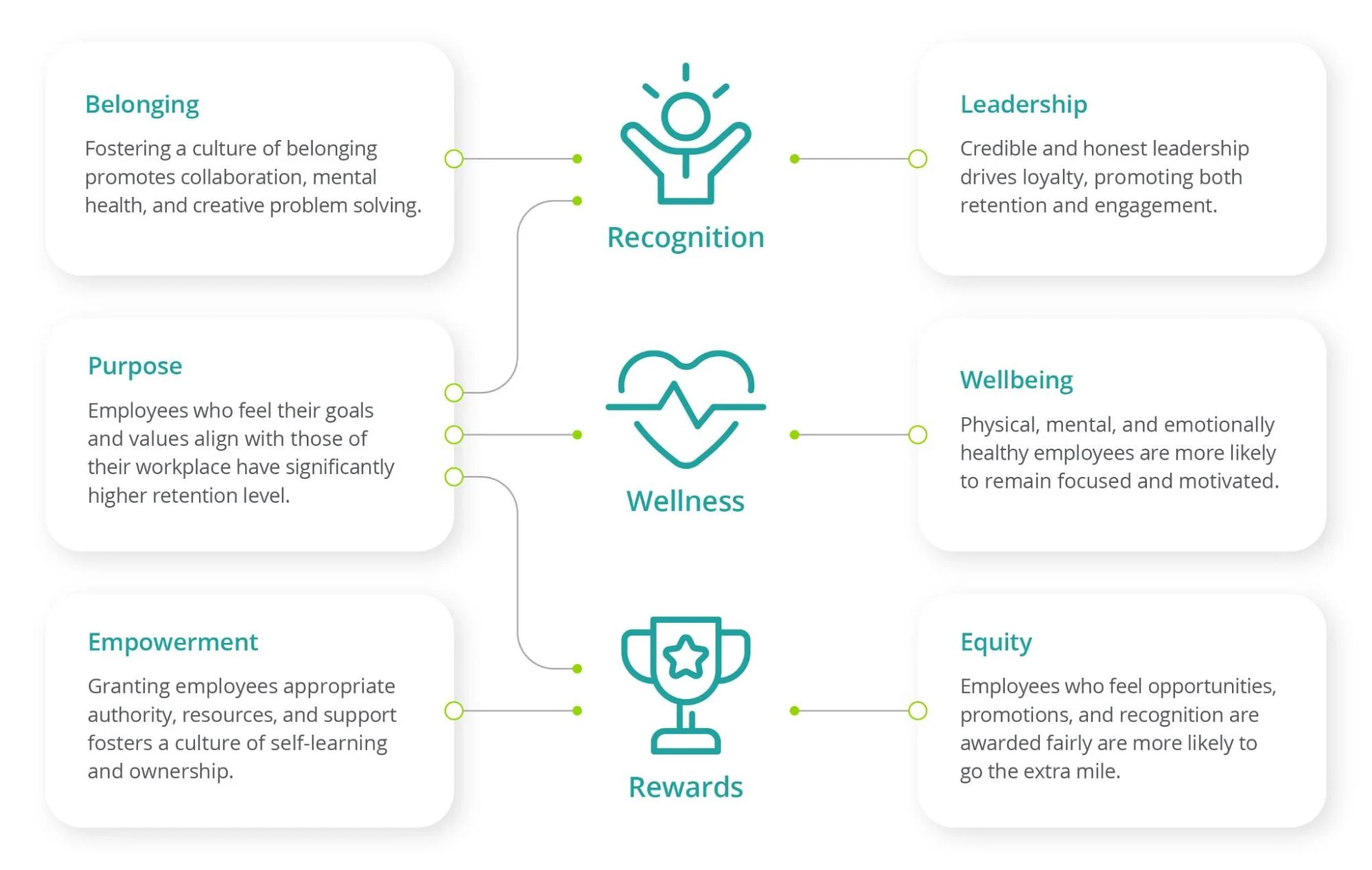
To understand what organizations can actually control, Terryberry's culture model identifies six factors that consistently shape how remote employees experience their work:
- Purpose: Remote employees engage more deeply when they understand how their work connects to something larger. Without the organic cues that reinforce meaning in a shared space, that connection has to be built intentionally.
- Empowerment: Engagement follows when employees feel trusted to make decisions, supported in their development, and given real room to grow, regardless of whether anyone can see them doing it.
- Well-being: Remote work removes the natural boundaries that prevent burnout. When employees can never fully disconnect, engagement erodes quietly long before it shows up in any metric.
- Belonging: Feeling genuinely included in a remote team doesn't happen by default. It requires consistent effort to ensure employees feel known by their colleagues and connected to the broader organization.
- Leadership: How supported employees feel by their managers is one of the strongest predictors of remote engagement. That relationship carries more weight when proximity is no longer doing any of the work.
- Equity: Recognition in distributed teams defaults to rewarding visibility, not contribution. Engagement holds when every employee feels their work is being seen and valued fairly, regardless of location.
These six factors are why remote engagement tends to break down in ways that feel invisible until they've already caused damage. A team can look fine on paper, hitting their numbers and attending their meetings, while purpose, sense of belonging, and equity quietly decline in the background. The steps below address each of these directly.
6 Ways to Engage Remote Employees
Remote engagement improves because organizations implement a dedicated strategy built around the experiences that matter to distributed teams. The six strategies below cover how to make that happen across recognition, connection, manager effectiveness, and well-being.
1. Build Recognition Into How Work Happens Every Day
Most organizations treat recognition as something that happens at annual reviews, during all-hands meetings, or when someone does something exceptional. The problem is that this leaves most employees without acknowledgment of their contributions for weeks or months. In a remote working environment, this silence can make employees feel unnoticed or unappreciated, which directly impacts employee retention.
When recognition is consistent and built into how work happens daily, that problem usually disappears. Employees stop wondering whether their contributions are being noticed, and instead, they start to expect acknowledgment as a natural part of the culture.
Strong recognition programs can also work as virtual team-building tools, creating shared moments of appreciation that bring distributed employees together rather than leaving them isolated in their individual roles.
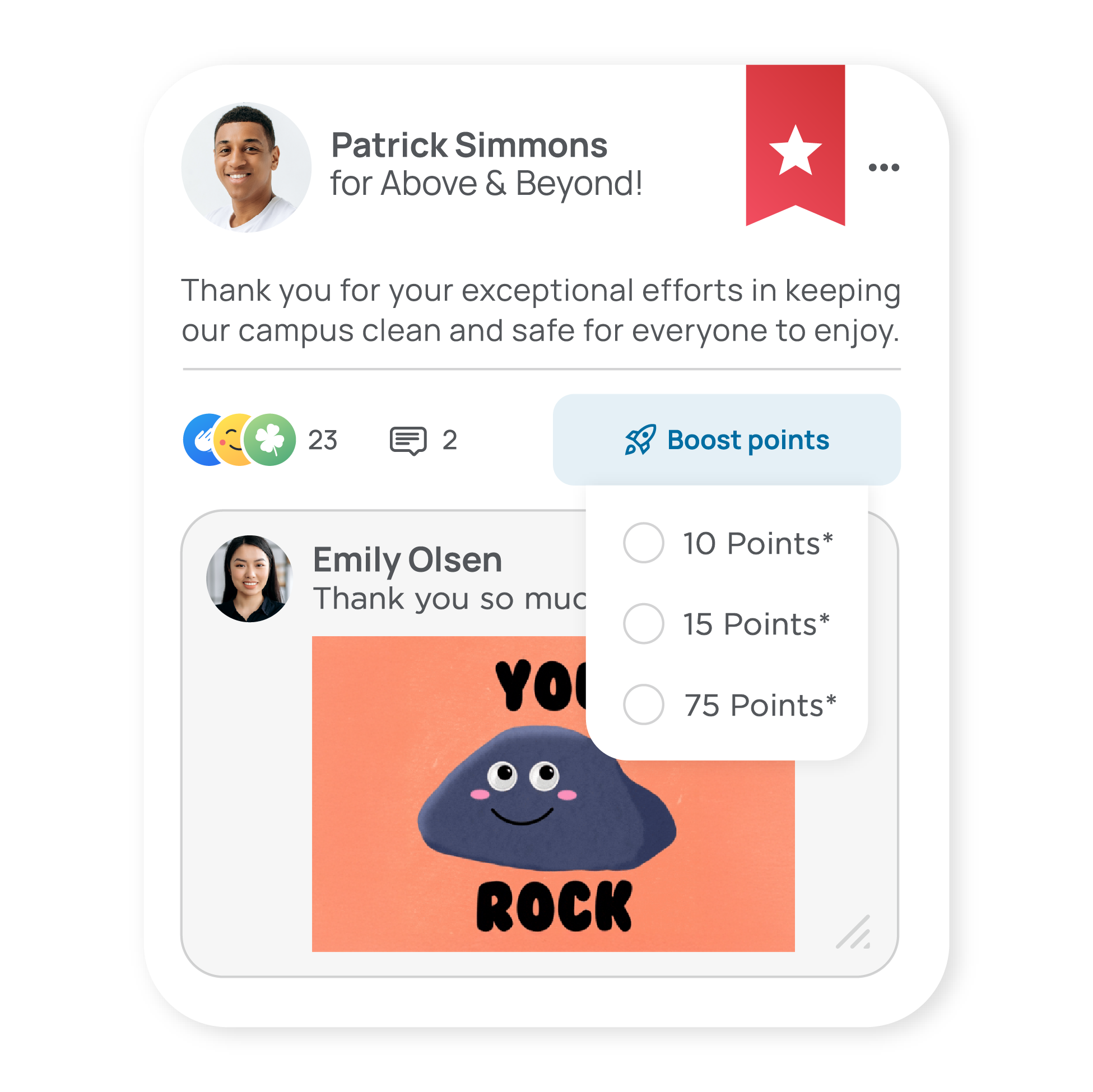
Research also supports this, as employees are 2.7x more likely to be highly engaged when they genuinely expect to be recognized. But achieving consistent recognition can be a challenge if your organization only relies on an individual manager's memory or initiative.
Terryberry's Social Recognition Platform solves this by bringing peer recognition, manager recognition, and milestone moments into a single shared feed where appreciation is visible across the entire organization in real time.
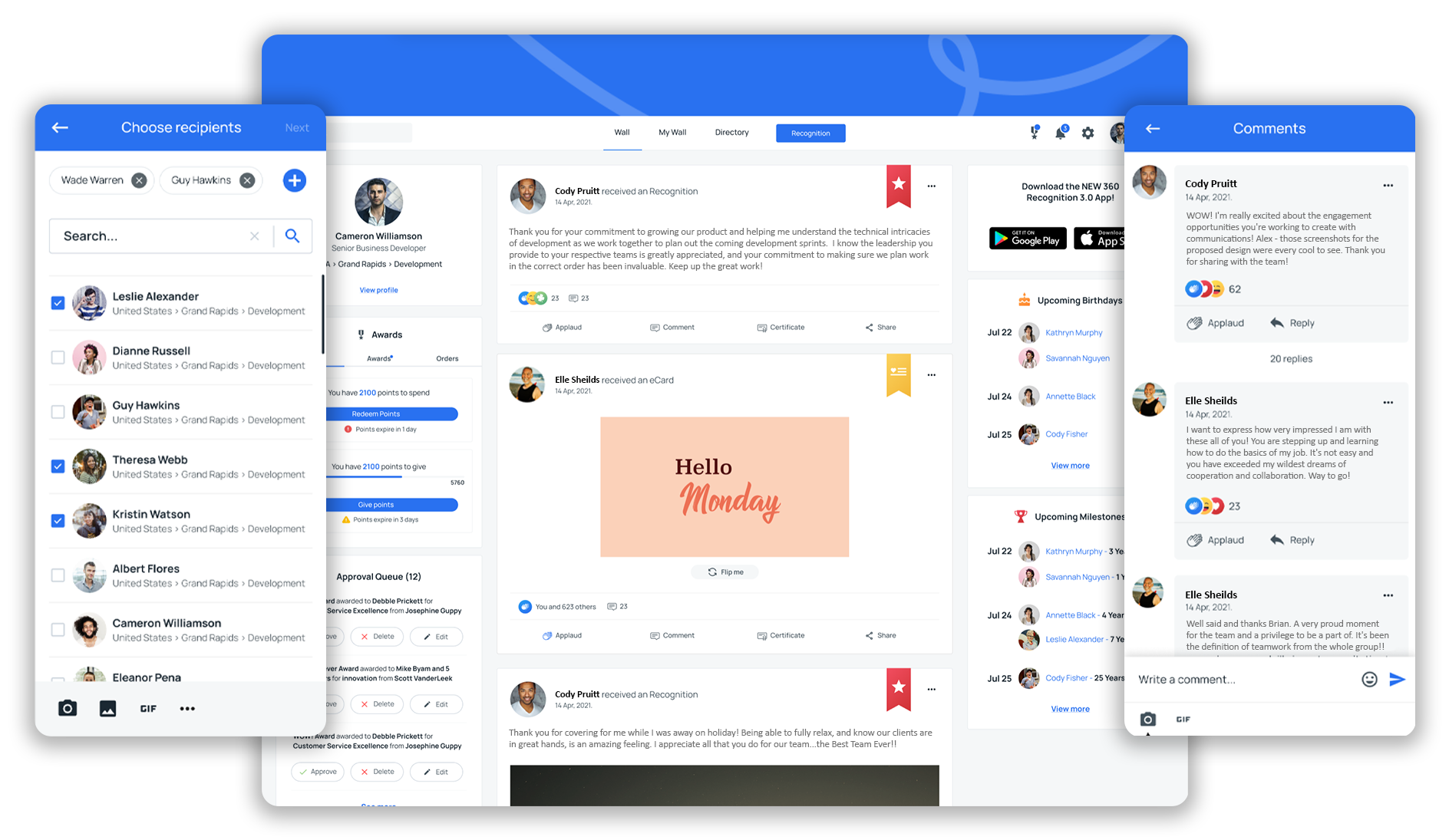
Recognition becomes part of the daily workflow rather than a separate task someone has to remember to do. Organizations that implement a formal recognition platform see 31% lower voluntary turnover and are 12x more likely to achieve strong business outcomes.
2. Acknowledge Progress and Milestones Before They Go Unnoticed
Remote employees and virtual team members notice when their milestones don't get marked. It might not always be in an obvious way, but recurring instances accumulate and lead to disengagement. This includes:
- A work anniversary passes without mention
- A major project wraps up with no acknowledgment beyond the ticket closing
- A certification earned after months of studying gets a thumbs-up in Slack and nothing else
In an office, these moments are more likely to get acknowledged naturally through shout-outs in team meetings, small celebrations, or casual social events after work. For remote team members, this happens far less often when there's no system in place. Unlike video calls or flexible work arrangements that keep distributed teams connected day-to-day, milestone recognition requires something more intentional and structured.
When milestone recognition is done well, it makes tenure and progress feel visible and valued. Employees don't have to wonder whether their contributions are important or being noticed by leadership. They know, because the company showed up at the right moment with something meaningful.
Terryberry's Employee Service Awards program handles this by automating milestone recognition across the full employee lifecycle.
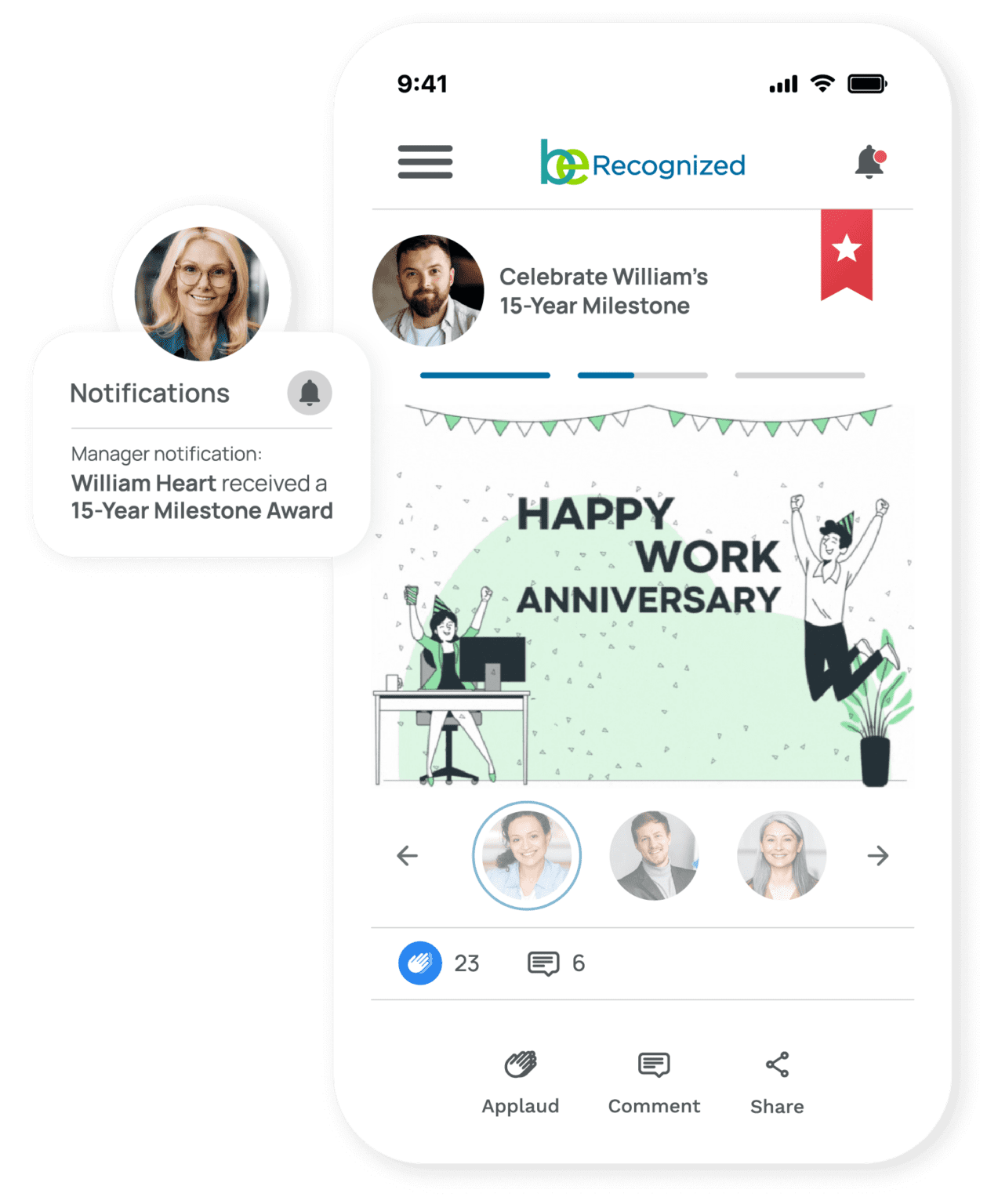
With it, organizations can:
- Automatically track every meaningful career moment, from first-year anniversaries to decade-long tenures, so nothing gets missed, regardless of how distributed the team is.
- Notify employees, managers, and teammates at the right time through automated workflows that don't depend on anyone remembering to act.
- Collect messages from colleagues in advance through Be Celebrated, so when the day arrives, the employee receives something that actually feels personal rather than a timestamp on an automated email.
The result is a remote workforce that knows their growth is being noticed because it's visible by default, to the employee, their manager, and the broader team.
Managers also get a clear picture of who is hitting milestones, where recognition is falling short, and which employees may be quietly progressing without any acknowledgment. This helps leadership lead distributed teams more fairly.
3. Implement Continuous Listening to Make Every Employee Feel Heard
In an office, proximity does a lot of management work that nobody fully accounts for. Managers notice things without scheduling a meeting to notice them, pick up on when someone seems off, and gather employee feedback in passing without it ever feeling formal.
That constant low-level attentiveness is one of the primary reasons employees feel supported, and it disappears almost entirely in a remote environment. The instinct is to replace it with more meetings, but that usually creates the wrong kind of internal pressure.
What remote employees actually need is confidence that their manager sees them, knows what they're working on, and genuinely cares about how things are going beyond what shows up in a status update. This can be done through more consistent 1:1s, regular pulse checks, and visible follow-through when something gets raised.
Terryberry's Employee Engagement Survey tools help organizations streamline the way they collect and act on employee feedback, giving managers the visibility they've lost by not being in the same room as their teams.
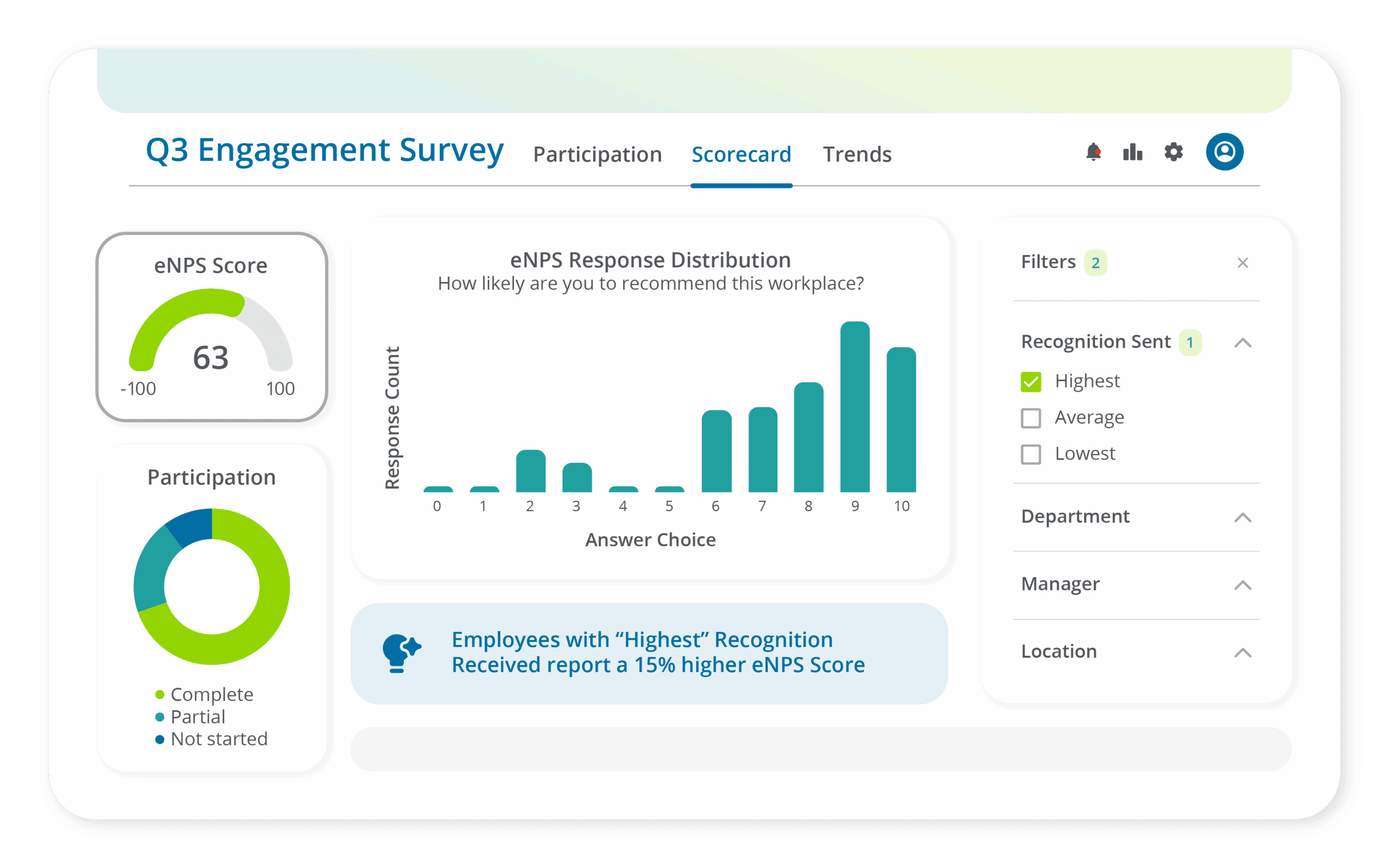
Teams can use Terryberry to:
- Reveal how distributed employees are actually experiencing their work. Use baseline, pulse, and lifecycle surveys to understand how remote employees feel about recognition, leadership support, belonging, and growth across different teams, tenures, and locations.
- Identify where employees feel unsupported before it leads to churn. Break down sentiment by team, role, seniority, and location instead of waiting for company-wide averages that fail to highlight what's actually happening at the team level.
- Connect listening data directly to recognition data. See the relationship between how much acknowledgment specific teams are receiving and how their engagement indicators are trending, so managers can make more informed decisions.
- Act on feedback in real time. Use listening insights to launch targeted recognition, wellness, or incentive programs that address specific gaps rather than waiting for annual survey results that arrive too late to make a meaningful difference.
Dan Norris, VP of Talent Development at a $3 billion heavy equipment company, reduced his organization's survey processing time from weeks to hours after moving to Terryberry. That meant his leadership team could act on what they were hearing before isolated frustrations turned into patterns that were much harder to fix.
“To retain employees for 10, 20, or 30 years, you need to listen to them. Terryberry gives us the tools to do that." - Dan Norris
For remote teams specifically, that speed matters more than most organizations realize. Disengagement in a distributed workforce tends to build quietly, without the visible signals that would alert a manager in a shared office. A continuous listening system gives remote managers the situational awareness they lost when their teams left the office.
4. Tie Recognition Directly to Your Company's Core Values
Company culture is created through shared experiences, the stories people tell about what gets celebrated, what gets noticed, and what leadership actually cares about.
However, it's difficult for remote employees to experience any of that organically. They don't overhear the conversations that give them a felt sense of the company's values, and they don't watch leadership make decisions that demonstrate what the organization actually prioritizes in real time.
The most practical way to fix this issue is to make values visible through employee recognition. Every acknowledgment is an opportunity to name the principle behind the contribution. This looks like:
- Encouraging managers to reference a specific value when recognizing an employee
- Letting employees nominate peers specifically for demonstrating a company value
- Tracking which values are showing up most in recognition data and which are conspicuously absent
Terryberry lets organizations tag every recognition to a specific core value and track how those values are being expressed across teams and roles over time.
Chelsea Groton Bank built its Acorn Rewards program on exactly this. It's a peer recognition system where employees nominate each other for demonstrating one of the bank's seven core values. The program increased recognition activity and gave culture a mechanism to travel across a distributed workforce, which is precisely the challenge that remote organizations struggle with most.
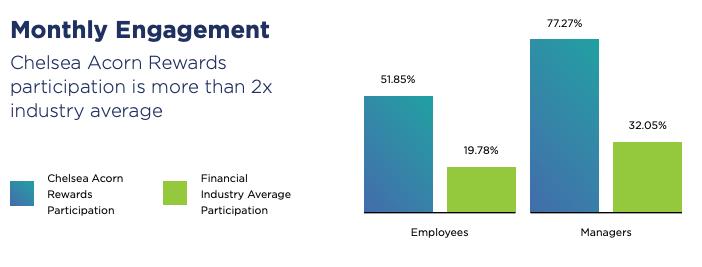
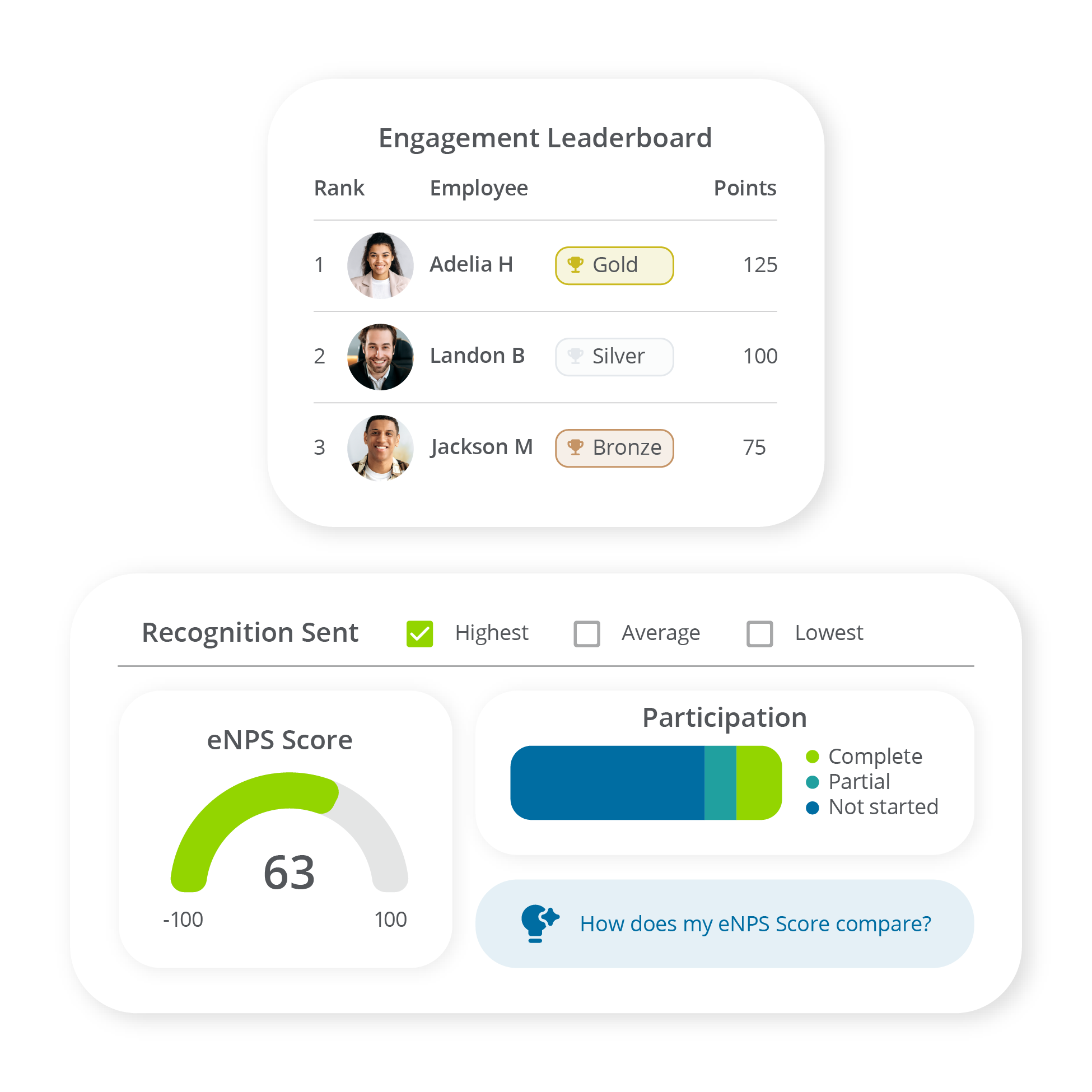
Terryberry's platform tracks recognition participation, eNPS scores, and engagement trends in one place. This allows organizations to see both who is being recognized and whether values-based recognition is actually impacting how employees feel about their work.
That visibility matters for remote teams because data helps management understand what's working and what isn't. Without it, organizations are making decisions about culture and engagement without knowing whether any of it is resonating with the people it's meant to reach.
5. Use Incentives to Reinforce Behaviors That Matter
Many remote employee incentive programs fail to provide a lasting impact because the rewards are disconnected from the workforce and don't feel meaningful to employees. Common examples include:
- A gift card after a quarterly review
- A bonus tied to output metrics
- A piece of company swag nobody asked for
While employees might appreciate it in the moment, it doesn't deepen their connection to the work, the team, or the organization. Unlike in-person environments, where recognition can happen organically during team meetings or team-building activities, remote workers rarely get those experiences. These rewards typically feel too transactional, especially when they aren't tied to anything meaningful.
The most effective incentives for engaged employees on remote teams increase engagement by:
- Reinforcing the behaviors that impact culture. Rewarding collaboration, demonstrating values, and meaningful contributions rather than output alone gives employees a clearer picture of what the organization actually cares about.
- Offering rewards that align with recognition. A reward that arrives after genuine acknowledgment feels like the natural conclusion of being appreciated. One that shows up without it just feels like compensation. Remote employees, who already receive less organic recognition than their in-office counterparts, feel that difference most.
- Letting employees choose what actually matters to them. Generic rewards create a generic feeling of being valued, which isn't the same as actually feeling valued. When employees can choose something that reflects their own interests and life outside work, the gesture carries real personal weight.
- Making progress feel tangible. Remote employees often lack visibility into how their effort connects to forward momentum. Incentives tied to milestones and sustained contributions create concrete markers that show growth is real and being noticed. This is something distributed work environments rarely produce on their own.
Terryberry's Employee Reward Platform ties incentives directly to recognition, milestone achievements, and performance objectives through an integrated points-based system.
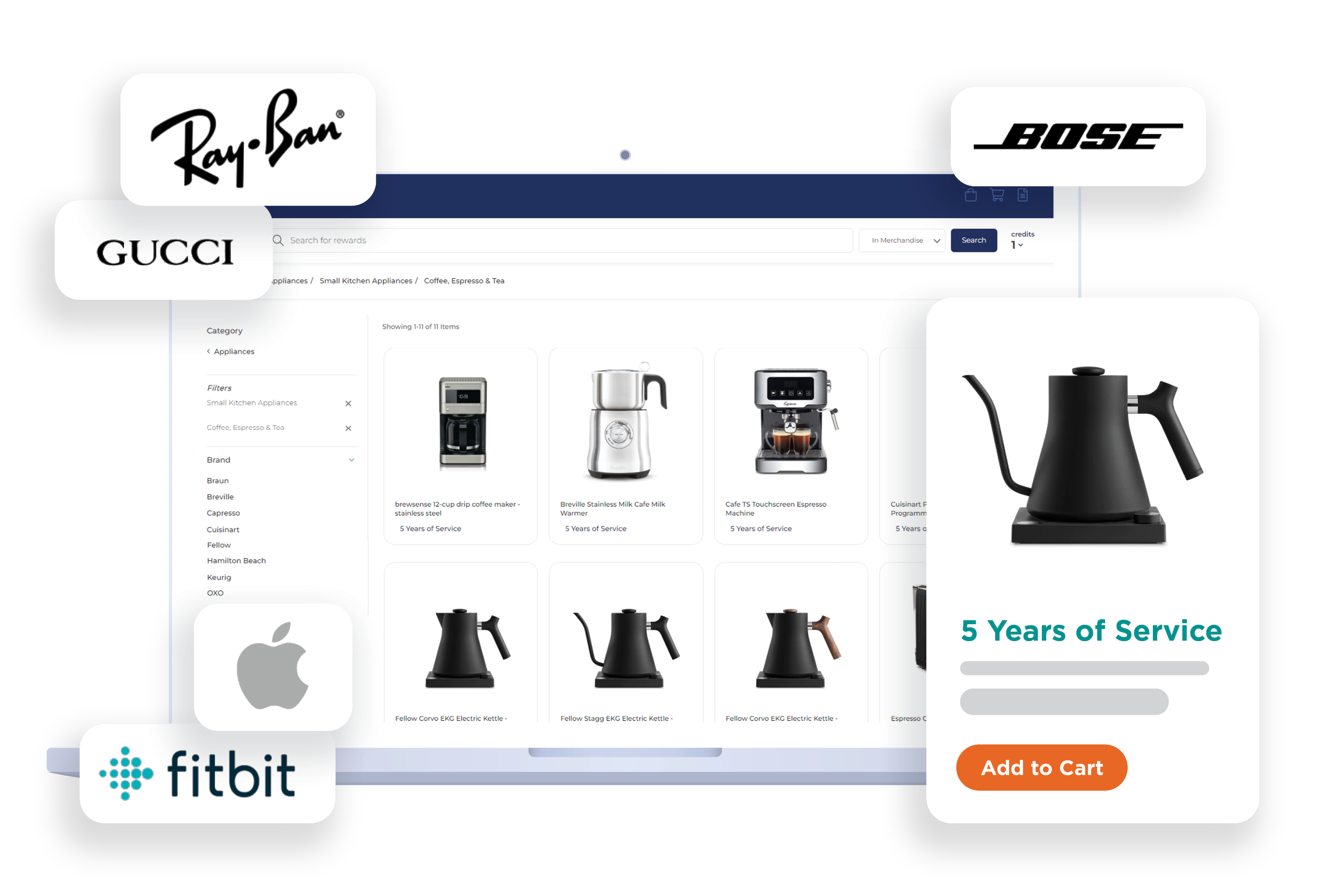
Employees choose from a broad rewards catalog through Terryberry's Amazon Business integration, which offers zero-markup rewards with Prime-like delivery, so what someone receives reflects what they actually value rather than what was easiest to fulfill.
The end result is an incentive program that functions as a genuine extension of your recognition culture rather than a separate initiative that runs parallel to it. For remote teams, that integration is the difference between rewards that reinforce engagement and rewards that just cost money.
6. Treat Employee Well-being as a Shared Team Priority
Remote work creates a burnout problem that engagement scores rarely catch in time. Without face-to-face interactions, regular check-ins, and the structural boundaries that offices enforce by default, maintaining work-life balance becomes significantly harder for distributed employees.
According to Gallup research, remote employees are more likely to report experiencing loneliness, sadness, and emotional strain than in-office workers. This can happen even when their engagement metrics look perfectly healthy.
The organizations that handle this well don't treat well-being as a benefit employees can access if they choose to. They make it a visible, shared team experience. This matters because low participation is common in most remote wellness programs.
Programs that actually get used by remote teams tend to share a few qualities:
- Low barriers to entry. If participation requires downloading a separate app, creating a new account, or navigating a tool nobody uses for anything else, most employees won't bother.
- Social by design. Team-based challenges create shared context and connection that remote work rarely produces on its own. A distributed team tracking collective progress toward a shared goal is building cohesion at the same time as it's improving health.
- Visible effort. When participation is recognized rather than private, employees feel that taking care of themselves is something the organization actively values.
- Tied to growth. The best well-being programs connect to broader professional development and recognition initiatives. Employees usually experience well-being as part of how the organization invests in them, not just a standalone perk.
Terryberry's Wellness Platform supports step and activity challenges, hydration and mindfulness goals, and personalized well-being plans, with a library of over 150 expert audio guides across 40+ mental health topics.
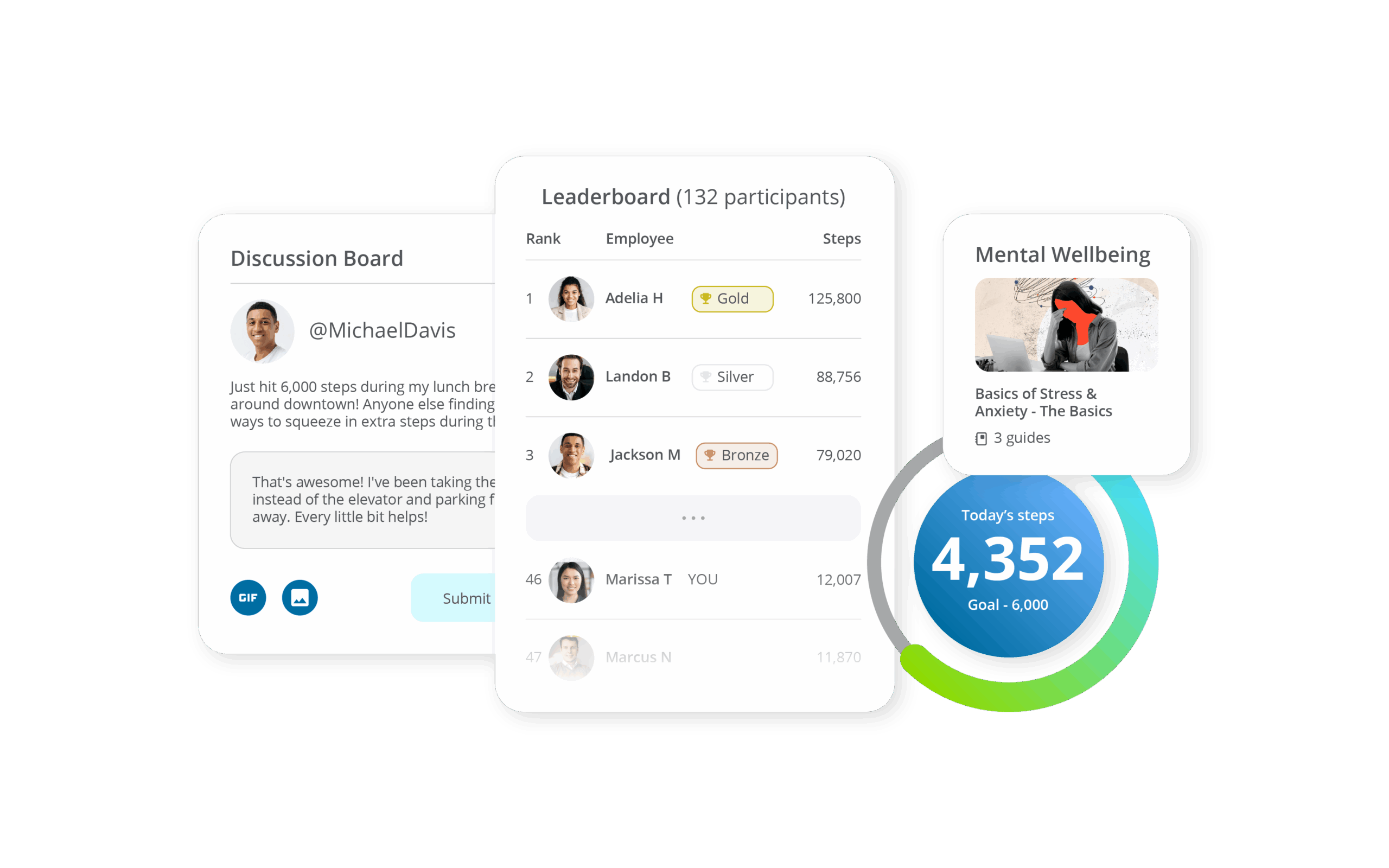
Employees earn recognition points for completing wellness goals, which connects health directly into the broader recognition culture rather than treating it as a separate initiative.
Leaders can track participation alongside recognition and survey data, so well-being engagement becomes part of how organizations understand and respond to the overall health of their remote workforce.
Engage Your Remote Workforce With Terryberry
Terryberry helps remote organizations improve employee engagement by centralizing recognition, listening, rewards, and well-being in a single integrated platform. This helps leadership understand what their distributed employees need, act on it consistently, and measure whether it's working over time.
With Terryberry, organizations can:
- Keep remote employees recognized and connected through social recognition. Give managers and peers a shared, visible space to acknowledge contributions in real time, so appreciation isn't dependent on any one person's memory or initiative.
- Automate milestone recognition so nothing goes unnoticed. Track service anniversaries, promotions, and career milestones across a distributed workforce and ensure every employee is acknowledged at the right moment, not weeks after it's passed.
- Give remote managers the visibility they've lost. Use continuous listening tools to surface how distributed employees are actually experiencing their work, broken down by team, tenure, location, and role, so leaders can act before small problems become bigger ones.
- Motivate employees with rewards that feel personal. Tie points-based incentives to recognition and wellness participation so employees can choose rewards that actually reflect their interests, through Terryberry's Amazon Business integration or custom award portals.
- Support well-being as a shared team experience. Run step challenges, mindfulness programs, and activity goals that bring distributed employees together around something beyond their day-to-day work.
- Measure what's actually driving engagement across your remote workforce. Centralized analytics connect recognition participation, survey sentiment, wellness engagement, and eNPS trends in one place, so organizations can see what's working and where distributed engagement is quietly breaking down.
Bringing all of these programs together under one platform is what separates organizations that sustain remote engagement from those that keep relaunching initiatives that don't stick.
Building a More Engaged Remote Workforce
Remote employee engagement is built when recognition, connection, manager support, and well-being are reinforced consistently through the right systems.
With Terryberry, engagement becomes something distributed employees experience every day through visible recognition, milestones that get marked at the right moment, managers who stay genuinely close to their teams, and well-being that feels like a shared priority.
Schedule a demo to see how Terryberry can help you build a remote workforce that stays engaged.