April 22, 2026


Social recognition at work is one of the most powerful methods to acknowledge and engage your employees. It’s no secret that by recognizing your team, you can build a strong culture of appreciation that ripples through every department.
Recognition is a vital tool for every organization. It allows leaders, managers, and colleagues to celebrate employee achievements and reinforce positive behaviors. From formal service awards to a passing high-five, these moments of gratitude are the building blocks of a healthy workplace. From employee service awards to a passing high-five, there are so many ways to recognize your employees.
What is Social Recognition?
Social recognition and peer-to-peer recognition are similar concepts, often used interchangeably. However, there are nuances to how they impact your workforce:
- Social Recognition: Focuses on public acknowledgment. It can come from anyone—managers, colleagues, clients, or even external recognition from partners. It often lives on digital platforms that mirror social media, featuring a communal feed where praise is visible to all.
- Peer-to-Peer Recognition: Specifically focuses on coworkers acknowledging each other. It empowers the people "in the trenches" to provide meaningful recognition for the daily effort that managers might not always see.
By implementing an official program, organizations can empower employees to celebrate success in real-time, fostering collaboration and ensuring no small win goes unnoticed.
Download Terryberry's Social Recognition Brochure
Essentially, peer-to-peer employee recognition is a type of social recognition that occurs specifically among co-workers and colleagues. Social recognition encompasses a broader range of sources for acknowledging employee contributions.
With an employee recognition program, organizations can give positive feedback and empower employees to celebrate achievements in real time. Not all managers can see every single small achievement. But your peers see all the effort you put forth, despite how small it may be.
Social recognition is a great option for managers and leaders to witness smaller accomplishments that go toward achieving greater goals.
Pro tip: Accompany your social recognition platform with a monetary component and non-monetary rewards for a complete and comprehensive recognition program that is designed for your entire company’s needs.
Why is Social Recognition Important?
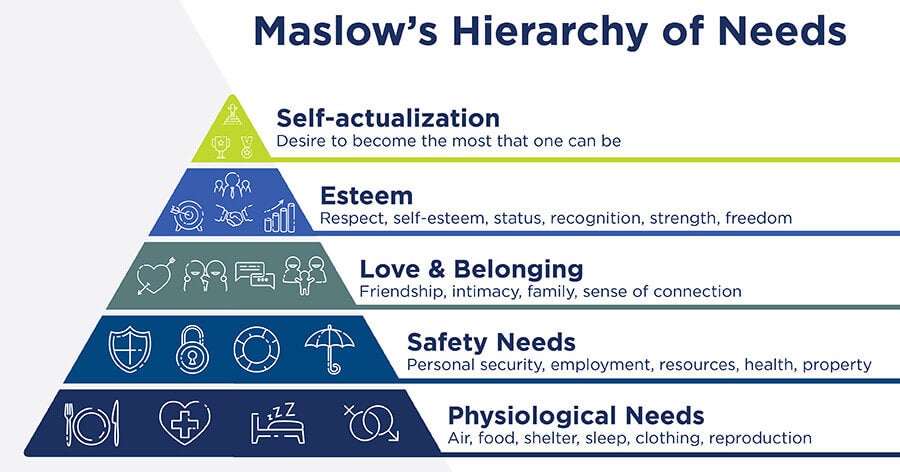
Social recognition feeds into the idea that humans are social creatures who value community. You may remember Maslow’s Hierarchy of Needs from high school, but it's still relevant today and can play an important role in understanding your employees' needs.
Published in 1943, Maslow wrote his first theoretical article about human motivation. He discusses five tiers of human needs for motivation: physiological, safety, belonging (social), esteem, and self-actualization.
Physiological and safety needs are considered basic needs that are represented by tangible and monetary items such as salaries, safe working conditions, health benefits, etc. Hopefully, these aspects of the workplace are a given.
RELATED: Diversity Culture: How to Bring Psychological Safety to the Workplace
The top-tier needs, however, are less straightforward. The top-tiers — belonging and esteem— are where an engaged workforce is truly built. By understanding higher tiers, HR professionals and organizational leaders can build an employee engagement model that meets all the needs Maslow addressed.
Social recognition helps employees create a positive and measurable infrastructure within a company culture. In short, it allows employees to celebrate success together as a community. When employees feel they belong to a community that celebrates them, their connection to the employer brand strengthens. Social recognition creates a measurable infrastructure that allows employees to thrive together.
Benefits of Social Recognition Programs
When done right, a social recognition program does more than just make people smile; they build trust and dramatically impact the bottom line. It’s a simple and effective way to increase employee retention, boost employee morale, keep engagement high, and put company values into practice.
Meaningful Relationships
Social recognition helps strengthen the relationship between employees, colleagues, and leaders. It allows remote employees, deskless, and in-office workers to interact with each other.
Whether it’s a work anniversary or a shoutout for a job well done, you can empower employees to experience moments in a meaningful way, which can be very bonding.
Furthermore, social recognition platforms help break down silos by highlighting the achievements of different departments, which can be particularly useful within large companies.
Increased Employee Engagement
What's the key to an organization's success? An engaged workforce.
It may sound overly simplified, but research has found that businesses with the highest scores on employee engagement showed 21% higher levels of profitability, a 10% increase in customer ratings, 24% less turnover.
This is because engaged employees are more likely to go above and beyond their job description to solve problems. They're more inclined to come up with innovative ideas, and they bring a positive attitude to the office.
With a social recognition platform, the entire company is encouraged to recognize each other, leading to teams that feel seen and appreciated.
Employee Retention
Everyone loves to be told they are doing well, but can social recognition really retain employees? Absolutely.
Engaged employees are not likely to leave an organization when they feel seen, heard, and appreciated. Social recognition allows companies to encourage leaders to show their appreciation more frequently and openly.
Connected Company Culture
Think of a social recognition platform as a professional social media outlet. Many programs include features from networks like Facebook, Twitter, and LinkedIn that allow for real-time, instant connections.
Whether it’s a "like," a post, or an e-card, this type of platform makes employees feel more involved, engaged, and active in their coworkers’ activities.
Additionally, social recognition can be integrated with other employee engagement initiatives. For example, employees can celebrate moments that matter by acknowledging work anniversaries and other milestones. This helps create a better sense of connection, resulting in a more positive work culture.
Real Insight and Measurable Data
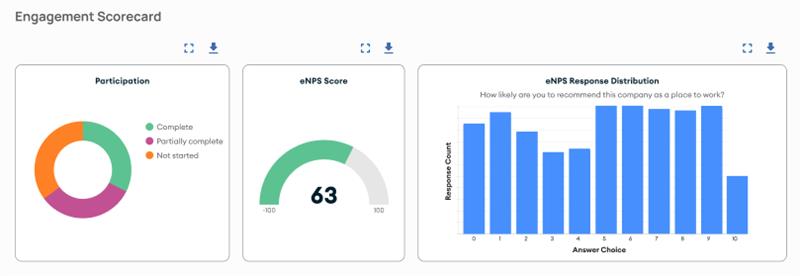
A social channel allows you to see real interaction in real-time. It allows HR departments and leaders to measure employee engagement.
With the implementation of recognition software, employers can measure how active their employees are, what days are more active than others, and the frequency of engagement. Over time, this type of data will help organizations improve their engagement strategies and increase productivity further.
Moreover, it’s a tool that can help managers and leaders see all the little and big accomplishments throughout different teams. Managers can give recognition on this platform, too! Recognition from leadership often carries a lot of weight.
RELATED: Social recognition can connect remote employees.
Key Characteristics & Best Practices for Social Recognition Platforms
While social recognition is impactful, it does still require time and effort to be done correctly. So, before you start an employee recognition program, make sure you'll be able to follow these best practices.

Frequency Matters
Although recognition should occur consistently, social recognition should be executed on a regular basis. This will make employees feel valued for their efforts throughout the year.
Organizations that provide frequent recognition to employees see lower turnover and disengaged employees. So, make sure you are being consistent with your employee recognition now.
We suggest that your recognition should be at least a couple of times a month, if not weekly. This ensures that your employees will always feel valued.
Pro Tip: We suggest that your recognition should be at least a couple times of a month, if not weekly. This ensures that your employees will always feel valued.
Leadership Buy-In
Leaders must set the standard. When executives participate in the social feed, it validates the program and builds trust across the hierarchy. Leaders who promote social recognition help create an environment where appreciation, recognition, and hard work are valued.
Make sure to train managers and leaders on social recognition platforms and their best practices. Managers and leaders who are proactive with engagement initiatives can significantly improve their relationships with employees.
Real-Time Creates Positive Reinforcement
Positive reinforcement is a great tactic for employee performance. When positive behaviors are recognized immediately, they are much more likely to be repeated.
Typically, when specific behaviors or actions are positively recognized, they get repeated. So, it’s important to have a real-time feed for social recognition platforms that support your engagement tactics.

Inclusivity is Important
Leave no one out. Social recognition software must be used in an inclusive way, from entry-level employees to leadership and behind-the-scenes workers to the biggest extroverts. This encourages participation on multiple levels.
Keep in mind that managers and leaders can see the different recognition posts, as well as comment on and like them. With interaction like this, you can create a healthy environment for everyone.
Make it Fun
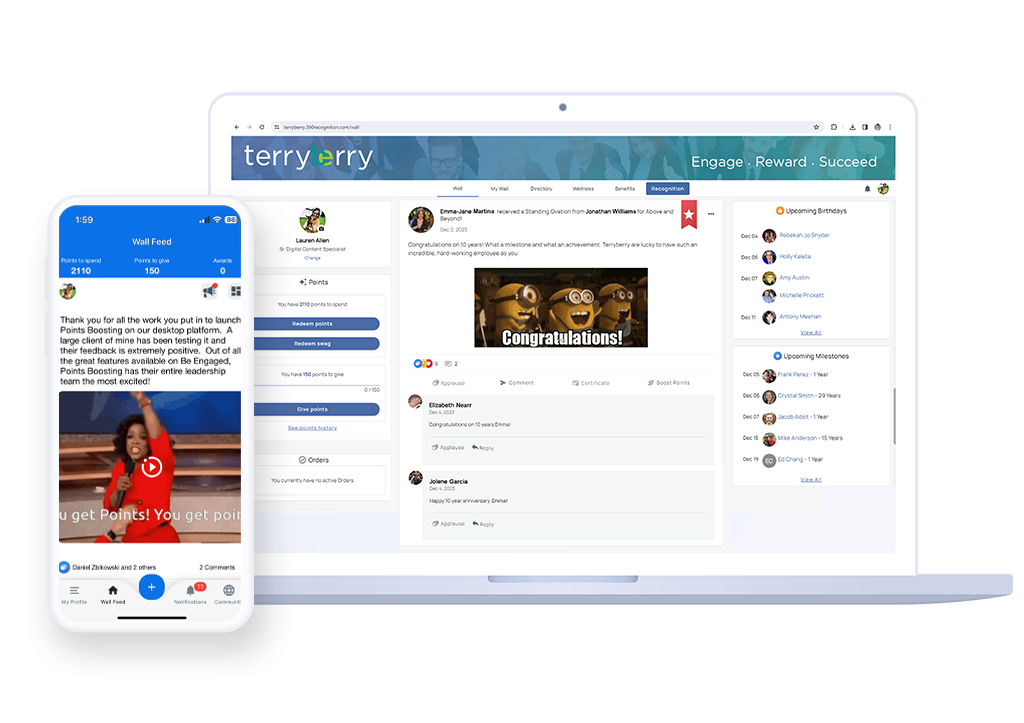
Although there are different types of public recognition, like emails or company-wide meetings, social platforms allow employees and users to play their own role in recognition. Use gamification to keep participation high. Features like points, leaderboards, and the ability to add memes or GIFs make the process enjoyable rather than a chore.
Implement platforms that allow users to customize their recognition posts with memes, GIFs, pictures, emojis, etc. With Terryberry’s social recognition software, you can include features like:
- Custom branding
- Integrations with work tools such as Slack and Teams
- Employee Birthday and milestone reminders
- Advanced analytics and reporting
- Configurations to support multiple locations
- Single sign-on (SSO) and advanced permission settings

Bundle Your Employee Recognition
Another great way to ensure you create a culture of appreciation is to cover a range of types of recognition. Meaning, in addition to social recognition, incorporate your company wellness program and employee listening initiatives.
Utilize your social recognition platform to recognize winners of wellness challenges and award them points through the platform. Use the information you find through an employee survey platform to drive announcements on your social platform.
Terryberry's Be Engaged platform offers employee recognition, wellness & step challenges, and surveys all through one powerful platform.
Next Steps
Let Terryberry help you build a culture of connection with our Social Recognition Platform. Together, we can achieve more. Contact us today for more information!