April 8, 2026

If you're looking for the best employee engagement software for government, you're likely dealing with high turnover in frontline and early-tenure roles, employees who feel disconnected from leadership, and departments where engagement varies wildly but you can't pinpoint why.
This is especially difficult in government because the tools most organizations rely on to drive engagement, like more competitive pay, bonuses, and equity, are largely off the table. That's because compensation is set by civil service classifications and raises follow predetermined steps.
With the right employee engagement software, government HR teams can:
- Identify disengagement drivers within your organization: The right platform uses science-backed surveys to measure and quantify engagement across departments, job classifications, and tenure levels. It should allow you to filter results by seniority, location, and years of service to identify which groups are at risk of churn and why.
- Give managers tools to recognize their teams: In government, managers have almost no financial levers to pull to retain talent. Instead, you should look for platforms that give them discretionary recognition budgets, simple workflows for on-the-spot recognition, and dashboards that show which employees haven't been recognized recently.
- Reach your entire workforce: Many government employees don't sit at desks. The right software makes engagement seamless with email-free logins and mobile app access. Beyond those, check for QR code-based survey delivery, code-based reward redemption, and offline recognition options to reach field workers who may never open a company email.
- Prove program ROI at budget time: Participation numbers alone won't justify a line item in front of a budget committee. The best platforms can centralize data from recognition, wellness, and listening programs while letting you connect that data to retention outcomes so you can show leadership what your investment is actually doing.
In this article, we cover seven employee engagement software platforms for government organizations, including:
- Terryberry: Our all-in-one platform for employee listening, recognition, rewards, and wellness — with centralized analytics built to help government HR teams prove program ROI.
- Gallup Access: A workforce platform used to measure and improve employee engagement with surveys.
- Lattice: A performance management platform that connects employee engagement to career development and goal-setting.
- Energage: An employee feedback platform that measures workplace culture and benchmarks engagement against peer organizations.
- Qualtrics: An enterprise survey and analytics platform with built-in employee listening capabilities.
- UKG: A workforce management and HR platform with employee listening and engagement tools.
- Workday Peakon Employee Voice: A continuous listening tool embedded inside Workday HCM for teams already using Workday.
1. Terryberry
End-to-End Employee Engagement Software for Government
Most employee engagement platforms were built for companies that can use higher salaries and bonuses as incentives to drive engagement. Terryberry can help government organizations that don't have this option.
Below, we'll show you how to use Terryberry to:
- Configure and launch recognition programs tailored to government teams: You can set up years-of-service awards, new hire milestone programs, peer recognition, and public safety awards — each configured around your agency's specific objectives.
- Measure engagement and predict turnover: Terryberry's science-backed surveys quantify the factors driving disengagement in your workforce, so you can identify which departments and job classifications need attention before people start leaving.
- Improve employee well-being and reduce burnout: You can create wellness challenges, personalized well-being plans, and on-demand mental health support built for the physical and emotional demands of government work.
- Increase employee motivation with extensive rewards options: The right incentive structure makes a meaningful difference in environments where salary increases aren't on the table — and Terryberry gives you options that actually resonate.
- Prove your program's impact to leadership: Connect recognition and wellness data to retention outcomes with Terryberry's centralized analytics, so leadership can see exactly what your programs are doing.
Create and Launch Goals-Driven Recognition Programs for Government Teams
Terryberry's employee recognition software lets you build programs around what matters most in government, such as public service values, team longevity, mission alignment, and the day-to-day contributions that never show up in a performance review but hold agencies together.
For each program, you can configure:
- What people are recognized for — whether that's years of service, demonstrating agency core values, completing a safety certification, supporting a colleague through a high-pressure compliance period, or receiving an exceptional public commendation.
- Who can nominate and reward people — you can give managers discretionary points budgets to spend on their teams, enable peer-to-peer nominations, or set up approval workflows for formal awards.
- How rewards are delivered — Terryberry's rewards platform is built into the engagement platform, so you can add incentives, track budgets, and manage orders without switching tools.
Most of the government organizations we work with launch a combination of programs that collectively support their engagement objectives. Below, we'll walk you through the three most common program types—and how to configure each with Terryberry.
Manager Recognition Programs: Lay the Foundation for a Recognition Culture
In government, mid-level managers often struggle the most when it comes to employee engagement. That’s not because they don't care about their teams, but because they have almost no financial tools at their disposal.
They can't offer bonuses or fast-track promotions. When a high-performing analyst goes above and beyond on a grant application, or a case worker handles a difficult situation with exceptional composure, managers are often left with nothing more than a verbal "good job."
Terryberry changes that. With manager recognition programs, you can allocate discretionary points budgets for managers to spend on their teams (monthly or quarterly) and give them simple, fast ways to recognize employees on the spot.
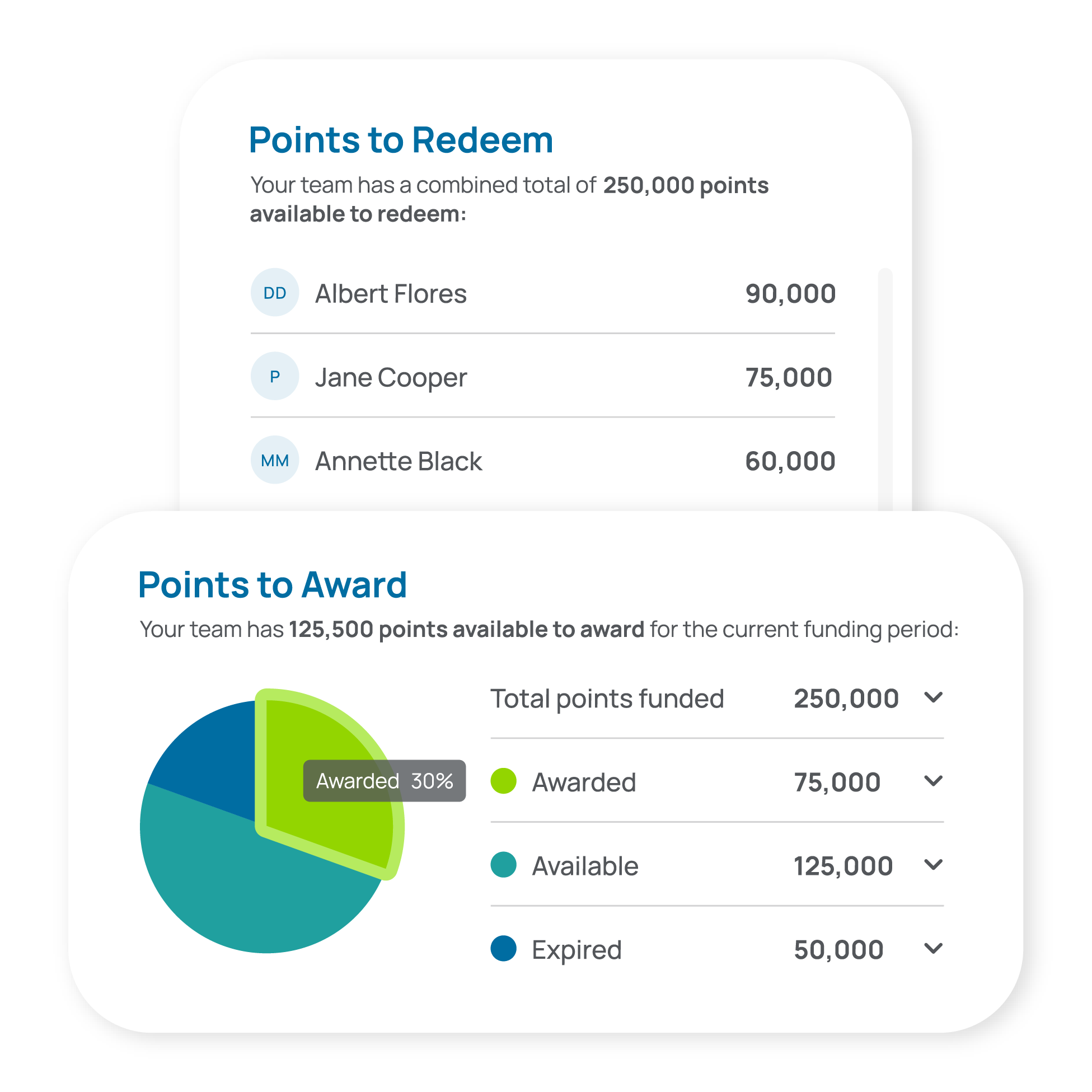
Depending on the permissions you configure, managers can:
- Recognize employees for specific, preconfigured goals. That could include demonstrating a department's core values, resolving a constituent issue with outstanding service, supporting a colleague through a surge period, or completing an important compliance training milestone.
- Award points at their discretion. If you allow this, managers can spend points however their team needs, such as covering a retirement gift, rewarding a new hire for a strong first month, or acknowledging someone who quietly keeps the whole department running.
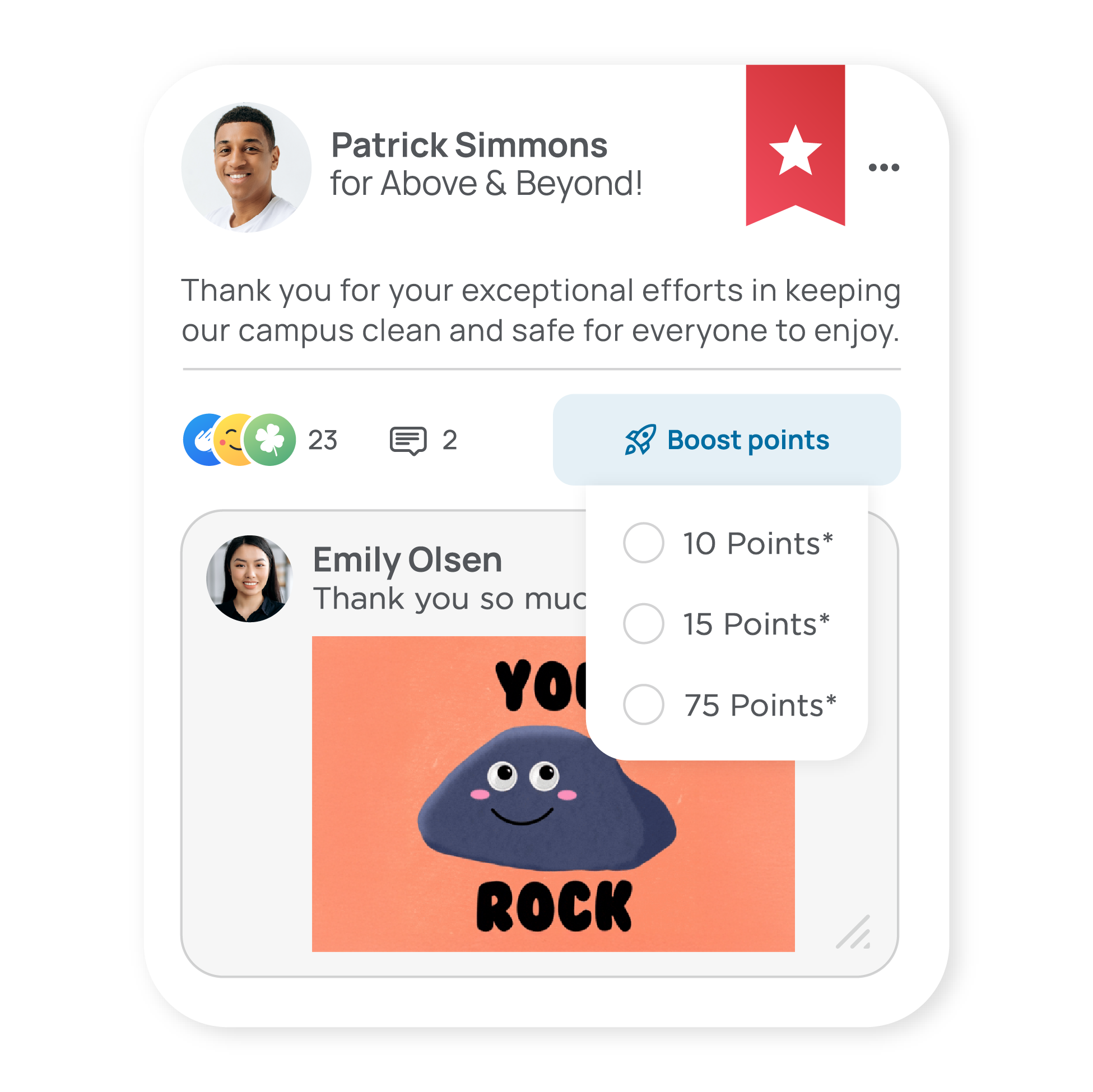
When a manager recognizes a team member, that moment is broadcast on Terryberry's shared culture hub for the whole organization to see. Colleagues can react, leave comments, or "boost" the post to award additional points to the recipient.
For agencies and departments that often feel disconnected from each other, these public recognition moments help build a shared sense of identity and purpose across an organization that might be spread across dozens of locations.
Terryberry also gives managers full visibility into their budgets, usage, and team recognition activity, including which employees have been recognized most and least, so no one gets missed.
Milestone Recognition Programs: Celebrate Service and Reduce Early-Tenure Turnover
Government organizations typically honor longevity better than any other company because agencies understand that institutional knowledge is one of their most valuable assets. But most government organizations rely on informal or administratively burdensome methods to recognize service milestones, or they let them slip by unacknowledged entirely.
With Terryberry, you can set up milestone programs that run on autopilot once configured — notifying peers about upcoming anniversaries, sending reward approval requests to managers, and tracking gifts from order to delivery.
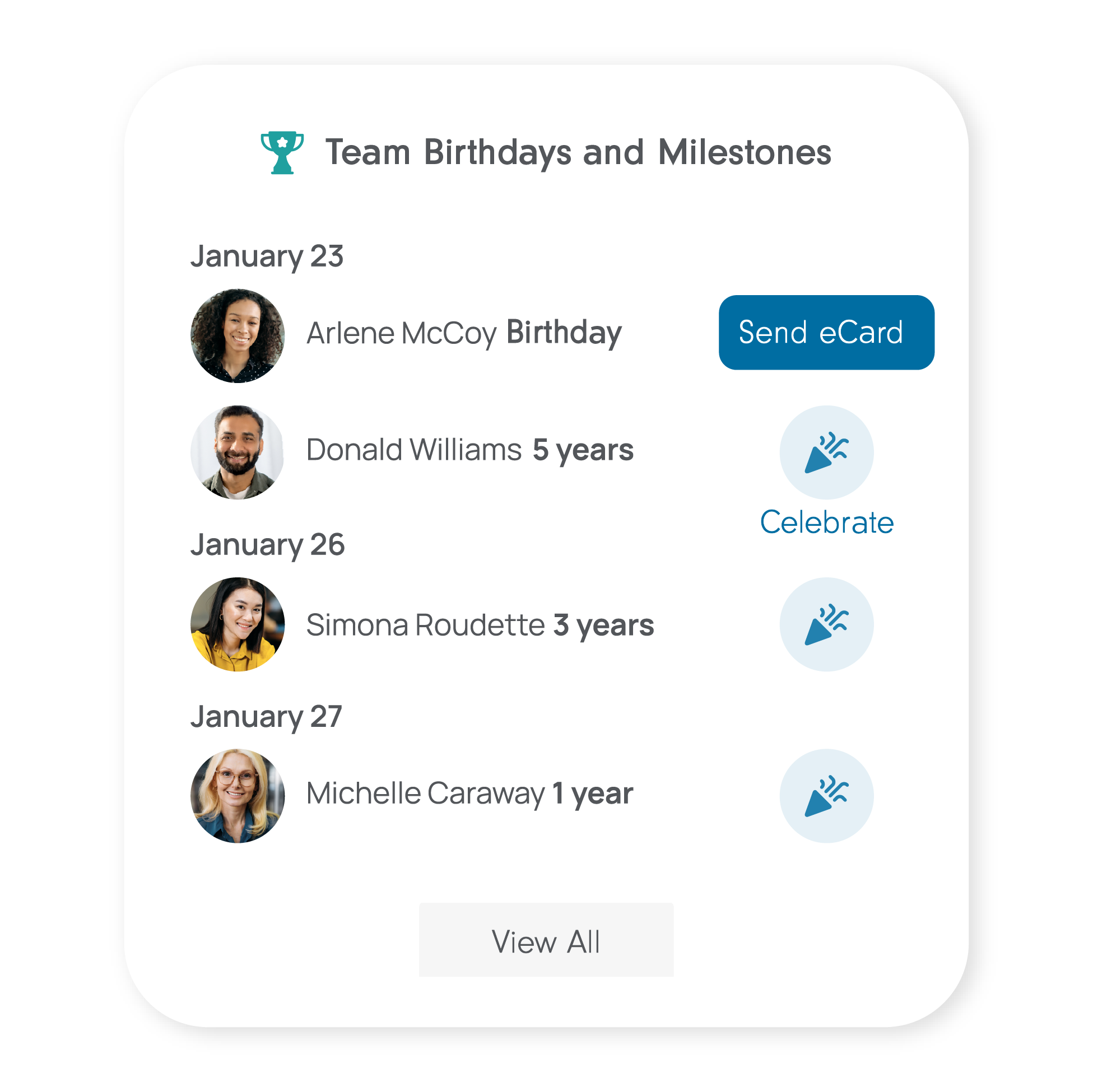
Here are three types of milestone programs government organizations use most often with Terryberry.
#1. Years of Service Awards Programs
Years of service awards programs are among the most effective tools for building loyalty in a workforce where financial rewards are limited. In government, where the nature of public service creates a unique sense of purpose, well-executed service awards programs can have a major impact on retention and engagement.
With Terryberry, you can:
- Celebrate milestones at each service anniversary. 1, 3, 5, 10, 15, 20, and 25+ years — each with its own reward tier and level of recognition.
- Tie service anniversaries to demonstrated values. For example, rather than recognizing someone simply for surviving another year, you can acknowledge the specific contributions they've made. Examples include a significant project they led, a core value they demonstrated consistently, or a community impact they drove.
- Scale the ceremony to the milestone. A first anniversary might warrant a personalized note from a department head. A 10-year milestone might involve senior leadership and a custom award manufactured to last a career.
When you're setting up incentives, Terryberry supports two systems. The recognition levels system lets you assign each service milestone its own reward tier. For instance, you can set it so the 1-year mark unlocks a $50 rewards selection, and the 10-year mark unlocks a $250 tier.
The points system lets you allocate points at each milestone that employees can accumulate and redeem on their own timeline. Either way, employees choose their own reward from Terryberry's catalog, which means the recognition lands meaningfully.
#2. New Hire Milestone Programs: Stop Losing Employees Before Their First Anniversary
Early-tenure attrition is one of the most costly problems in government HR — and one of the most preventable. New government employees are often highly motivated when they join, drawn by mission and purpose. But if they spend their first six months navigating bureaucracy without feeling connected to the team around them, that motivation can fade fast.
A standard years-of-service program won't fix this because the milestone is too far away to matter during onboarding. What works is a program with shorter, more frequent touchpoints in the first year.
With Terryberry, you can configure a new hire milestone program that runs on autopilot from day one. It will notify managers of upcoming milestones, automatically trigger recognition moments, and track reward fulfillment without any manual work. For example, you might configure milestones for:
- The first day, first week, and first month on the job
- 60 days, 90 days, and six months
- Completion of specific onboarding goals — a training certification, a first independent case closed, a safety qualification earned
Each milestone can be tied to its own recognition level or points allocation, so the reward scales with the significance of the moment. A day-one welcome feels different from a 90-day milestone that marks the end of probation, so your program should reflect that.
The structure is flexible enough to work across any government context. A transit authority can tie milestones to route certifications and safety training completions. A social services agency can recognize new case workers at key performance thresholds. All that matters is that the milestones are consistent, visible, and felt before someone decides to leave.
#3. Mission and Public Safety Award Programs
Government workforces are driven by purpose in ways the private sector rarely is. Recognition programs that tap into that have a more noticeable impact.
With Terryberry, you can configure nomination-based programs for mission-driven awards alongside your standard milestone programs.
For example:
- A public service excellence award where managers or peers nominate someone for exceptional constituent service, with an approval workflow that routes to a senior leadership committee.
- A public safety milestone program that tracks and celebrates safety streaks — months without incidents for field crews, emergency management teams, or transportation departments.
- A community impact award that recognizes employees whose work directly improved public outcomes — securing a grant, improving service delivery time, or implementing a process that reduced a backlog.
You can specify who can nominate (managers only, peers, specific departments), what criteria the nomination must address, and what approval layers are required — making it easy to align formal recognition programs with existing civil service and union guidelines.
Peer Recognition Programs: Give Every Employee a Role in Building Culture
Government organizations are notoriously disconnected across different teams. Departments that share a building often have no visibility into what the other does. It's not uncommon for employees to spend entire careers without feeling connected to the broader mission.
Peer recognition programs are one of the most effective ways to break that pattern. When employees can recognize each other regardless of department, location, or job title, it creates a shared culture that isn't dependent on management to sustain it.
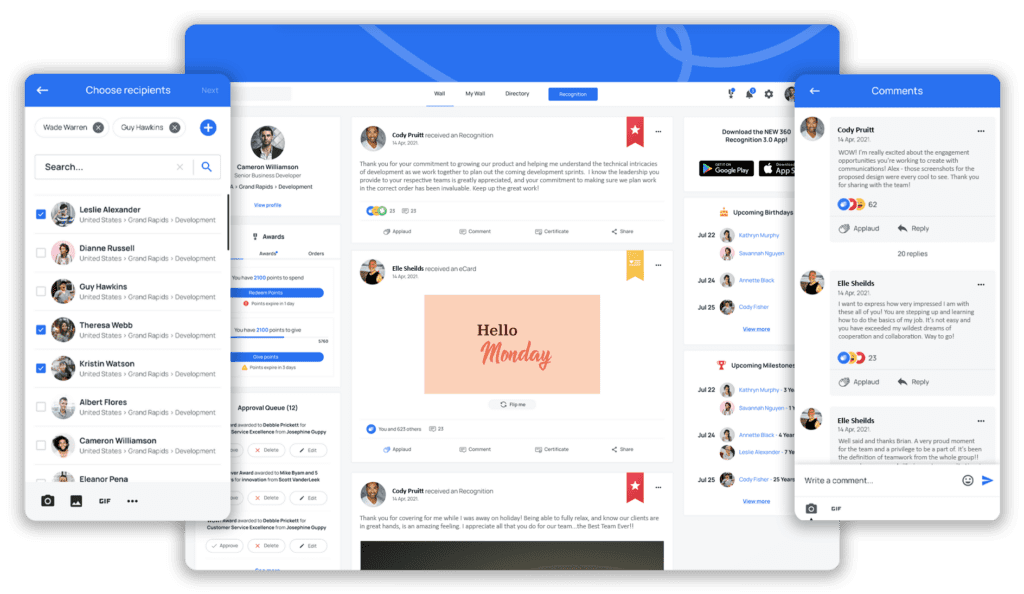
With Terryberry, you can:
- Enable peer recognition across your entire agency: Configure nomination workflows tailored to specific objectives — recognizing a colleague for demonstrating a core value, supporting another department during a surge period, or going above and beyond in a constituent-facing role.
- Customize goals to different teams and departments: For a corrections team, you might configure nominations around de-escalation and peer support. For an administrative department, you can set recognition goals around process improvement and cross-agency collaboration.
- Create nomination-based programs: Such as public servant of the quarter, community impact award, safety champion of the month, or most collaborative team of the year.
Every recognition moment is published on Terryberry's shared culture hub, giving a field team in one region visibility into the contributions of a department they've never interacted with. Colleagues can like, comment, or "boost" a post to add extra points to the recipient, turning a single recognition moment into an agency-wide conversation.
Benchmark Engagement and Predict Turnover with Employee Listening
You can't fix engagement you can't measure. But measuring engagement in government is harder than it sounds. That’s because annual engagement surveys are outdated before the results land on a director's desk. And most survey tools give you scores without telling you why those scores are what they are, or which groups are most at risk of leaving.
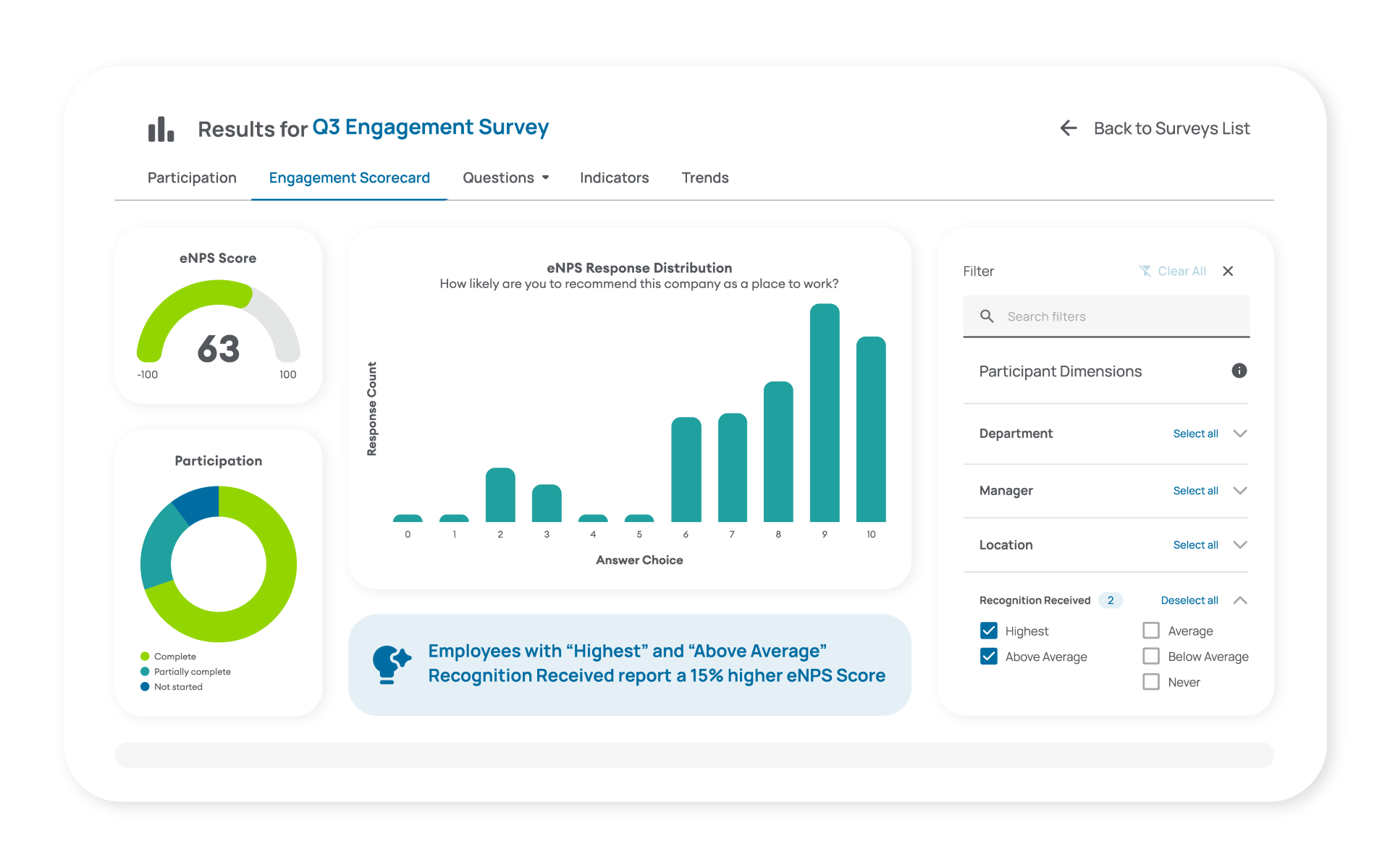
Terryberry's employee listening tool, Be Heard, helps you track employee sentiments in real time, uncover the factors driving engagement and churn across specific groups, and build a continuous feedback loop that actually informs your engagement strategy.
Measure and Quantify Engagement with Our Science-Backed Culture Model
Be Heard features a library of pre-designed, science-backed surveys designed to measure employee satisfaction and engagement across your workforce — including engagement baseline surveys, eNPS surveys, pulse surveys, drill-down surveys, new hire surveys, exit surveys, stay interviews, and more.
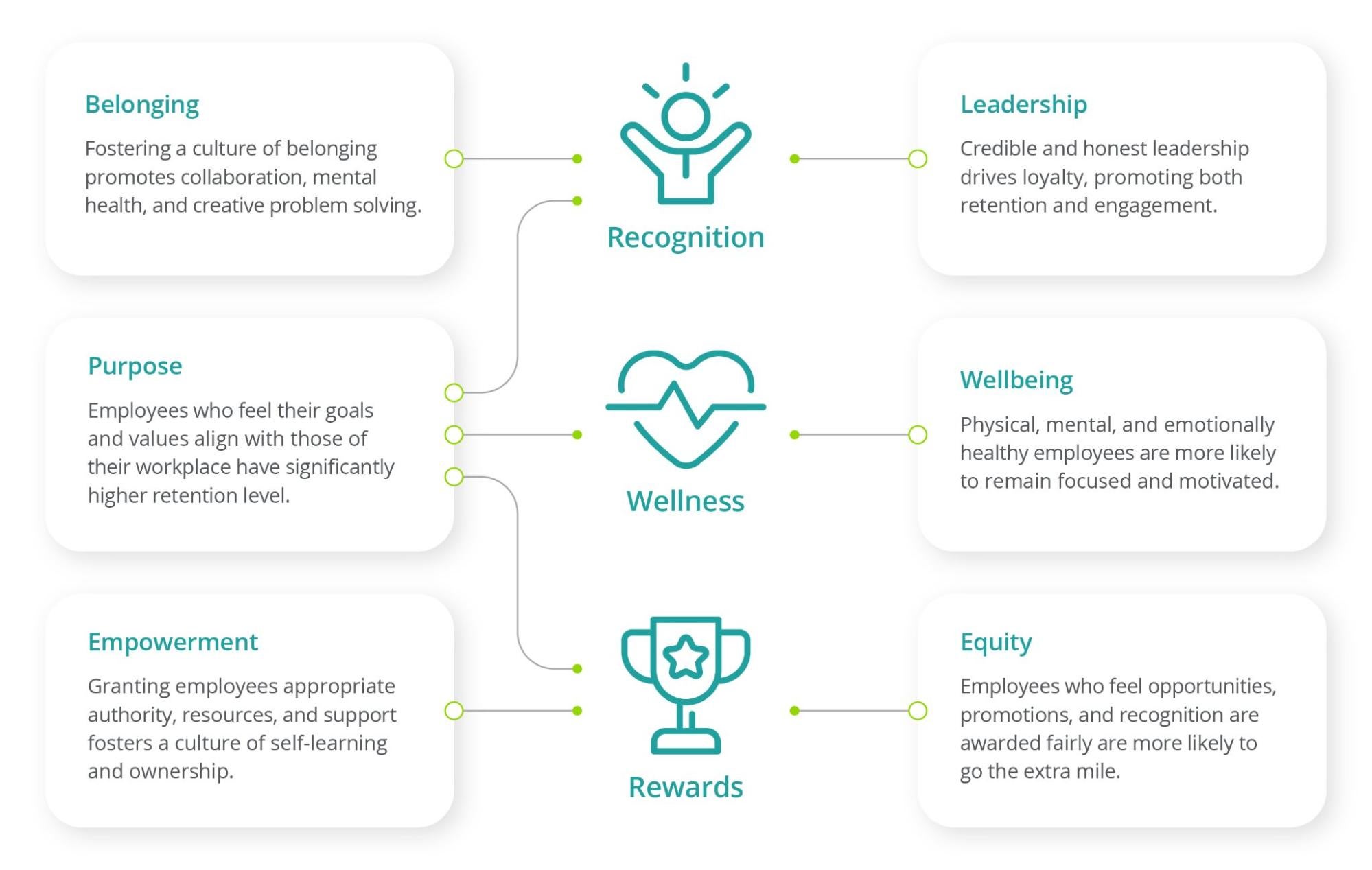
Our engagement baseline survey is specifically designed to measure and quantify employee engagement in government organizations. Developed with three independent PhD researchers and backed by I/O psychologists, it measures engagement using six indicators — belonging, leadership, equity, purpose, empowerment, and well-being — each of which has particular relevance in a government context:
The baseline survey quantifies each indicator using Likert scores, which can be positive or negative. For example, a score of +25 in "purpose" suggests employees are strongly aligned with your agency's mission. A score of -8 in "leadership" tells you that weak manager-employee relationships are actively hurting engagement.
After the survey runs, Terryberry automatically processes responses and populates an analytics dashboard with your six indicator scores — giving you an organization-wide picture of engagement instantly.
Uncover Trends Across Departments, Agencies, and Groups with Cohort Analysis
A government-wide engagement score doesn't tell you much on its own. What matters is understanding which departments are struggling, which job classifications are most at risk of leaving, and what's actually driving those gaps.
Terryberry's analytics dashboard includes participant filters that let you break down results by department, location, job title, tenure, seniority level, gender, age, and more. You can combine filters, for example, filtering by "department" and "tenure" simultaneously, as long as the resulting group contains at least six people to preserve anonymity.
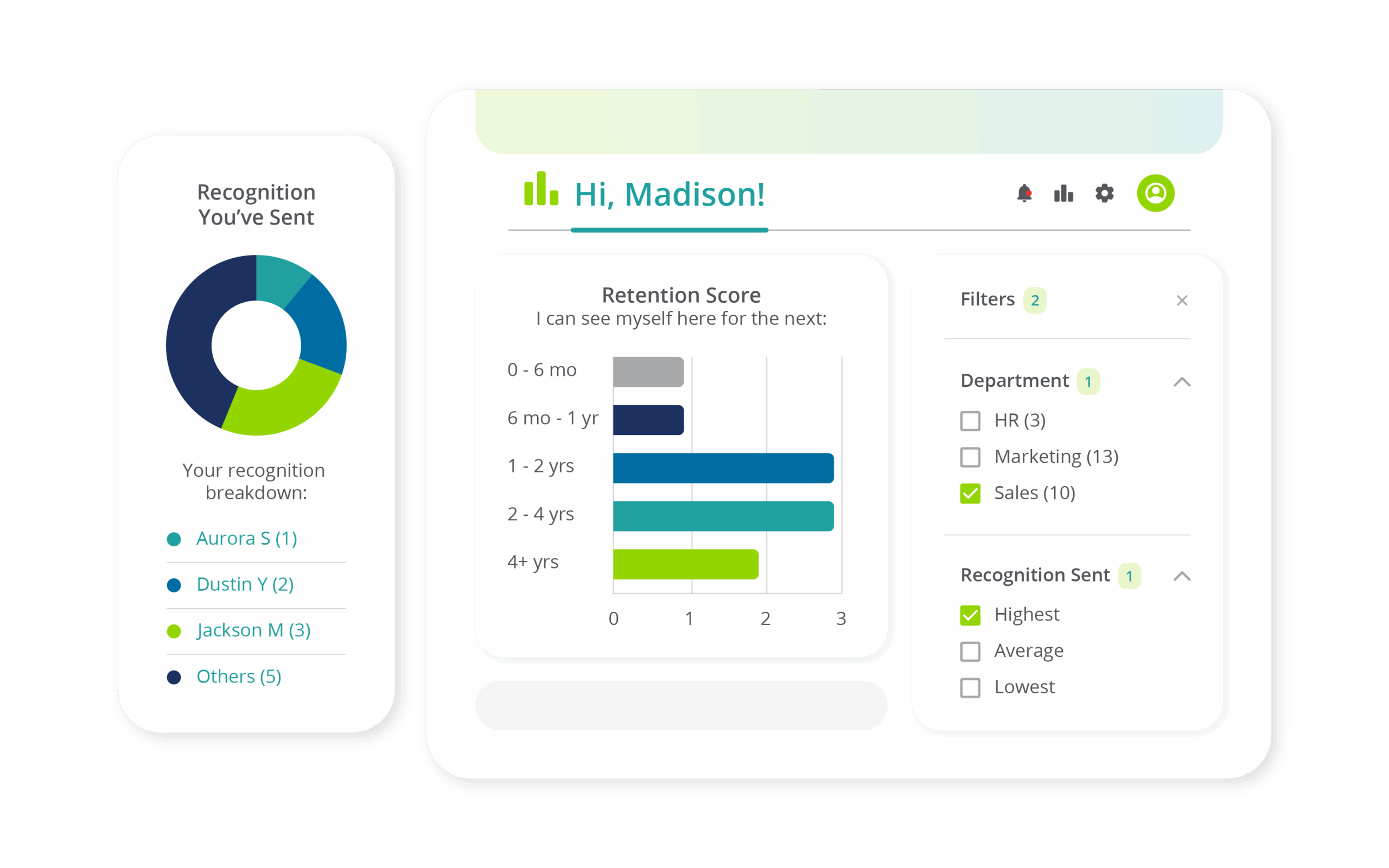
Here's how government HR leaders typically use these filters:
- Compare eNPS scores across tenure levels — e.g., employees at the 1-, 3-, 5-, and 10-year marks — to identify where attrition risk is highest in the employee lifecycle.
- Filter by department or agency to see whether engagement gaps are organization-wide or concentrated in specific areas.
- Segment by seniority level to measure whether frontline managers feel as supported as the employees who report to them — a common gap in government, where middle management is chronically undertrained.
- Filter by job classification to understand whether mission-critical roles (e.g., case workers, field technicians, officers) have different engagement profiles than administrative staff.
Running eNPS and baseline surveys in tandem lets you identify which groups are most at risk of leaving — and specifically which engagement indicators are driving that risk.
For example, if a particular department has consistently low eNPS scores and low "equity" and "empowerment" scores, you now know not just that this group is a churn risk, but why. From there, you can run a targeted drill-down survey to investigate the root cause before launching an intervention.
Maximize Participation Across a Distributed Workforce
The value of your survey data depends entirely on how many employees actually respond. In government, that means getting field workers, transit operators, corrections officers, and other non-desk employees into the process — not just office staff.
Terryberry supports multi-channel survey delivery to maximize participation across every type of government worker:
- Mobile app — employees can complete surveys directly from their phones, anywhere.
- QR codes and custom links — managers can share via Teams, email, text, or post QR codes in common areas.
- Paper-based surveys — for employees without device access or in secure environments where personal devices aren't permitted.
Our team also works with you to build out survey communications — including initial messages, reminders, and follow-ups — timed based on our internal research to maximize response rates. We also help you benchmark your results against agencies of similar size and industry, so you know where you stand relative to peers.
Proactively Support Government Workers Through Employee Wellness Programs
Government workforces include some of the most emotionally and physically demanding roles in the workforce, including first responders, social workers, corrections staff, emergency management teams, veteran affairs case workers, and public health nurses. These employees struggle because the work is genuinely hard, and most organizations respond reactively, waiting until someone burns out before offering support.
Terryberry's wellness platform, Be Well, is designed to get ahead of that. Rather than reacting after burnout sets in, Be Well proactively supports employees' physical, mental, and emotional well-being and makes wellness a shared, visible part of your agency's culture.
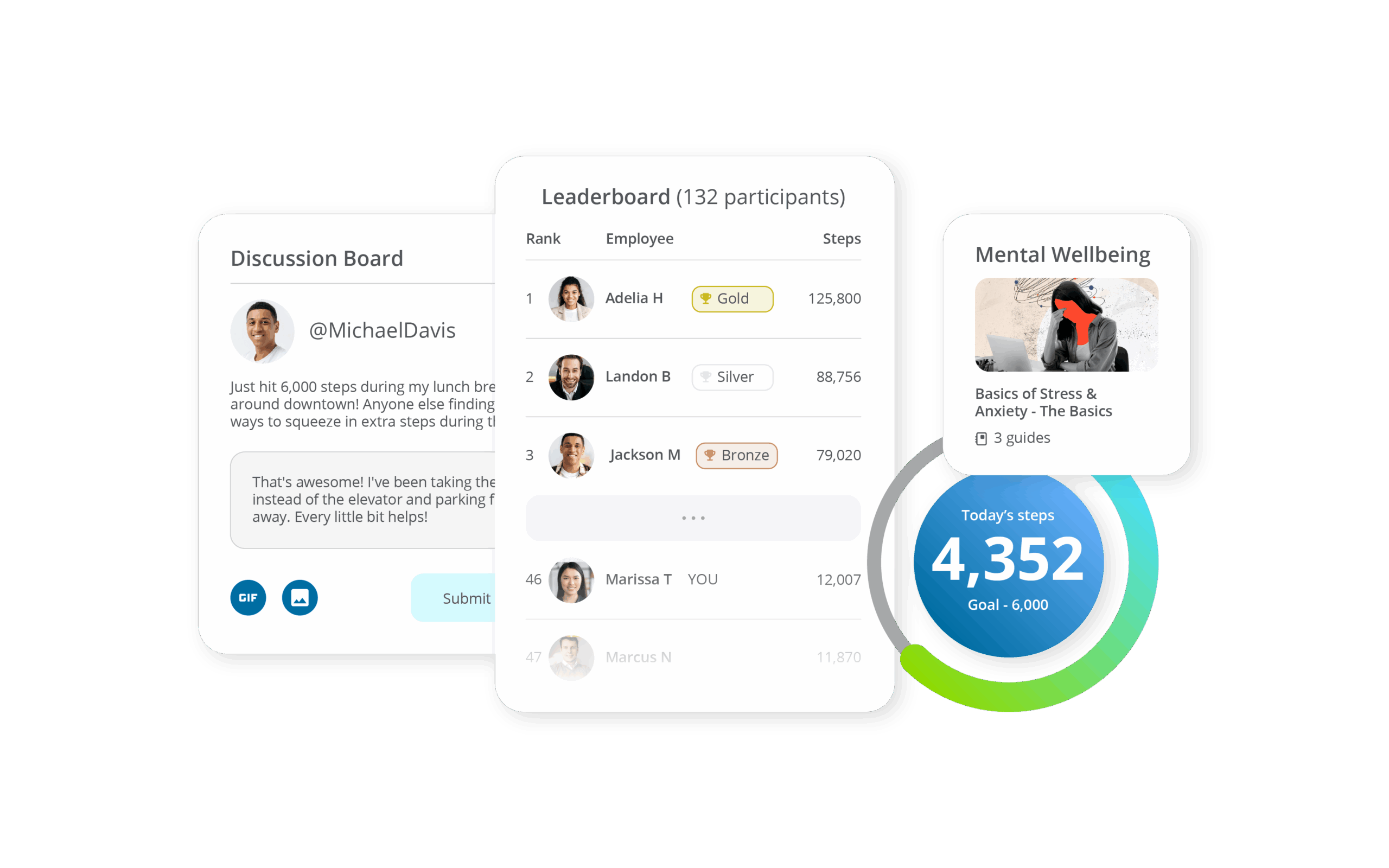
Be Well includes:
- Wellness and activity challenges. Choose from predesigned challenges, including steps, activity, hydration, and sleep, or build custom challenges tailored to your workforce's needs. Each employee gets personalized performance metrics and can see how they compare on a shared leaderboard. Team challenges are particularly effective in government environments where morale benefits from collective wins.
- Personalized well-being plans. Each employee can access a personalized plan built around their specific needs, whether that's managing workplace stress, improving sleep, building healthier habits, or finding time for recovery during high-demand periods.
- On-demand mental health support and expert-led seminars. Be Well includes over 150 audio guides covering 40+ mental health topics, available on demand so employees can access support during a difficult shift, not just when HR schedules a seminar. You can also schedule expert-led group trainings for teams facing specific, shared challenges.
- Wellness analytics. Track participation across programs, identify which teams are engaging, and when combined with Terryberry's centralized analytics, measure the impact of your wellness program on employee well-being scores and retention over time.
We've seen organizations increase workforce physical activity by over 200% after launching step challenges with Be Well, not because the challenges were mandatory, but because the combination of team visibility, leaderboards, and meaningful incentives made participation feel worthwhile.
Motivate Employees with Rewards They'll Actually Want
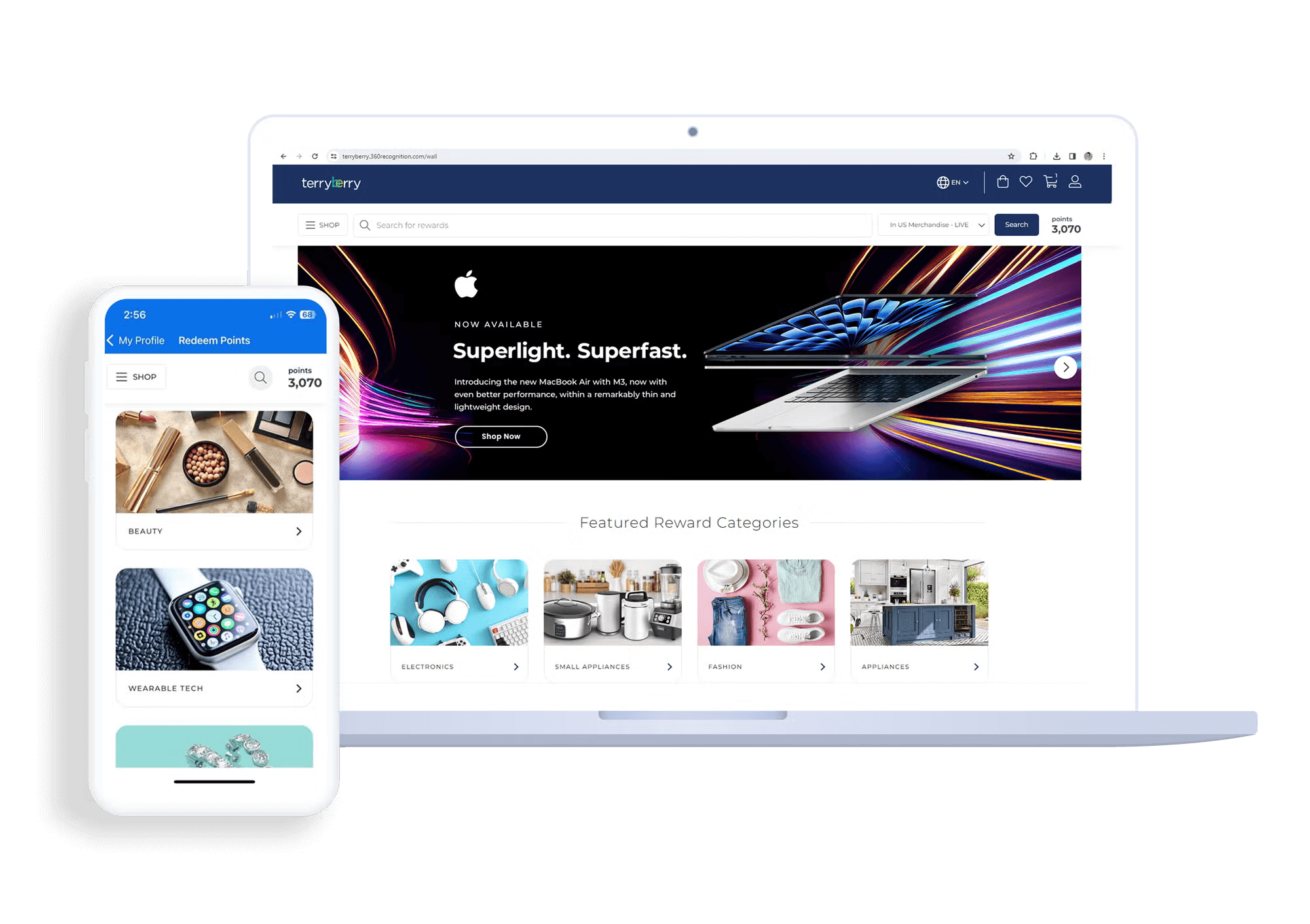

Terryberry's rewards platform is built into our engagement platform, so you can add incentives to any program, track budgets in real time, and manage orders in one place. We offer:
- Custom awards. We've been manufacturing heritage awards for over 100 years, including plaques, trophies, and jewelry designed to last a career. These are a natural fit for government service milestones, where the symbolic weight of the award matters as much as the reward itself. A custom-engraved plaque marking 20 years of public service has a different meaning than a generic gift card.
- Terryberry X Amazon Business. Our integration with Amazon Business brings the largest selection of zero-markup rewards in the U.S. market, with Prime-like delivery. Employees who'd rather pick their own reward, whether electronics, home goods, sporting equipment, or books, can do so without anyone guessing what they'd want.
- Terryberry's Premium Rewards catalog. Mix and match reward categories to create custom shopping portals tailored to your workforce. Choose from electronics, lifestyle, travel, once-in-a-lifetime experiences, charitable donations, merchandise, and more. We've partnered with local fulfillment providers across 100+ countries, so if your agency has employees stationed internationally, they get the same experience without customs fees or shipping markups.
Two reward structures are available depending on how your programs are configured:
- Points-based: Employees accumulate points each time they're recognized and redeem them whenever they choose. Managers can also receive discretionary points budgets to award on the spot.
- Recognition levels: Each service milestone or award tier unlocks a specific rewards selection. For example, the 5-year mark might unlock the $100 tier, while the 15-year mark unlocks the $300 tier. This is the most common structure for formal service awards programs.
Prove ROI and Secure Future Budget Approvals with Centralized Analytics
Terryberry's centralized analytics solve this by combining program participation data with employee listening insights in a single dashboard — giving you the ability to measure the impact of your programs, not just how many people clicked.
Here's what you can measure and demonstrate with Terryberry's centralized analytics:
- The impact of recognition on retention. Compare the eNPS scores of your most- and least-recognized employees. Compare the eNPS of teams whose managers give frequent recognition against teams whose managers rarely participate. The delta between those groups tells you — in concrete, reportable terms — what recognition is worth to your retention rate.
- The impact of recognition on specific engagement indicators. After running the baseline survey, compare engagement indicator scores across your most- and least-recognized cohorts. If your most recognized employees consistently score higher in "belonging" and "purpose" than those who've rarely been recognized, that's a defensible connection between your recognition program and two of the most meaningful predictors of retention.
- The impact of your wellness program on well-being and turnover. Compare the well-being indicator scores and eNPS of employees who actively participate in Be Well challenges with those of employees who don't. Track these comparisons before and after launch to demonstrate trend lines over time.
- Manager-level impact on employee engagement. Compare the engagement indicator and eNPS scores of teams with highly participatory managers against teams with managers who rarely engage in the program. This data is particularly valuable in government, where the case for investing in manager development often needs to be made with evidence.
You can further drill into these comparisons using Terryberry's participant filters, breaking down results by department, agency, job classification, tenure, and more, to identify where programs are working and where additional investment is needed.
When it's time to present to leadership or justify budget renewal, you have actionable insights that prove your programs are delivering real results.
Getting Started With Terryberry
Terryberry combines employee listening, recognition, rewards, and wellness into a single, integrated platform. This consolidates your data, vendors, and administrative overhead into one place.
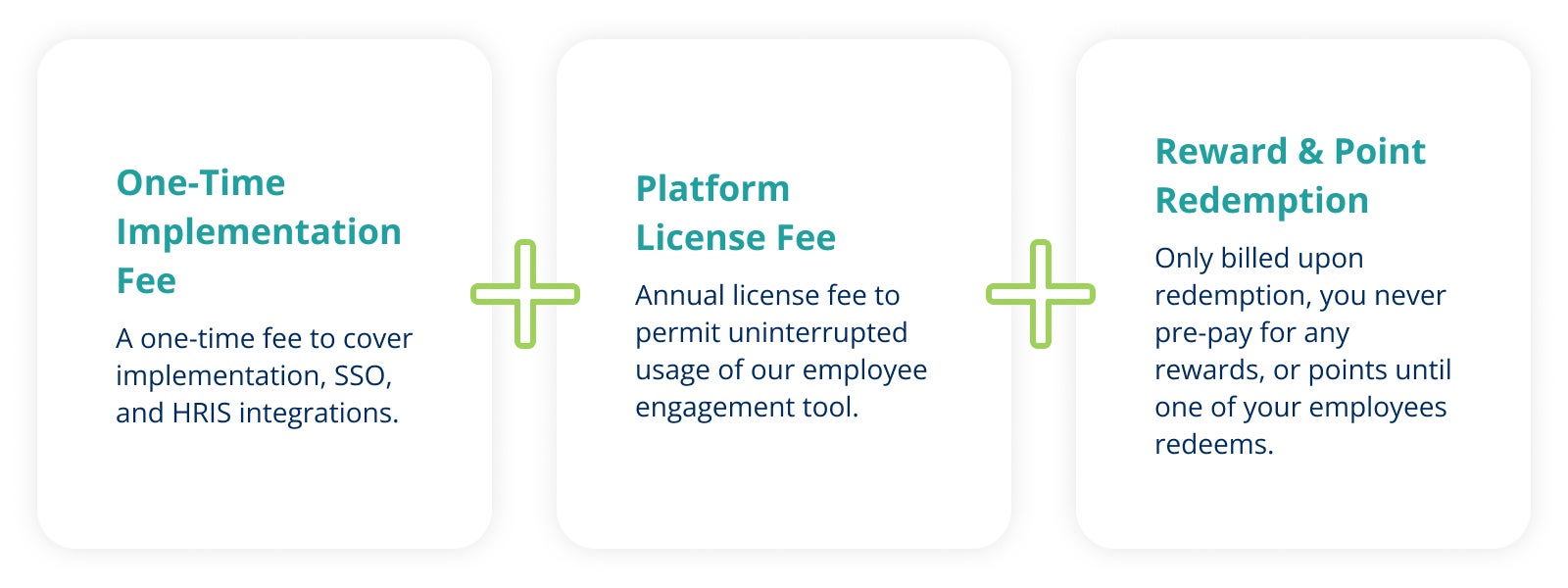
Unlike most providers, we only charge for rewards upon redemption—meaning you don't pay for points that go unused. Our admin fees run 30–40% below the market average, and our global fulfillment network spans 100+ countries, so distributed government workforces are covered without inflated shipping costs.
Schedule a free demo to see how Terryberry can help your organization measure engagement, take meaningful action, and build the business case for ongoing investment in your people.
2. Gallup Access
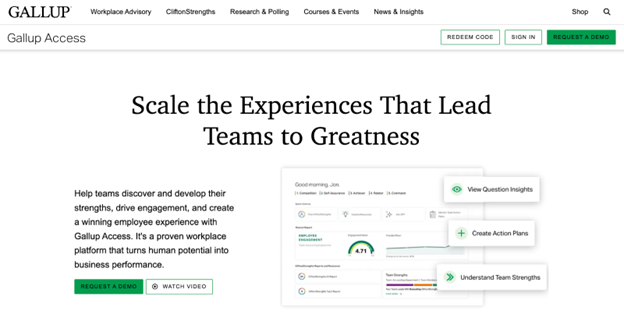
Gallup Access is the platform behind the Q12 employee engagement survey. Agencies use it to benchmark team-level engagement, track sentiment over time, and identify where managers' effectiveness falls short.
However, it doesn't include recognition, rewards, or wellness capabilities, so firms need separate tools to act on what their surveys reveal.
Key features include:
- Q12 engagement survey
- Manager-level team reporting to see which managers are driving strong engagement and which need support
- Government and private sector benchmarking to compare your agency's scores against Gallup's database
- Manager coaching and development resources
3. Lattice
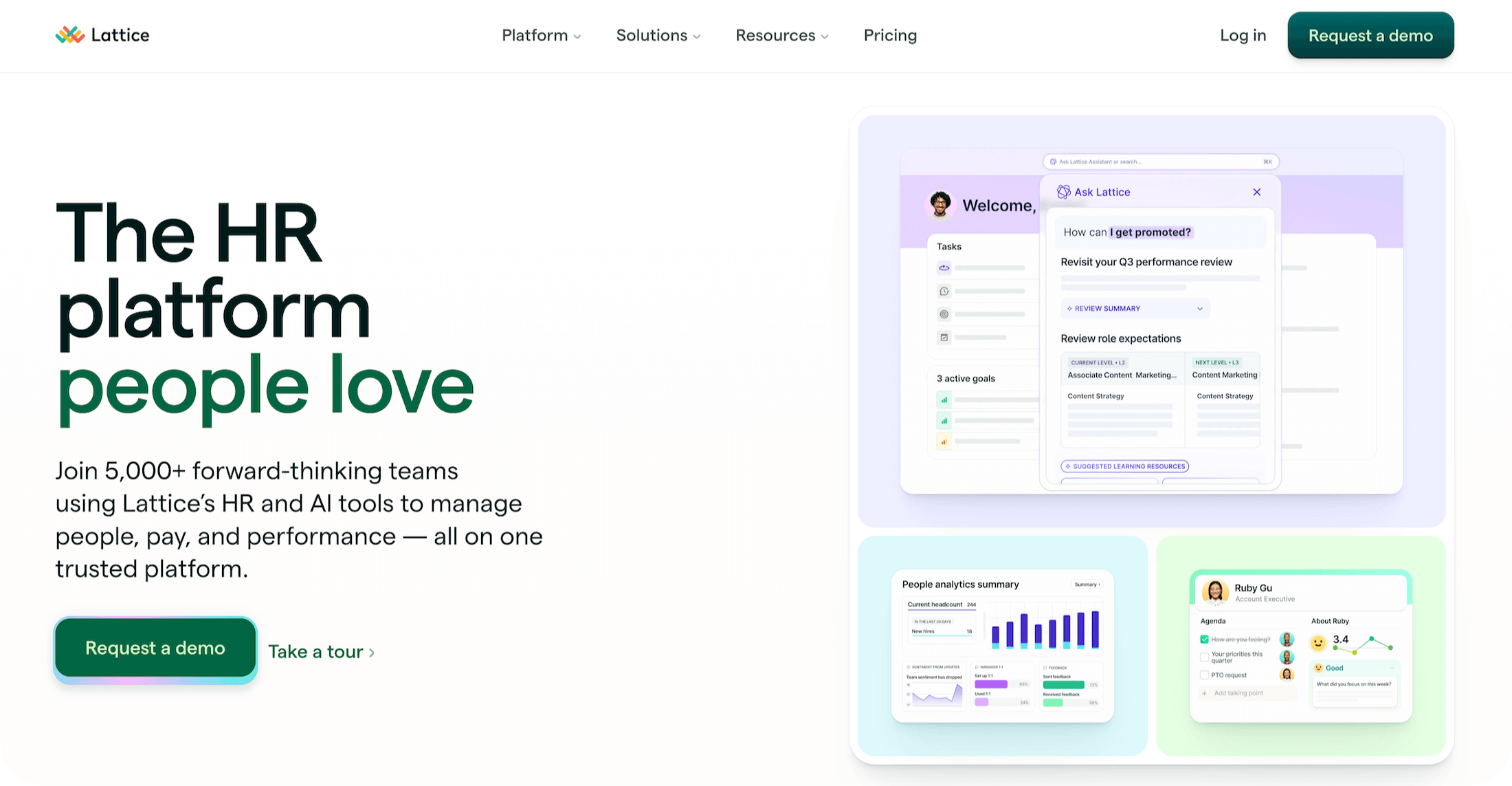
Lattice is a performance management and employee engagement platform that connects recognition and feedback directly to career development.
The platform works well when performance management and engagement are closely linked, but its recognition capabilities are more limited than those of dedicated recognition platforms, and it doesn't include wellness or advanced listening tools.
Key features include:
- Performance reviews and OKR goal-setting with structured review cycles and OKR-style goal tracking
- Pulse surveys and engagement measurement to track sentiment over time
- 1:1 meeting tools, including built-in agendas and talking points
- Values-based recognition
- Employee career pathing with growth tools that let employees map out career paths and track progress
4. Energage
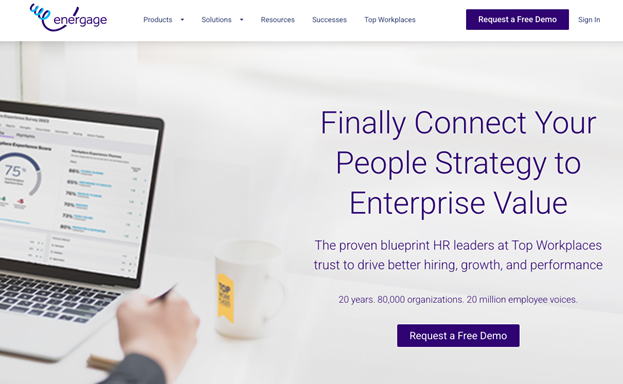
Energage is an employee experience platform built around survey-driven insights. It collects feedback on workplace culture, leadership, and communication, and then uses the data to help HR leaders identify where engagement is strong.
Energage can support organizations of various types, including local government agencies looking to benchmark their culture against peer organizations. It's worth mentioning that this is primarily a listening and analytics platform. It has recognition capabilities, but does not include wellness features.
Key features include:
- Customizable workplace employee surveys
- Department, tenure, and demographic-level analytics
- “Top Workplaces” benchmarking against 80,000+ organizations
- Manager check-ins and real-time feedback tools
- Action planning based on survey results
5. Qualtrics
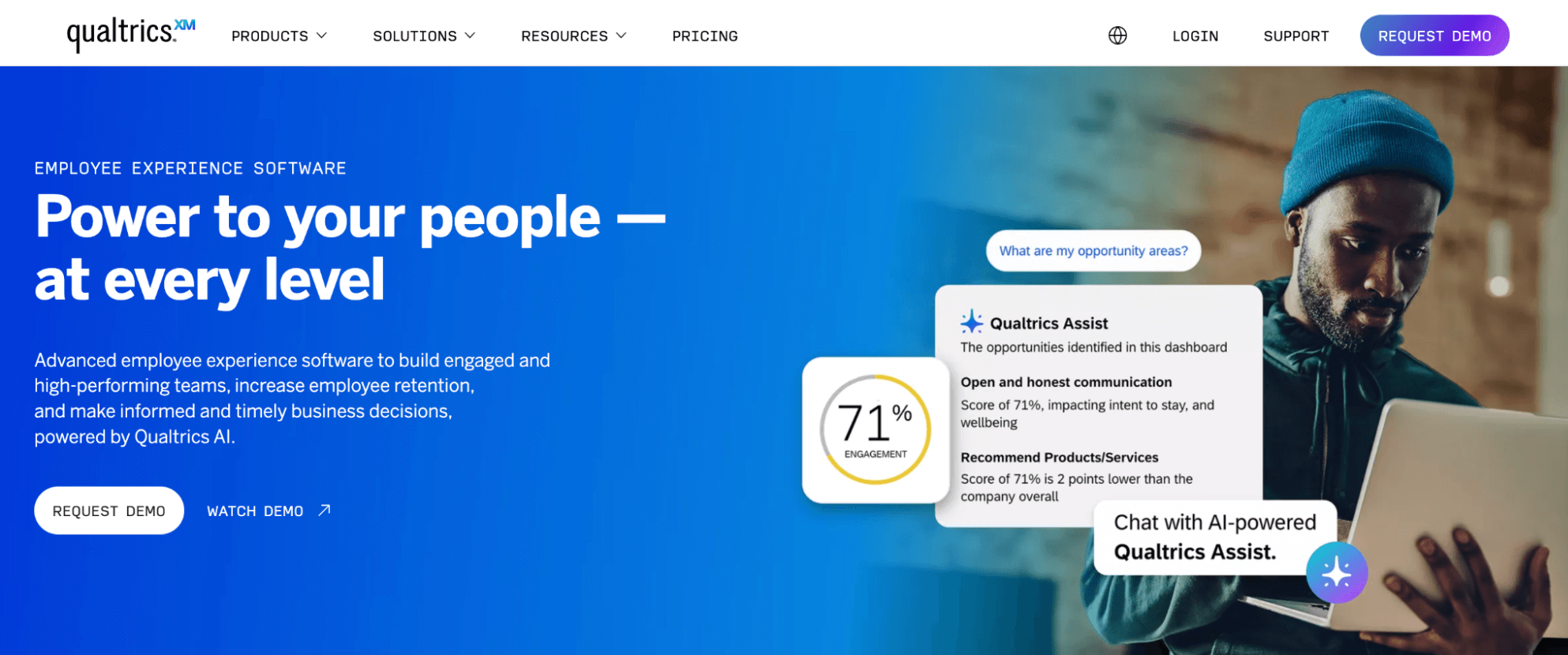
Qualtrics is an enterprise experience management platform built to help large organizations automate and scale their employee listening programs. Its survey infrastructure is research-grade and designed to help human resources teams that need advanced measurement tools.
Federal government and state agencies also use Qualtrics to improve the customer experience of public-facing services by collecting and analyzing constituent feedback alongside employee data. That said, it's primarily a listening platform, so recognition, rewards, and wellness aren't included.
Key features include:
- Employee lifecycle surveys
- Advanced filtering and cross-tabulation analytics
- Text analytics for open-ended responses
- Feedback-to-action planning tools
- Government-grade security and compliance
6. UKG
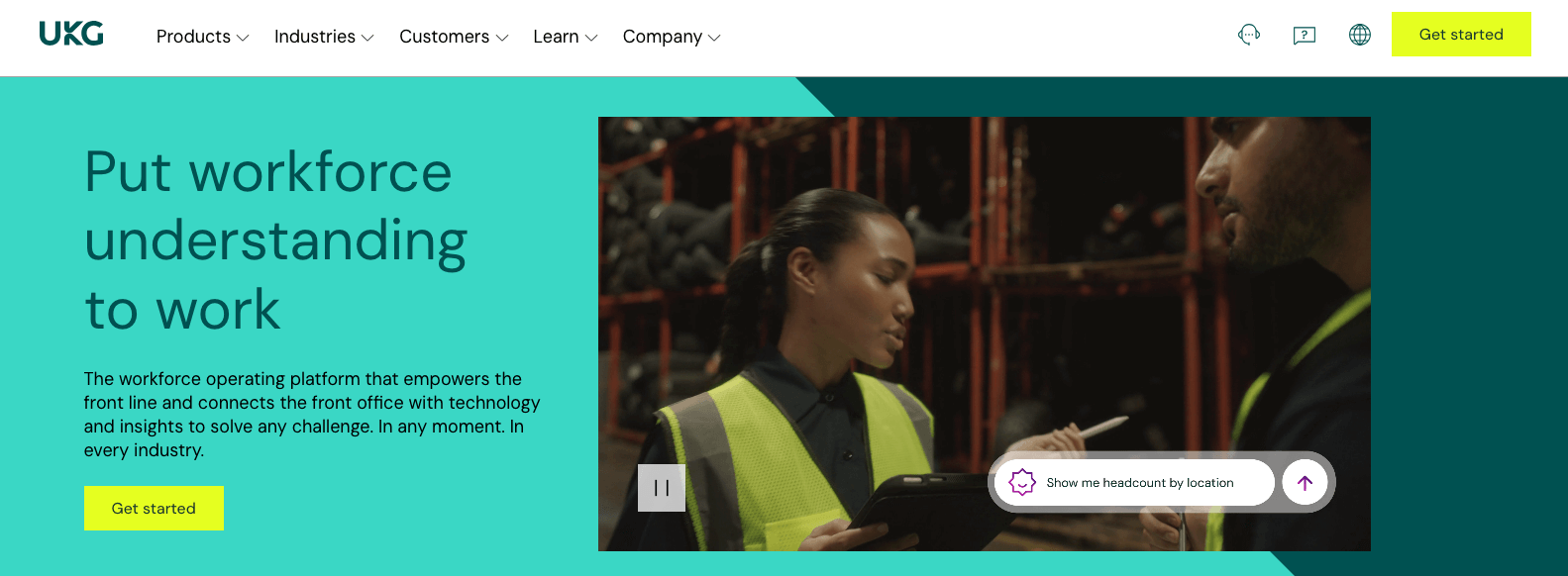
UKG is a workforce management and human capital management platform. Many of the platform's key features include operational HR tools for payroll, scheduling, time tracking, and compliance.
It also includes employee listening and engagement tools as part of its broader suite. Government agencies that need a full HR system will benefit most from UKG, but other options provide better recognition, listening, and wellness capabilities.
Key features include:
- Scheduling and labor management
- Payroll and benefits administration
- Pulse surveys and employee feedback tools
- Employee self-service portal
- Combined workforce and engagement analytics
7. Workday's Peakon Employee Voice
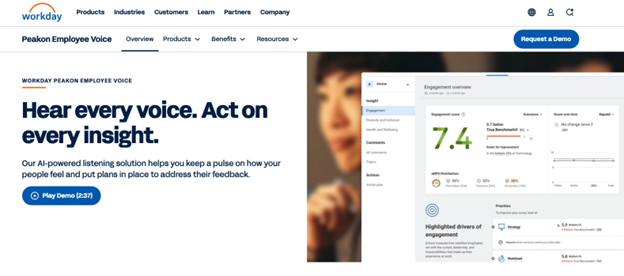
Workday Peakon Employee Voice is a continuous listening platform that sends automated, recurring pulse surveys to employees. On top of that, the platform uses AI to turn the responses into prioritized recommendations for HR leaders and managers. It's useful for teams to build a real-time picture of how sentiment is changing and what can be done to create more engaged employees.
For agencies already running Workday HCM, Peakon helps streamline the listening process by automatically syncing employee data. But Peakon doesn't include recognition, rewards, or wellness, so you'll need additional integrated tools to act on your insights.
Key features include:
- Automated recurring pulse surveys
- AI-powered driver analysis and attrition forecasting
- Manager dashboards with prioritized action recommendations
- Anonymous commenting with two-way response capability
- Benchmarking against industry and public sector peers
- Native Workday HCM integration
Give Your Government Workforce Better Recognition Culture With Terryberry
Government organizations use Terryberry's all-in-one employee engagement platform to measure and benchmark engagement, identify churn risks, and take action with programs built for how the public sector actually operates.
Terryberry helps you:
- Identify what's driving disengagement across departments, job classifications, and tenure levels, and act on it before people leave.
- Launch recognition and wellness programs tailored to government constraints, with tools to reach every employee regardless of where they work.
- Prove your program's impact with centralized analytics that connect recognition and wellness data to retention outcomes, so you can walk into budget reviews with clear evidence.
Ready to build a recognition culture your government workforce appreciates? Schedule a personalized Terryberry demo today.