December 15, 2025


In 2024, only 30% of American workers were engaged at work, while 18% were actively working against their employers’ interests. This disengagement crisis costs organizations $8.9 trillion globally in lost productivity—a staggering figure that transforms employee engagement from a ‘nice-to-have’ HR program into an urgent business imperative.
Over the past decade, organizations have increasingly recognized the impact of employee engagement on both financial and operational outcomes, making it a central focus for sustainable business growth.
The data is unforgiving: actively disengaged employees cost organizations 34% of their salary in lost productivity, creating a hidden drain on resources that most business leaders dramatically underestimate. Yet despite overwhelming evidence linking employee engagement to bottom line results, many organizations continue treating engagement as a soft initiative rather than a strategic lever for business success.
C-suite leadership plays a critical role in championing employee engagement initiatives and fostering a culture of trust and transparency, ensuring these efforts are embedded throughout the organization. From dramatic cost reductions to measurable revenue growth, the financial impact of prioritizing employee engagement extends far beyond traditional human resources metrics.
This comprehensive guide presents the quantifiable business case for employee engagement, providing executives and HR leaders with the data-driven arguments needed to secure investment and drive organizational transformation.
Why Employee Engagement Demands Immediate Business Attention
The current state of workplace engagement represents one of the most significant untapped opportunities for business improvement in modern organizations. Recent data reveals a stark reality: while businesses invest heavily in technology, processes, and market expansion, they’re hemorrhaging value through a fundamentally disengaged workforce.
According to Gallup’s latest research, only 30% of American workers demonstrate genuine engagement with their roles and organizations. More concerning, 18% are actively disengaged—employees who not only lack commitment but also actively undermine their colleagues and organizational goals.
These disengaged employees spread negativity, miss deadlines, and have more accidents, creating ripple effects that extend throughout the entire organization. Business units in the bottom quartile of engagement consistently underperform those in the top quartile across key business outcomes, highlighting the critical impact of engagement levels on organizational success.

The global cost of this engagement crisis reaches $8.9 trillion in lost productivity annually. To put this figure in perspective, that's more than the entire GDP of Germany and Japan combined. For individual organizations, the impact is equally devastating: actively disengaged employees cost their employers 34% of their annual salary in lost productivity through reduced output, increased errors, and negative influence on team dynamics.
This productivity drain manifests in multiple ways across business units. Disengaged employees demonstrate lower quality work, miss more deadlines, require additional management oversight, and contribute to higher stress levels among colleagues. The indirect costs include increased management time spent addressing performance issues, higher rates of customer complaints, and the opportunity cost of unrealized innovation and improvement.
What makes this crisis particularly urgent is its compound effect on organizational success. Unlike one-time costs or temporary market challenges, low engagement creates persistent drag on every aspect of business performance.
Conversely, companies with highly-engaged teams consistently outperform their peers across virtually every key performance indicator, while those with disengaged workforces struggle to maintain competitiveness even in favorable market conditions. Organizations with cultures aligned to the company's values foster higher engagement and innovation, further amplifying the benefits of a positive workplace environment.
The business case for immediate attention becomes clear when considering that employee engagement serves as a leading indicator for other critical outcomes. Organizations that prioritize employee engagement see improvements in customer loyalty, safety records, quality metrics, and financial performance within months of implementing comprehensive engagement programs.
The Financial Impact of Employee Engagement on Your Bottom Line
The financial benefits of employee engagement extend far beyond abstract productivity improvements, delivering measurable cost reductions and revenue increases that directly impact organizational profitability.
Three critical areas demonstrate the most significant financial returns: turnover reduction, absenteeism management, and enhanced stock performance.
1. Dramatic Reduction in Turnover Costs
Voluntary turnover represents one of the most expensive consequences of low employee engagement, with American businesses losing $1 trillion annually to preventable departures. Reducing turnover is a primary driver of cost savings in employee engagement programs. The typical replacement cost for employees earning under $50,000 equals 33% of their annual salary, while specialized roles often require investments exceeding 100% of annual compensation.
Consider the mathematics for a mid-sized company with 500 employees and average salaries of $60,000. With industry-standard turnover rates of 15%, this organization faces annual replacement costs of approximately $1.5 million.
The estimated cost to replace a $10-per-hour retail employee is approximately $3,300, and for healthcare organizations, recruiting costs for a full-time employee can reach $61,000. However, highly engaged teams reduce turnover by 51% according to Gallup research, potentially saving $765,000 annually in direct replacement costs alone.
These calculations become even more compelling when accounting for hidden turnover costs. Beyond recruiting costs, organizations must factor in lost institutional knowledge, reduced productivity during transition periods, training investments for new hires, and the impact on customer relationships. Turnover also affects the productivity of other employees who must compensate for the missing team member.
Engaged employees demonstrate higher retention rates not only because they feel valued, but because they understand how their roles contribute to organizational success and maintain stronger connections with colleagues and managers. Plus, engaged employees are less likely to seek other jobs, and one in four non-engaged employees are likely to leave within their first year.
Retention benefits compound over time as engaged employees develop deeper expertise, stronger client relationships, and more valuable institutional knowledge. Long-term employees in engaged organizations become force multipliers, mentoring new team members, driving process improvements, and serving as cultural ambassadors who attract and retain other high-performers.
2. Significant Decrease in Absenteeism Expenses
Absenteeism costs American businesses $225.8 billion annually, according to CDC data, representing both direct wage costs for unproductive time and indirect expenses from coverage, overtime, and delayed projects. Engaged teams reduce absenteeism by 78%, creating substantial savings for organizations of all sizes.
The distinction between absenteeism and presenteeism proves crucial for understanding the full financial impact. While absenteeism involves employees missing work entirely, presenteeism occurs when workers attend but operate at reduced capacity due to illness, stress, or disengagement.
Wellness programs that support engagement deliver particularly strong ROI, with some organizations reporting $3-6 returns for every dollar invested. These programs work synergistically with engagement initiatives because they address underlying factors that contribute to both health issues and workplace dissatisfaction.
Employees feel valued when organizations invest in their well-being, leading to stronger emotional connections, reduced stress-related absences, and increased productivity
The financial calculations extend beyond immediate cost savings. Organizations with highly engaged workforces report healthcare costs nearly 50% lower than companies with high-pressure, low-engagement cultures. This reduction stems from lower stress levels, better work-life balance, and proactive health management among engaged employees who feel supported by their organizations.
3. Enhanced Stock Performance and Financial Resilience
Public companies with highly engaged workforces consistently outperform market averages. For example, as DTE Energy’s employee engagement scores increased over several years, stock price performance closely tracked these improvements, ultimately outperforming industry benchmarks by significant margins.
Furthermore, engaged workforces provide competitive advantages during market fluctuations and economic uncertainty. Organizations with strong engagement maintain higher productivity during challenging periods, adapt more quickly to changing conditions, and preserve customer relationships through consistent service delivery. This resilience translates into more stable earnings and reduced volatility compared to competitors with disengaged teams.
The compound effect of engagement on financial performance becomes evident in long-term studies tracking organizations over multiple business cycles.
Companies that consistently prioritize employee engagement demonstrate superior profit growth, higher returns on investment, and better positioning for sustainable expansion compared to those treating engagement as a secondary concern. Organizations that make employee engagement a strategic priority are better positioned for long-term success and sustained growth.
Productivity and Performance Benefits That Drive Revenue

Employee engagement serves as a catalyst for productivity improvements that directly translate into increased revenue and competitive advantage. Providing constructive feedback and implementing mentorship programs are proven strategies for boosting employee engagement and driving performance improvements.
The relationship between engagement and performance operates through multiple mechanisms that compound to create substantial business benefits.
Measurable Productivity Improvements
Deloitte research demonstrates that organizations investing in employee recognition see 14% improvements in engagement, productivity, and performance. This improvement stems from engaged employees’ willingness to contribute discretionary effort—the extra initiative and energy that distinguishes exceptional performance from merely meeting minimum requirements.
Engaged employees convert inputs like time, skills, and resources into outputs more effectively. They demonstrate higher focus, make fewer mistakes, and approach challenges with problem-solving mindsets rather than simply completing assigned tasks. This efficiency gain becomes particularly valuable in knowledge work environments where quality and innovation matter more than raw output volume.
The reduction of presenteeism plays a crucial role in actual productivity gains. While traditional metrics might show employees present and working, engaged employees operate at full cognitive and emotional capacity. They bring creativity, enthusiasm, and proactive thinking to their roles rather than simply going through motions while mentally checked out.
Specific productivity metrics consistently favor organizations with highly engaged teams. These business units demonstrate 18% higher sales productivity, 23% higher profitability, and 10% higher customer loyalty compared to less engaged counterparts. The consistency of these results across industries and geographies indicates that engagement benefits are fundamental rather than situational.
Innovation and Competitive Advantage
Google’s famous 20% time policy—allowing employees to spend one day per week on passion projects—generated innovations worth billions, including Gmail and AdSense. This approach works because engaged employees naturally seek opportunities to improve processes, solve problems, and contribute beyond their immediate job responsibilities.
Positive company culture drives employee creativity by creating psychological safety for experimentation and risk-taking. Engaged employees feel comfortable proposing new ideas, challenging existing processes, and collaborating across traditional boundaries. This openness accelerates innovation cycles and helps organizations adapt to changing market conditions.
The competitive edge gained through continuous improvement culture compounds over time. Engaged employees proactively identify inefficiencies, suggest process improvements, and implement solutions without requiring constant management oversight. This self-directed optimization creates operational advantages that competitors struggle to replicate through technology or process changes alone.
Current employees in engaged organizations serve as innovation networks, sharing knowledge, building on each other’s ideas, and creating institutional learning that benefits the entire organization. This collective intelligence becomes a sustainable competitive advantage as the organization’s capability to innovate exceeds what individual contributors could achieve independently.
Customer Experience and Revenue Growth Through Engagement
The connection between employee engagement and customer experience creates a multiplier effect that drives revenue growth through improved service delivery and stronger customer relationships. Engaged employees become natural brand ambassadors who deliver exceptional experiences that differentiate organizations in competitive markets.
Superior Customer Service Delivery
The correlation between employee satisfaction and customer satisfaction scores demonstrates one of the most direct paths from engagement to revenue. Engaged employees show genuine empathy, listen actively to customer concerns, and take personal ownership of problem resolution rather than simply following scripts or procedures.

Engaged employees understand how their customer interactions impact organizational success, leading them to go beyond minimum service standards. They anticipate customer needs, proactively address potential issues, and create positive experiences that build customer loyalty. This approach proves particularly valuable in today’s fragmented market where customers have numerous alternatives for most products and services.
The quality of customer interactions improves significantly when employees feel valued and supported by their organizations. Engaged employees bring positive energy to customer interactions, demonstrate patience under pressure, and maintain professional standards even in challenging situations. These behaviors directly influence customer perception and willingness to continue business relationships.
Workforce engagement also enables better collaboration between customer-facing teams and internal support functions. Engaged employees work across departments to resolve customer issues, share feedback that improves products and services, and maintain consistency in customer experience regardless of interaction channel.
Improved Hiring and Referral Success
Engaged employees become powerful recruiting assets who refer qualified candidates from their professional networks. These referrals typically demonstrate higher quality, better cultural fit, and longer retention compared to candidates sourced through external recruiting efforts. The cost savings from employee referrals versus traditional recruiting can reach thousands of dollars per hire.
The Employee Net Promoter Score (eNPS) concept measures how likely employees are to recommend their organization as a place to work. Organizations with high eNPS scores access larger talent pools, reduce recruiting costs, and accelerate hiring processes because referrals come pre-qualified with positive impressions of the company culture.
Engaged employees also reduce negative word-of-mouth about the organization, protecting employer brand reputation in increasingly transparent job markets. Social media and employer review sites amplify both positive and negative employee experiences, making engagement a crucial factor in maintaining a competitive recruiting advantage.
Strong employer brand reputation creates virtuous cycles where top talent actively seeks opportunities with the organization, reducing time-to-fill for critical positions and improving overall talent quality. This talent advantage enables better customer service, innovation, and business growth compared to competitors struggling with recruitment challenges.
The Strategic Power of Employee Recognition
Employee recognition stands as a cornerstone of any effective employee engagement program, delivering far-reaching benefits that extend well beyond simple morale boosts. When organizations make recognition a consistent and visible part of their culture, they unlock the full potential of engaged employees and set the stage for lasting organizational success.
Recognizing employees for their contributions—whether through formal awards, public praise, or everyday acknowledgments—sends a powerful message that employees are valued and their work matters. This sense of appreciation is closely tied to higher employee satisfaction, as individuals who feel recognized are more motivated to excel and align their efforts with the company’s values and goals.
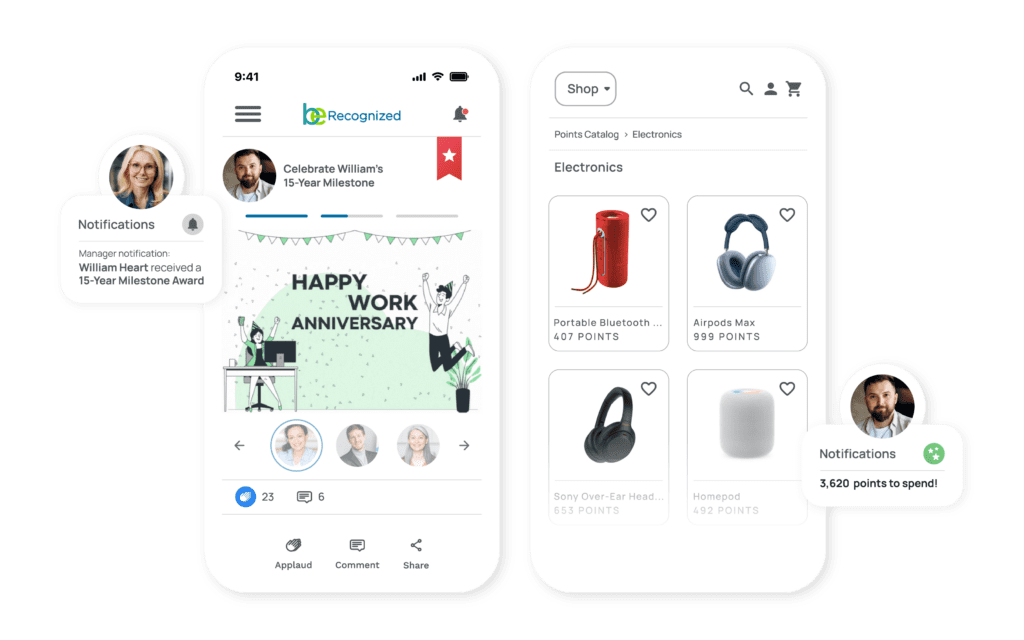
Furthermore, the impact of employee recognition on engagement is both immediate and long-term. Highly engaged employees who regularly receive recognition are more likely to go above and beyond in their roles and demonstrate greater initiative, creativity, and commitment.
This heightened engagement translates directly into better customer service, as recognized employees are more enthusiastic, attentive, and empowered to solve problems for customers. The result is increased customer loyalty—a key driver of repeat business and positive word-of-mouth referrals.
From a business perspective, the strategic use of employee recognition programs delivers tangible benefits to the bottom line. Organizations that prioritize recognition see measurable improvements in key performance indicators such as productivity, retention, and profitability. According to research, companies with strong recognition cultures experience up to 31% lower voluntary turnover rates and significantly higher engagement scores compared to those that overlook this critical element.
Moreover, employee recognition fosters a positive feedback loop throughout the entire organization. As employees observe their peers being acknowledged for outstanding work, they are inspired to contribute at higher levels, reinforcing a culture of excellence and continuous improvement.
This collective momentum not only supports business success but also strengthens the company’s reputation as an employer of choice.
In summary, employee recognition isn't just a feel-good gesture—it is a strategic investment in employee engagement that drives organizational success, customer loyalty, and sustainable business growth. By making recognition a core part of their engagement strategy, business leaders can ensure that employees feel valued, motivated, and committed to delivering exceptional results.
Building Your Business Case for Leadership Buy-In

Creating a compelling business case for employee engagement requires translating qualitative benefits into quantifiable business impact that resonates with financially-focused decision makers. The most effective business cases combine immediate cost savings with long-term strategic advantages.
Essential Components of an Effective Business Case
A successful business case begins with an executive summary that positions employee engagement as a strategic business driver rather than an HR initiative. This summary should highlight key ROI projections, immediate cost savings opportunities, and competitive advantages gained through improved engagement levels.
A current-state assessment forms the foundation of your argument by quantifying existing program gaps and their financial costs. Include metrics such as current turnover rates and associated replacement costs, absenteeism expenses, customer satisfaction scores, and productivity measures. This baseline demonstrates the opportunity for improvement and helps calculate potential returns on engagement investments.
Your proposed solution should then integrate engagement initiatives with existing business processes and demonstrate scalability across the entire organization. Avoid positioning engagement as an additional program that competes for resources; instead, show how engagement investments enhance the effectiveness of current initiatives in areas like quality improvement, safety, customer service, and innovation.
Outcome expectations must include specific timelines and success metrics that align with business planning cycles. Conservative projections typically include 10% engagement score improvements and 8% turnover reduction within the first year, with compound benefits building over subsequent periods.
Overcoming Leadership Objections
Address concerns about engagement being “soft” by focusing exclusively on hard business metrics and avoiding emotional appeals about employee happiness. Frame discussions around profit improvement, cost reduction, risk mitigation, and competitive advantage rather than workplace satisfaction or culture.
Demonstrate how unified engagement platforms eliminate silos between HR, operations, customer service, and other functions while reducing management complexity. Show how engagement data integration provides insights that improve decision-making across multiple business areas rather than creating additional reporting requirements.
Position engagement investments as minimal cost increases compared to potential savings and revenue benefits. Use specific calculations showing how turnover reduction alone can justify engagement program costs, with increased productivity levels, quality gains, and customer loyalty benefits providing additional returns.
Leverage success stories and case studies from similar organizations to illustrate proven value and reduce perceived implementation risk. Focus on measurable outcomes achieved by comparable companies rather than theoretical benefits or best-practice recommendations.
Data-Driven Approach to Engagement Investment
Modern employee engagement programs rely on systematic data collection and analysis to identify improvement opportunities, track progress, and demonstrate ROI. This analytical approach transforms human resources from a cost center into a strategic function that drives measurable business results.
Making HR a Strategic, Data-Driven Function
Employee surveys and pulse checks provide the foundation for engagement programs, but their value depends on asking the right questions and analyzing results in business context. Effective surveys identify specific improvement areas such as manager relationships, role clarity, recognition practices, and career development opportunities rather than simply measuring overall satisfaction.
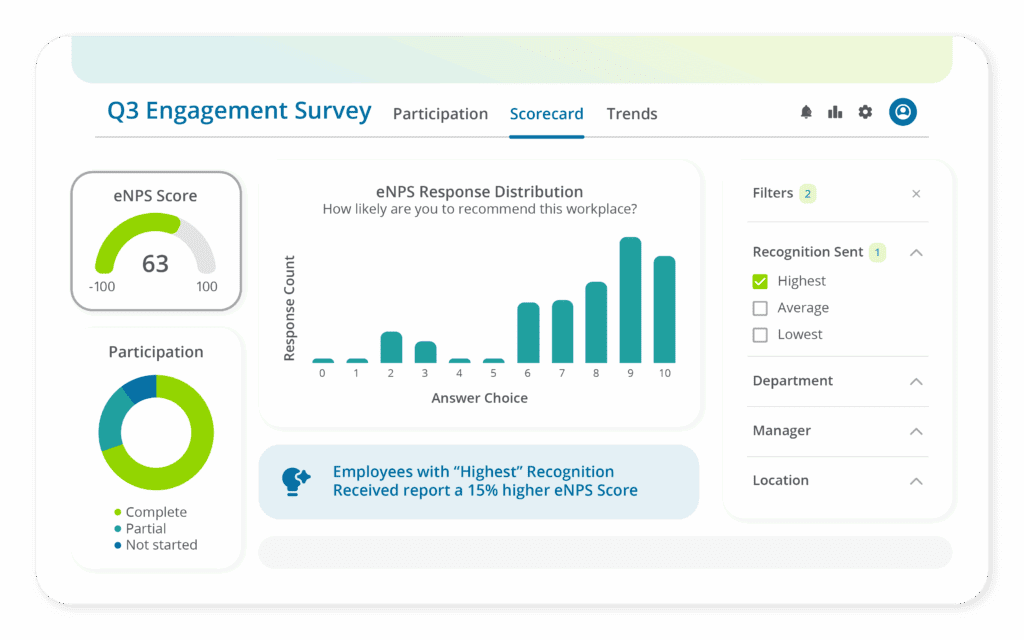
Technology solutions enable scalable, cost-effective data collection that provides real-time insights into engagement levels across different teams, departments, and demographics. These platforms integrate with existing HR systems to correlate engagement data with performance metrics, turnover patterns, and customer outcomes.
Continuous feedback loops ensure engagement programs adapt to changing employee needs and business conditions. Regular pulse surveys, focus groups, and manager check-ins provide ongoing insights that enable proactive adjustments before engagement issues impact business results.
Data analysis reveals patterns and trends that guide targeted interventions rather than broad, generic programs. For example, data might show that engagement varies significantly between different manager styles, locations, or career stages, enabling customized approaches that deliver better results with more efficient resource allocation.
Key Metrics to Track ROI and Success
Primary engagement KPIs include engagement scores, retention rates, productivity measures, and customer satisfaction ratings. These metrics provide direct indicators of engagement program effectiveness and enable correlation analysis with business outcomes.
Engagement scores typically improve 10% within the first year of comprehensive programs, while retention improvements of 8% represent substantial cost savings for most organizations. Productivity measures vary by role and industry, but consistently show positive correlation with engagement levels across different business contexts.
Secondary metrics capture broader organizational benefits, including referral rates, absenteeism patterns, healthcare costs, innovation measures, and safety records. These indicators demonstrate the compound effects of engagement beyond immediate productivity and retention improvements.
Cost-of-turnover calculations provide essential tools for ongoing measurement and business case reinforcement. These worksheets help organizations track actual savings from reduced turnover while accounting for hidden costs such as training time, lost productivity during transitions, and customer relationship impact.
Implementation Strategy for Maximum Business Impact
Successful engagement program implementation requires phased approaches that minimize risk while demonstrating early wins to build momentum and secure ongoing support. The most effective strategies focus on sustainable culture change rather than short-term program initiatives.
Phased Approach to Minimize Risk and Maximize Success
Pilot programs test engagement strategies with specific teams or departments before organization-wide rollout. These pilots provide proof-of-concept data, identify implementation challenges, and generate success stories that support broader adoption. Typical pilot programs run 90 days with clearly defined success metrics and regular progress reviews.
Leadership commitment proves crucial for engagement program success, requiring people, process, and culture focus rather than relying solely on technology solutions. Executive sponsorship demonstrates organizational priority and provides resources necessary for meaningful change.
Implementation timelines typically span three months for initial deployment with high participation expectations across all employee levels. Success requires clear communication about program goals, regular feedback opportunities, and visible leadership participation in engagement activities.
Continuous improvement culture adapts engagement strategies based on employee feedback and changing business needs. Regular program evaluation ensures initiatives remain relevant and effective while building institutional capability for ongoing engagement management.
Long-Term Strategic Benefits

Employee engagement serves as a foundation for sustainable business growth and organizational resilience. Engaged workforces adapt more readily to market changes, support innovation initiatives, and maintain performance standards during challenging periods.
The compound benefits of reduced turnover, improved customer loyalty, and increased innovation create competitive advantages that strengthen over time. Organizations with consistently high engagement build institutional knowledge, stronger customer relationships, and cultural capabilities that competitors struggle to replicate.
Engaged workforces support organizational change initiatives including digital transformation, market expansion, and operational improvements. These capabilities prove essential for long-term competitiveness as business environments become increasingly dynamic and uncertain.
The business case for employee engagement ultimately positions engagement as an investment in future business success rather than simply addressing current challenges. Organizations that prioritize employee engagement create sustainable competitive advantages through their most important asset: their people.
Building Your Future on Engaged Employees
The business case for employee engagement has evolved from theoretical benefits to quantifiable returns that directly impact organizational success. With $8.9 trillion in global productivity losses at stake and proven strategies available for improvement, organizations can no longer afford to treat engagement as optional.
The financial evidence is overwhelming: engaged teams deliver 23% higher profitability, 51% lower turnover, and 78% reduction in absenteeism while driving innovation and customer loyalty. These benefits compound over time, creating sustainable competitive advantages that strengthen organizational resilience and market position.
Forward-thinking business leaders recognize that prioritizing employee engagement isn’t just good for employees—it’s essential for business success in competitive markets where talent, innovation, and customer experience determine winners and losers.
Begin building your business case today by assessing current engagement levels, calculating the cost of disengagement in your organization, and identifying the specific financial benefits that resonate most strongly with your leadership team. The investment in employee engagement pays dividends through every aspect of business performance, making it one of the highest-return strategies available to modern organizations.