February 6, 2026


Working in healthcare is inherently demanding. Doctors, nurses, administrators, and support staff typically work long shifts, endure constant pressure, and shoulder the emotional weight of patient care.
When these demands aren’t matched with the right support systems, it can result in rising burnout rates, lower team morale, and higher turnover. While the healthcare industry continues to face these challenges, many organizations are making meaningful progress toward solving them.
By investing in tailored employee engagement programs, they’re energizing teams, improving retention, and empowering their workforce to deliver a better patient experience.
Effective engagement in healthcare should make employees feel recognized, supported, and safe every day. In our experience working with over 40,000 companies, the most impactful employee engagement initiatives share three traits:
- They’re tailored to clear objectives. Engagement programs typically have multiple, interconnected goals. For example, let’s say your overall objective is to reduce burnout by boosting workplace safety and supporting employee well-being. So your well‑being program’s goal might be to build specific healthy habits, while the safety initiative focuses on reducing incidents by 20% each month.
- They’re designed to reflect your workforce’s unique needs. That includes making them friendly for busy frontline workers, supporting microcultures, adding the right incentives, and more.
- They’re driven from the top down. Leadership involvement is key, whether that means involving senior executives in ceremonies or empowering frontline managers to recognize employees in their day-to-day work.
That’s why we created this guide. It’s designed to help healthcare organizations choose employee engagement ideas that align with operational priorities and can be implemented at scale.
Inside, you’ll find:
- A scientific framework for quantifying employee engagement and understanding the factors that impact your workforce specifically.
- 15+ employee engagement ideas for healthcare, including practical tips that helped Terryberry customers achieve results like a 50% reduction in new-hire turnover.
- A detailed walkthrough on how to bring your engagement ideas to life and scale your initiatives with Terryberry’s integrated employee engagement software for healthcare. You can manage rewards, track budgets, tailor programs to strategic objectives, and prove ROI with our fully integrated system.
Schedule a personalized demo to discover how Terryberry empowers healthcare organizations to engage their entire workforce.
What Drives Engagement and Retention in Healthcare?
No two employees feel precisely the same way toward their jobs, coworkers, managers, and workplace culture. Their individual experiences, underlying motivations, and responses to their work environment all influence their level of engagement at work.
While you can’t measure each employee's exact sentiment and motivations, you can track trends across specific segments of your workforce. Research shows that a specific set of underlying factors consistently impacts employee engagement.
You can obtain a fairly accurate overview of your workforce’s engagement by measuring these factors and identifying common themes. That’s where our culture model comes in.
With the help of three independent PhD researchers, we developed a model to quantify the impact of a workplace’s culture on employee engagement and retention. It uses six engagement indicators, which are:
- Belonging: A culture where everyone feels welcome promotes team collaboration, supports employees’ mental health, and keeps them connected to your culture. Strong teamwork in the healthcare sector is also directly linked to better outcomes and higher retention rates.
- Leadership: Employees are more loyal when they feel positively toward leadership. Make sure you trust the right people in these roles—managers who can navigate complex situations, empower their teams, provide constructive feedback, and defuse high-stress situations.
- Purpose: When healthcare workers rally around shared goals—such as improving the quality of care—and clearly see how their work makes a difference, they become more engaged.
- Well-being: Healthcare professionals are more prone to burnout and physical injuries because of their physically, mentally, and emotionally demanding jobs. Employers that holistically support employee well-being build a more focused, motivated workforce—and boost retention along the way.
- Empowerment: When employees have the right tools, plus the freedom to take charge and learn from mistakes, they gain confidence, take ownership, and become champions of your culture.
- Equity: Employees stick around when they see a promising future at your company. Make sure you have systems in place that give them the confidence and support for their future ambitions.
Our engagement baseline survey is designed to measure and quantify these factors, using 38 questions that cover all six. Running the survey returns six Likert scores for each indicator, allowing you to identify which factors drive engagement and which hold you back. Then, you can:
- Combine these results with eNPS scores to identify which engagement factors most strongly drive employee turnover.
- Dig deeper into the scores of specific groups to uncover employee engagement trends. For example, do specific professions, such as nurses and caregivers, have below-average employee well-being scores? If so, this could mean they’re more prone to burnout than other groups.
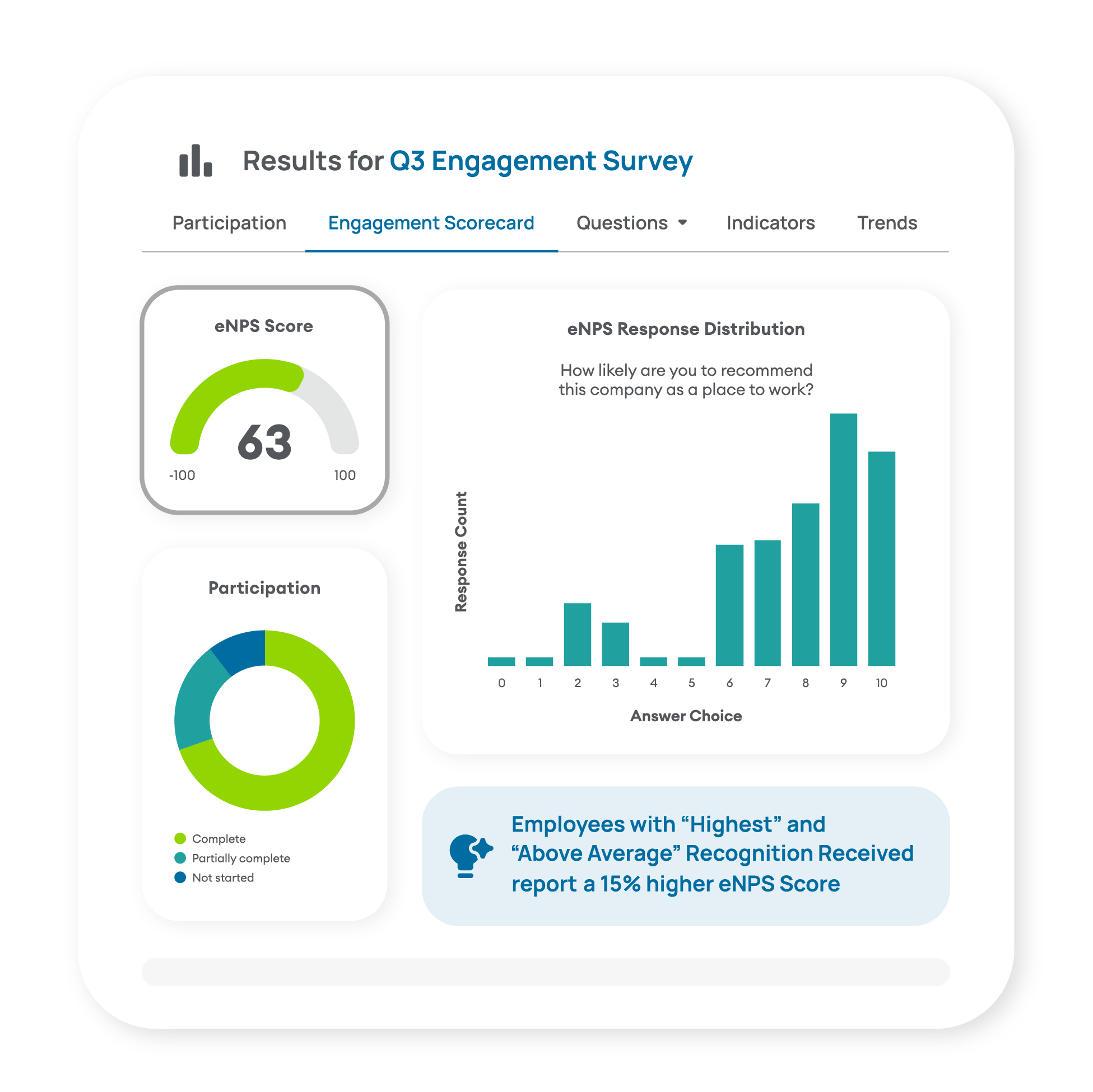
When you identify the specific factors holding your workforce back, you can confidently select engagement programs that address them head‑on.
15+ Employee Engagement Ideas for Healthcare
The right employee engagement programs can help you boost retention, reduce burnout, and keep people motivated at work.
Below, we outline the most effective employee engagement strategies for healthcare, explain the gaps they can help you address, and share insights from our own experiences.
Celebrate Your Workforce with Recognition Programs
Most of our healthcare clients start with employee recognition programs and gradually introduce additional engagement initiatives. These programs are popular starting points because:
- They’re among the most effective ways to boost retention and engagement across your entire workforce, unlike more niche initiatives.
- They can be tailored to specific goals, such as promoting core values or ensuring successful patient transfers.
- Employees at every level can drive them—whether that’s senior leadership, frontline managers, regular employees, or all three.
Here’s more on the three most common types of employee recognition programs in healthcare, and how you can implement them.
Manager Recognition
As healthcare staff navigate stressful workdays and long shifts, frontline managers are in the best position to support them, maintain motivation, and intervene when necessary.
Manager recognition programs empower frontline leaders with budgets they can use to reward their team’s contributions. This includes demonstrating core values, delivering passionate care, and quick thinking in emergencies—actions that boost morale, strengthen job satisfaction, and reinforce a positive employee experience.
You can tailor these programs to the needs and work environment of different teams and departments. For example, patient feedback programs celebrate nurses and other care workers who go above and beyond. When a patient leaves especially positive feedback, managers can broadcast it to the entire department or company and reward the caregiver.
Peer Recognition
Peer recognition builds on the foundations of your manager recognition program by engaging your entire workforce and helping build trust across different teams.
When teams are distributed across multiple physical locations and work various shifts, they have limited visibility into each other’s contributions.
Peer recognition can bridge the gap here by:
- Empowering people within a team to meaningfully recognize each other’s contributions
- Cultivating a shared sense of purpose and belonging across your workforce.
For example, Tidelands Health, the largest healthcare provider in coastal South Carolina, attributed a dramatic increase in engagement among evening and night-shift staff to peer recognition. Jeremy Stephens, the Associate VP of HR Operations, attributed this to the program’s “Recognition Wall”: day shift employees leave notes of appreciation on it for their counterparts to see.
As with manager recognition programs, you can tailor outcomes to each team and its unique contributions. For example:
- Care teams can recognize one another for assisting with patient transfers or covering another team member’s shift.
- Peers can recognize safety teams for their quick response to incidents.
- Employees can recognize one another for demonstrating core values or going above and beyond to help them.
When delivering these programs, adapting them to each team’s existing culture can significantly boost participation—just like the “Recognition Wall” did for Tidelands Health.
Read more: This case study details how Tidelands Health increased engagement levels by almost 10% year-over-year with employee recognition programs.
Nomination Programs
Nomination programs allow peers to weigh in on one another’s unique contributions or achievements. These programs can be for internal awards, such as:
- Hospital Employee of the Month: Employees can nominate colleagues for consistent contributions, such as delivering outstanding patient care, de-escalating tense situations, or keeping their whole team motivated.
- Mentorship MVP: Recognize natural leaders who help team members through difficult moments. The ones that help them navigate stressful situations and understand patient needs, share constructive feedback, and inspire others to grow.
You can establish programs to nominate employees for distinguished industry awards, such as the DAISY Award or the AHCA Noble Caregiver Award, by developing a formal process where:
- Eligible individuals (employees or external people) may nominate someone for the award.
- Colleagues and patients can support an existing nomination.
- An internal panel reviews the nominees.
Personalize Employee Recognition with Terryberry
Terryberry’s employee recognition software lets you set up any type of recognition program and tailor it to your strategic objectives.
You can specify what people can recognize others for, such as demonstrating core values, going above and beyond, or assisting with a patient transfer. Alternatively, you can leave nominations open-ended so people can recognize one another at their discretion (manager recognition programs often do this).
Then, you can choose who can recognize people and customize approval workflows. Manager and peer recognition just involves specifying who can celebrate people.
But for nomination-based programs, you can further specify the number of required nominations and set up approval hierarchies.
Engaged employees are publicly recognized on Terryberry’s shared culture hub, which connects all your teams and employees here.
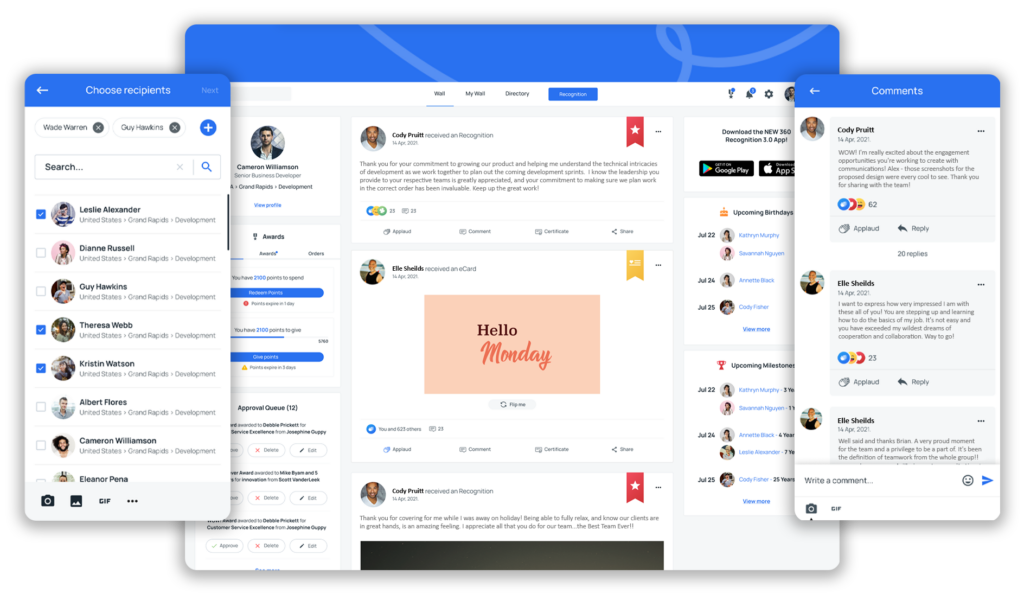
Terryberry’s culture hub connects employees across different teams, departments, and locations
From here, peers can join in to show support by liking or commenting on the posts. You can also enable post “boosting,” which allows people to share additional points with the recipient.
Read more: What’s the Best Employee Engagement Software for Healthcare?
Milestone Programs—Make Special Moments Memorable
Milestone programs commemorate personal and professional achievements, so teams can celebrate employees as they progress in their lives and careers. You can tailor these programs to specific strategic objectives, such as boosting retention, encouraging innovative ideas, or even promoting community service.
New Hire Milestone Programs
Many healthcare organizations, including hospitals and aged care facilities, struggle with high turnover among new hires. We’ve found that it’s especially common among younger workers. They join, rack up a year’s worth of work experience, and then accept an offer somewhere else.
We’ve helped healthcare companies tackle this problem with specialized programs that integrate new hires into their first year, achieving retention rates as high as 50% among this group.
New-hire programs set clear milestones—first day, week, month, two months, quarter, half year, etc.—and recognize the progress employees make along the way. For example, learning to use the EHS, assisting for the first time in a medical procedure, or completing compliance training.
Years of Service Awards
These programs are popular across industries for a reason—they do a great job of boosting long-term loyalty. Employee Years of Service Awards programs recognize employees’ tenure at the company, such as their first, third, fifth, tenth, and fifteenth years, culminating in a retirement ceremony.
You can tailor these programs to your workforce, specific goals, and budget. For example:
- Celebrating each individual’s achievements, such as recent promotions or completing training.
- Recognize the core values the recipient has demonstrated over the year.
Organizations also take different approaches to delivering these programs. Some go all-in on ceremonies with custom trophies or jewelry, while others keep it simple with plaques, gift cards, and signed thank-you notes from leadership.
Read more: Discover everything you need to know about launching a year of service awards program that boosts loyalty and retention.
Clinical Excellence Awards
Excellence awards can motivate engaged staff to achieve specific performance objectives or outcomes, such as:
- Increasing patient satisfaction scores, e.g., 95% or higher in surveys.
- Completing a specific number of safe surgeries or successful patient transfers.
- Suggesting new approaches to patient care that deliver proven results.
You can also tailor these programs to shared goals and celebrate the wins of entire teams or departments. For example:
- Reducing readmission rates
- Zero hospital-acquired infection streaks—e.g., for a quarter
- Meeting specific patient safety goals, e.g., reducing patient falls
- Reducing patient wait times
Set Up Custom Milestone Programs in Terryberry
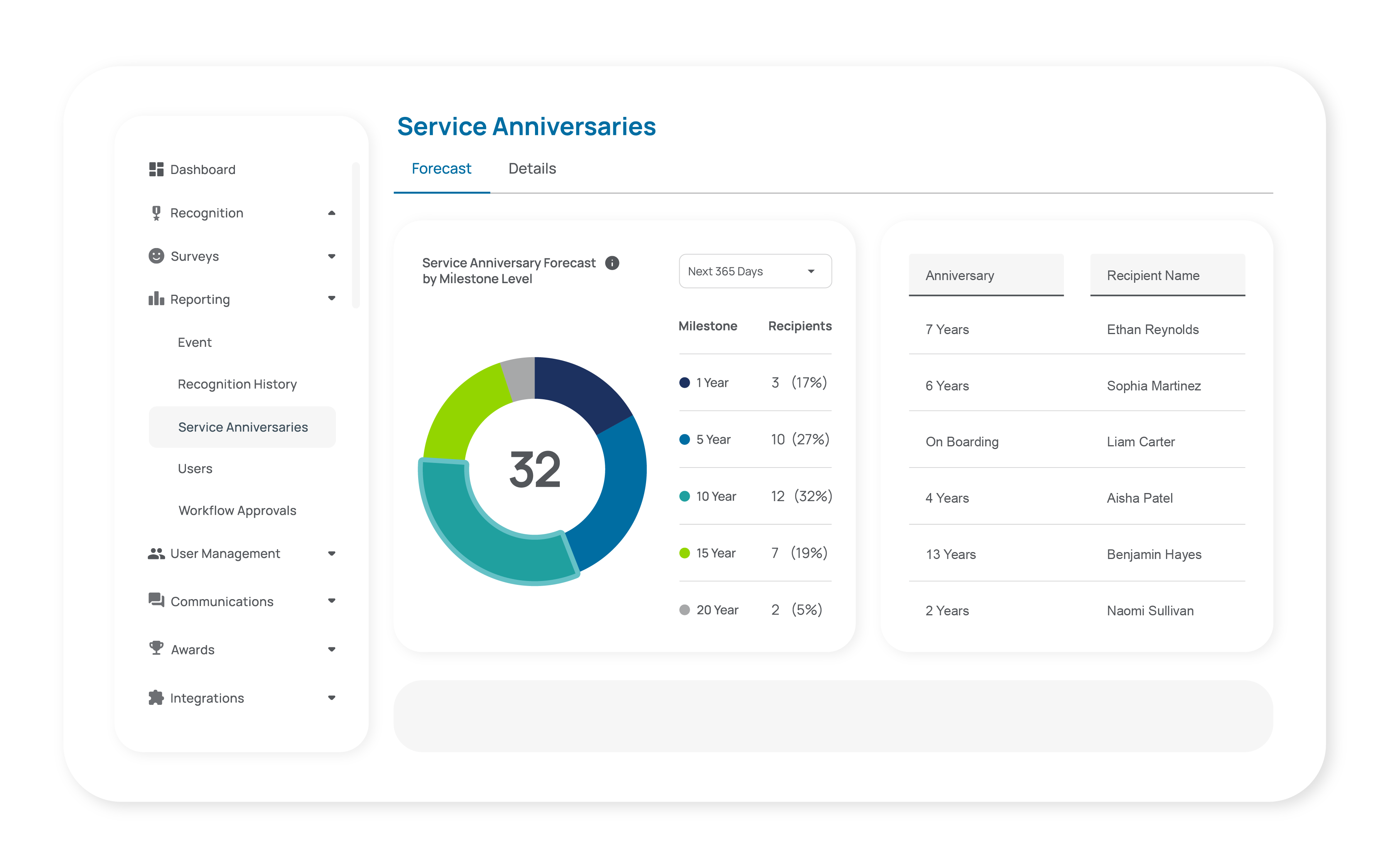
Terryberry makes it easy to scale engagement programs for both personal milestones (such as birthdays, engagements, and having a child) and professional milestones (such as long- and short-service anniversaries or performance incentive programs).
Our platform automatically tracks relevant milestones and sends reminders and approval requests as the dates near. For each milestone, you can either allocate specific rewards or allow employees to choose their own using either:
- The points system: Allocate a specific number of points to each milestone, e.g., 200 for their first year of service and 1000 for their fifth.
- The levels system: Each milestone unlocks a different reward tier. For example, employees with five years of service might unlock a $150 tier, while employees with ten years of service can choose from rewards valued at $300.
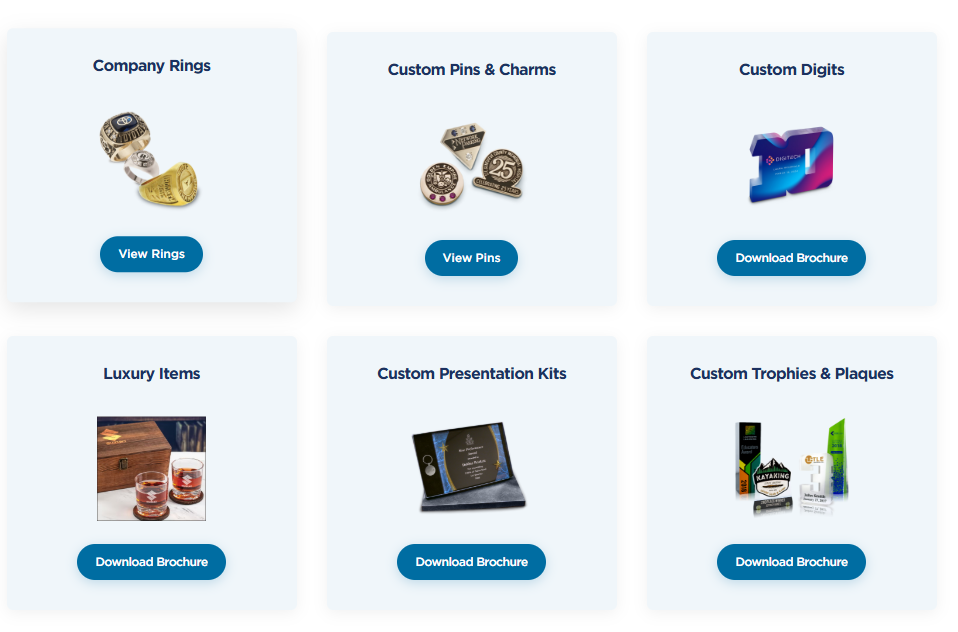
Many of the organizations we work with use a combination of these systems and our heritage awards for professional milestones, such as years of service. We’ve been manufacturing these custom awards, which include rings, plaques, trophies, luxury items, and other jewelry, for over a hundred years now:
Employee Listening Programs—Find Out How Employees Really Feel
Earlier, we discussed how you can track engagement and retention using eNPS and employee engagement surveys.
But to develop a formal program that tracks engagement and its root causes over time, you’ll also need to work out a few additional factors, including:
- The frequency of running these surveys
- How they’ll be delivered (e.g., via mobile app or on paper)
- How you’ll process and analyze the results
- The action you’ll take based on your findings
A dedicated employee listening strategy covers all these considerations and further defines exactly what you’ll measure and how. With engagement and retention as the starting point, you’ll want to drill down to understand the root causes impacting engagement indicators and eNPS scores.
If, for instance, employee well-being scores are low, then what’s contributing to burnout? Do the factors vary across groups?
Answering these questions and capturing different employee sentiments requires:
- Additional surveys, such as employee satisfaction, integration, exit and stay, disaster response, and many more.
- Other listening methods, including an anonymous employee feedback box, insights shared by managers about their teams, and 1:1 interviews with workers.
Read more: We cover everything you need to know about setting up and scaling a continuous employee listening program in this guide.
Collect Feedback & Measure Employee Engagement with Be Heard
Be Heard, our employee listening platform, includes all the tools healthcare organizations need to measure employee engagement and sentiments, identify trends, and determine the best course of action. You can:
- Measure employee engagement and retention with science-backed surveys, and identify root causes with additional predesigned surveys from our library.
- Analyze trends and uncover actionable insights with advanced analytics. Compare engagement indicators and eNPS scores across groups to identify which ones are vulnerable to turnover or burnout and why.
- Collect feedback and suggestions via open-ended, anonymous surveys that employees can complete at any time.
Support Your Team with Employee Wellness Initiatives
Wellness initiatives can reduce burnout by mitigating shift-related stress, helping employees develop healthy habits, and providing personalized support. Here are some tried-and-tested ideas for supporting doctors, nurses, caregivers, administrators, and other healthcare workers:
- Dedicated zones for employees to take micro-breaks during shifts: These spaces provide room for shift workers to de-stress in a quiet, relaxing environment. This is especially important after they have exerted themselves in emotionally or physically demanding work.
- Wellness challenges: Make physical activity fun and engaging through tailored initiatives such as step challenges and team activities. Meanwhile, challenges related to sleep and hydration make self-care a shared team goal.
- Personalized support: This can take different forms, such as nutrition and fitness plans, 1:1 therapy, and workshops that help employees navigate challenges like stress or work-life balance.
Proactively Support Employee Well-Being with Terryberry
Be Well is our employee wellness solution that provides healthcare teams with the tools they need to prioritize their health and navigate the more stressful aspects of their work.
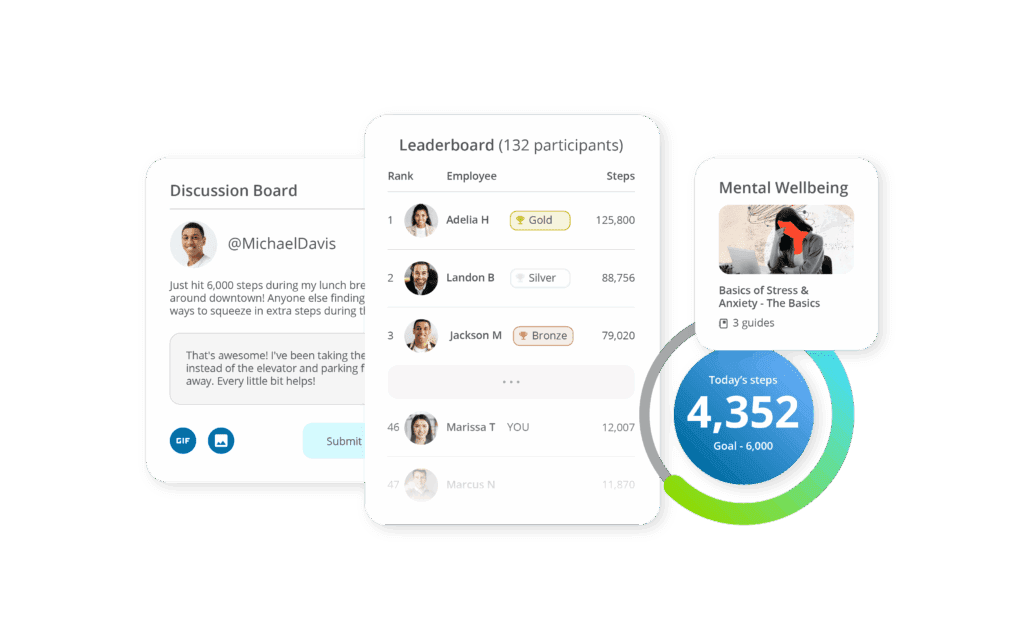
Our wellness app supports employees’ physical, mental, and emotional well-being with:
- Wellness and activity challenges. Engage employees with custom challenges or choose from pre-designed ones such as step, hydration, and sleep. Be Well keeps teams motivated and promotes healthy competition with personalized statistics and shared leaderboards.
- Personalized wellness plans. Support employees with the specific challenges they’re facing with plans for improving sleep quality, increasing nutrition, managing stress, and more.
- Expert-led wellness trainings. Schedule expert-led training sessions to help healthcare workers manage common workplace challenges. Employees can also access on-demand mental health support through Be Well’s 150+ audio guides covering 40+ topics.
- Detailed Wellness Analytics. Track your program’s overall engagement and drill down into individual performance with tailored analytics.
Employee Safety Programs—Build a Safe Workplace
You can build a safer environment for workers and patients alike by rewarding employees who consistently follow safety protocols and by celebrating team safety efforts. Safety programs can take the form of:
Safe Patient Handling Programs
The modern working conditions of healthcare workers mean they’re more at risk of musculoskeletal injury than workers across all other industries. These injuries usually afflict care workers’ backs, necks, legs, and arms—and can be severe enough to end careers.
Many U.S. states have introduced safe patient handling laws, regulations, and guidelines to help prevent these injuries—although they haven’t been fully implemented yet due to resistance. They cover everything from policy development to equipment acquisition.
Whether your state has comprehensive laws or not, investing in a safe patient handling program is worthwhile. It helps build a safer work environment and boosts long-term employee retention.
You can:
- Establish an internal committee to develop and implement safe patient protocols.
- Recognize and reward employees for consistently following safe patient handling protocols to reinforce them.
Safety Milestones
Setting measurable goals transforms workplace safety from an abstract concept into something tangible for teams to work towards together. These goals may look like:
- Reducing workplace injuries by a set percentage.
- Achieving 100% compliance in annual safety training.
- Successfully completing mock emergency drills.
- Implementing new equipment or technology (e.g., patient lifts, sharps disposal systems).
You can engage leadership to reward teams, branches, or facilities that reach these goals—and even host special awards ceremonies.
Infection Control and PPE Programs
While brochures and pamphlets can be effective for spreading awareness, they don’t build lasting safety habits and reinforce best practices. If the correct protocols aren’t top of mind for healthcare workers, they’ll be overlooked as people focus on getting through busy shifts, handling patients, and putting out fires.
Organizations can protect staff and patients alike from exposure and healthcare-associated infections by linking recognition and rewards to formal campaigns and procedures.
For example, peers can recognize one another for adhering to hand hygiene and environmental cleaning protocols. You can also combine these programs with dedicated training to help increase participation.
Learning, Development, and Performance Management Programs
Supporting employees in their current roles and providing clear opportunities for growth helps stave off burnout today and boost retention in the future. As noted above, safety training in particular supports employees’ physical well-being and improves care and patient outcomes. Similarly, you can provide:
- Clinical skills training with CME credits
- Technology skills training on digital tools like EMR systems
- Mentorship programs to support new hires and upskill employees
Don’t forget to tailor these programs to your team’s work environment—they should be able to participate conveniently between busy shifts. That means providing options such as mobile app-based learning and breaking courses into short modules that employees can complete during their breaks.
To achieve long-term improvements and growth, healthcare organizations create tailored learning paths aligned with organizational objectives and staff motivations. For example, you might set goals like improving patient satisfaction scores or helping frontline workers transition into leadership roles.
Boost Retention and Engagement with Terryberry’s All-in-One Employee Engagement Solution
Terryberry enables healthcare organizations to scale employee listening, recognition, wellness, and rewards programs through a single, fully integrated system. Track budgets, personalize incentives, measure engagement, and provide ROI to leadership.
1. Predict Churn and Measure What Matters
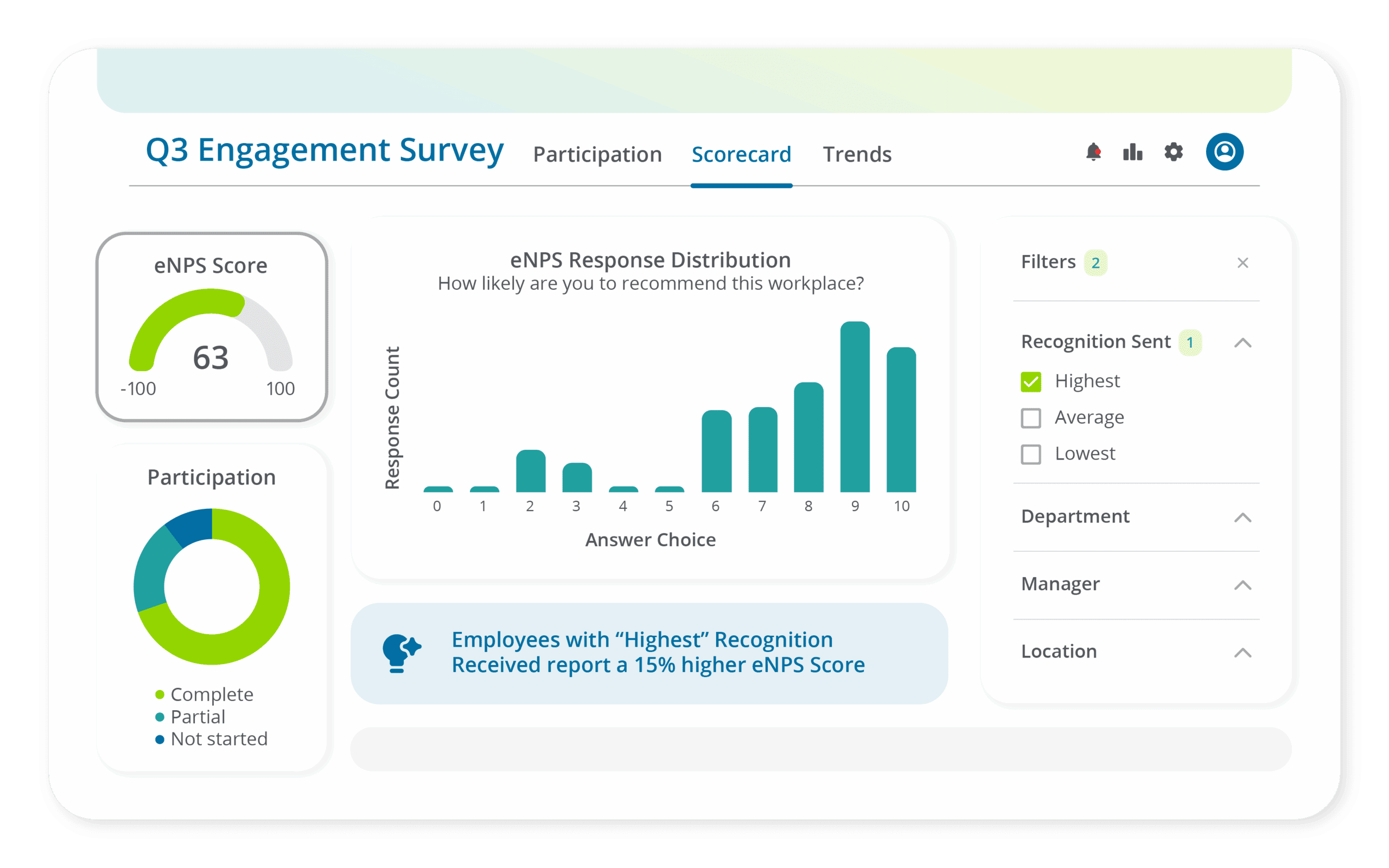
Be Heard lets you do more than measure engagement and retention. Our full suite of employee listening tools includes:
- An extensive survey library. Choose from dozens of pre-designed surveys to capture employee sentiment and diagnose root causes of issues such as burnout or low confidence in leadership. Our library includes engagement drill-downs, employee satisfaction, exit & stay surveys, and more.
- Multi-channel survey delivery options. Make sure your survey results reflect your entire workforce’s sentiments by ensuring they’re accessible to everyone, with options to deliver surveys via desktop, mobile app, QR codes, links, and offline (paper-based).
- Anonymity protection. Our 6-response minimum threshold means that admins can’t drill down into responses for groups with fewer than 6 participants (although the data is still included in aggregate scores). Third-party encryption also ensures individual responses can’t be traced.
- Automated processing and participant tracking. Be Heard lets you schedule surveys and reminders in advance, automatically process results, track completion rates, and send follow-up surveys to your chosen pool.
- Powerful analytics with multiple views. Be Heard lets you analyze responses from different score views to visualize strengths, gaps, and benchmarks. Our participant filters let you uncover patterns across specific groups, including ones for departments, age, gender, generations, facilities, job titles, and seniority levels.
2. Take Action with Tailored Recognition, Milestone, and Wellness Programs
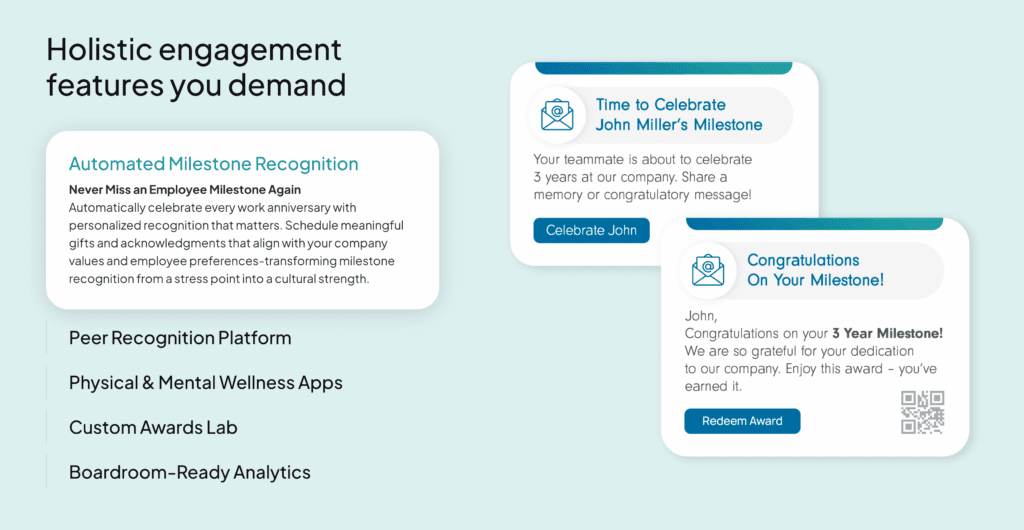
With our integrated platform, you can manage all aspects of your engagement programs—including participation, user administration, budgets, incentives, and performance tracking—so you can successfully boost employee engagement across your organization.
Healthcare organizations like Tidelands Health have launched several programs to support their workforce using Terryberry’s Be Recognized and Be Well.
Our platform allows you to do the following, all with one system:
- Design programs around specific objectives, such as promoting core values, recognizing excellent patient care, following safety protocols, and building healthy habits through structured employee engagement activities.
- Configure automated milestones, from birthdays and service anniversaries to clinical excellence and safety achievements.
- Add personalized rewards. Choose from Terryberry’s heritage awards or access the largest selection of rewards in the U.S. via Terryberry x Amazon Business. You can also create custom shopping portals using Terryberry’s Premium Rewards catalog, which supports global businesses with our network of fulfillment providers across 100 countries.
- Meet employees where they work. Engage your workforce via mobile app, desktop, MS Teams, and Outlook. We also offer several offline engagement options and can set your program up on different systems, like a kiosk.
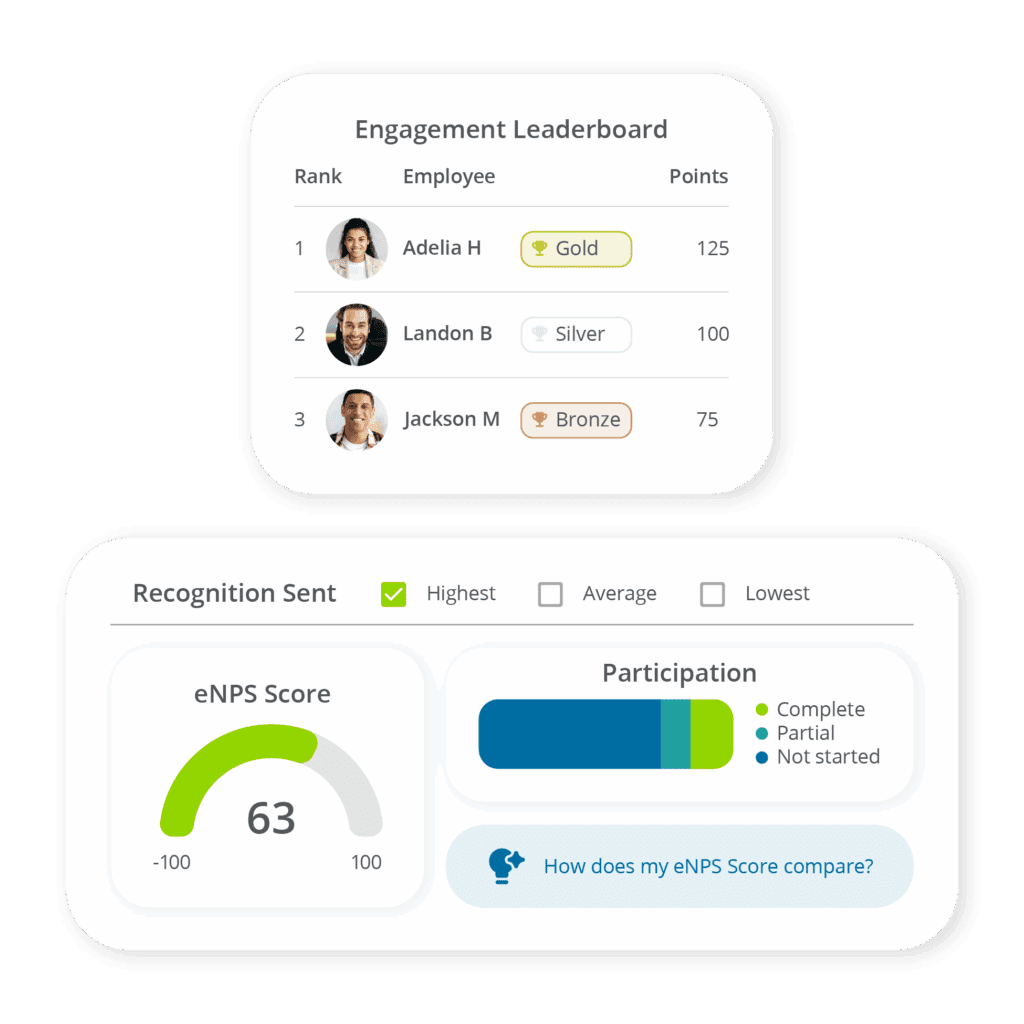
- Track participation and engagement with manager dashboards, engagement leaderboards, and automated benchmarks.
3. Centralize Budgets and Rewards
Many organizations already have informal employee recognition and rewards initiatives that exist across different teams, such as recognition walls, team activities, retirement gifts, and the like. But since these activities aren’t formally managed, they fly under the radar, and management lacks visibility into the expenditures.
With Terryberry, you can centralize budgets and track all this “ghost spend,” giving you a clearer picture of how much is already being spent on employee engagement—and where things can be streamlined. Since program incentives are managed through our native rewards system, all these expenses are recorded in one place.
While admins can track program-wide budgets, we also provide dashboards for managers to track their team budgets and engagement. At a glance, they can view the total points earned across the team, along with a clear breakdown of each individual’s contributions.
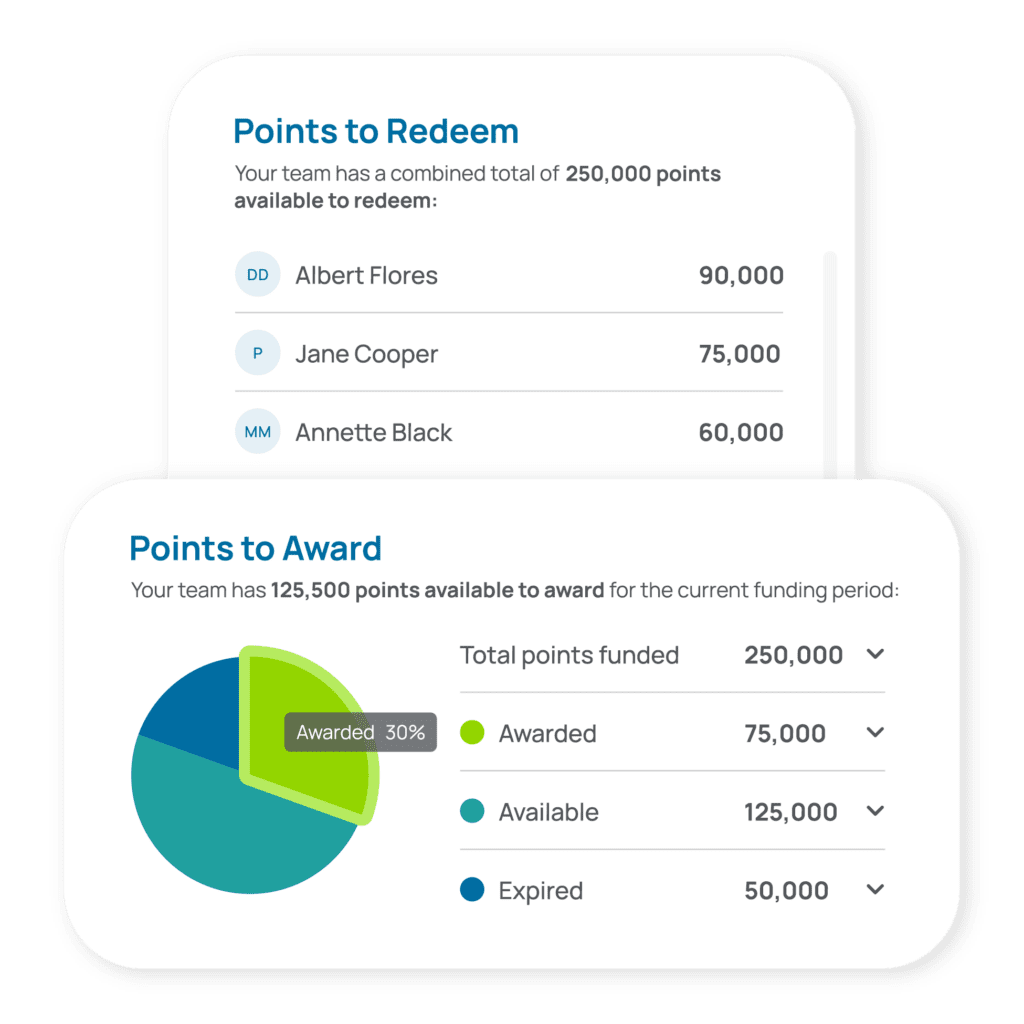
Tracking how these budgets are spent across teams, departments, and facilities also offers insights into engagement practices. For example, say you have a peer recognition program tied to core values or a safety incentives program in place.
Teams that use up most or all of their points budgets each month are highly engaged in these programs, signaling that workers are adhering to safety protocols or demonstrating core values. In other words, budget utilization provides visibility into engagement across different groups.
4. Prove ROI with Centralized Analytics
While participation metrics are a good high-level indicator of a program’s performance, they don’t independently reveal the finer details of their impact on employee engagement and retention. To do that, you’ll need to include employee listening data, such as engagement indicators and eNPS scores, in the mix.
We’ve done precisely this with Terryberry’s centralized engagement analytics. Our system pulls participation data from across your programs and combines it with employee listening data, so you can build a business case and present it to leadership.
From Terryberry’s centralized analytics dashboard, you apply program-specific participant filters—e.g., individuals who’ve received “above average,” “below average,” or the “highest” recognition—and compare retention and engagement across these groups.
These insights can help you prove the impact of programs on specific aspects of employee engagement in healthcare. For example, groups with managers who frequently provide recognition may have higher employee well-being and retention scores. This shows that manager recognition positively impacts employee well-being and reduces turnover rates.
You can also combine participant filters (provided the resulting group still has at least six members to protect their anonymity) to narrow these scores down to specific groups. For example, you could compare:
- The impact of your wellness program on night shift vs. day shift workers
- The impact of peer recognition on different professions (e.g., nurses, canteen staff, cleaning staff)
Getting Started with Terryberry
Terryberry’s all-in-one employee engagement solution has helped thousands of organizations—including hospitals, clinics, and aged care facilities—reduce churn, fight burnout, and build a more engaged workforce.
We offer all the tools you need to track employee engagement, take action, and measure impact in one subscription—with admin fees 30–40% below the typical market average.
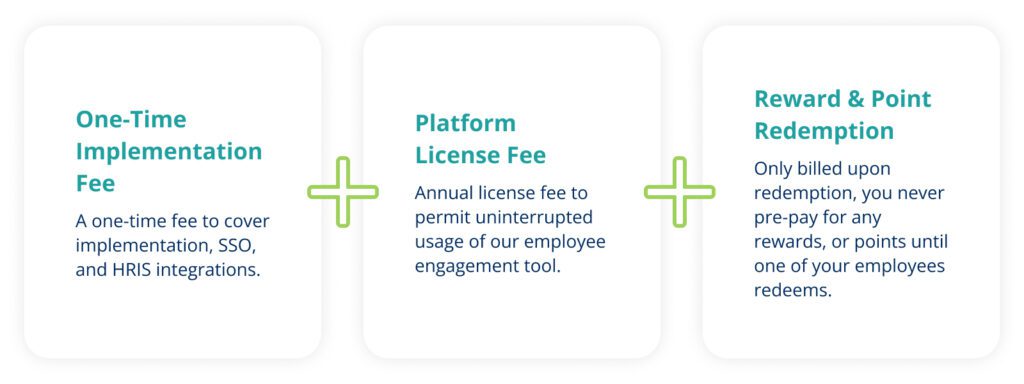
Book a personalized demo to see Terryberry’s complete stack of employee engagement tools in action.
Fight Burnout and Employee Turnover with Terryberry
The best employee engagement programs start with a real understanding of what drives your people, including their feelings, motivations, and morale.
That’s where Terryberry’s all-in-one engagement software for healthcare comes in. It gives you the tools to identify what’s shaping engagement, take action with programs designed for your team, track results, and keep improving over time.
With our unified system, you can support employee well-being, align disconnected teams around shared goals, and ensure every individual feels valued and celebrated.
Schedule a personalized demo to discover how healthcare organizations have reduced turnover by up to 50% with Terryberry.