February 27, 2026


Employee fulfillment is the sense that work is meaningful, appreciated, and leading somewhere. It measures employees' job satisfaction, as well as whether they feel recognized for their contributions, supported by their organization, and able to make progress in their careers.
Most companies want their employees to feel fulfilled at work, but many struggle to achieve it because they approach fulfillment the wrong way. Common mistakes include:
- Focusing on employee perks instead of everyday experiences: Assuming benefits, rewards, or occasional incentives will create fulfillment, while overlooking daily factors like recognition, support, and progress.
- Relying on surface-level or lagging signals: Using annual engagement scores or exit data to understand fulfillment, rather than listening continuously and responding to real-time employee experiences.
- Managing fulfillment through one-off initiatives: Launching isolated programs that aren’t reinforced consistently or connected to a broader system, making fulfillment difficult to sustain over time.
True employee fulfillment is built through everyday experiences, such as making employees feel appreciated for the work they do, supported by their manager and organization, and clear on how their work contributes to growth and progress.
This guide shows HR leaders how to overcome these mistakes and approach employee fulfillment more intentionally. Here’s what it covers:
- The key drivers of employee fulfillment: Understand the experiences that shape fulfillment over time, from recognition and participation to leadership support and opportunities for growth.
- Six proven ways to increase employee fulfillment at work. Discover practical strategies focused on recognition, growth, listening, well-being, and progress—designed to reinforce fulfillment through everyday experiences, not one-off initiatives. Within these strategies, we'll share real-world examples from the Terryberry platform.
- How to sustain employee fulfillment with connected systems. See how organizations use integrated recognition, listening, and reward programs to scale fulfillment across teams and roles, and maintain consistency over time.
- What Employee Fulfillment Actually Means (and Why It’s Different From Engagement)
Employee fulfillment is often mistaken for employee engagement, or the two are lumped together and treated as the same thing. This confusion can make it harder to understand how workplace culture truly influences how people experience their work.
Employee engagement describes the level of commitment and energy employees bring to their work and organization. But employees can be highly engaged without feeling truly fulfilled because of responsibility, pressure, or ambition, even if their work lacks deeper meaning or long-term alignment within the broader company culture.
However, fulfilled employees almost always demonstrate strong engagement because fulfillment builds on commitment by adding purpose, a sense of belonging, and a feeling of progress.
Employees who feel fulfilled are more likely to stay motivated, invested, and aligned with the organization’s long-term goals.
What Drives Employee Fulfillment at Work
Many organizations try to understand employee fulfillment by looking at engagement scores, satisfaction ratings, or broad survey benchmarks. While these data points can be useful, they rarely explain why employees feel fulfilled, or where fulfillment is breaking down inside a specific organization.
That's because a single experience doesn’t shape fulfillment. Employees don’t suddenly become unfulfilled because of one missed promotion or one tough quarter. Instead, fulfillment is influenced by a combination of experiences that build up over time, which is often self-reported in overly simplified ways.
Our experience in helping organizations improve employee engagement taught us that employee fulfillment is driven by multiple cultural factors, not isolated initiatives. People may value similar things, such as recognition, growth, or support, but the weight and interaction of those factors vary by team, role, and manager.
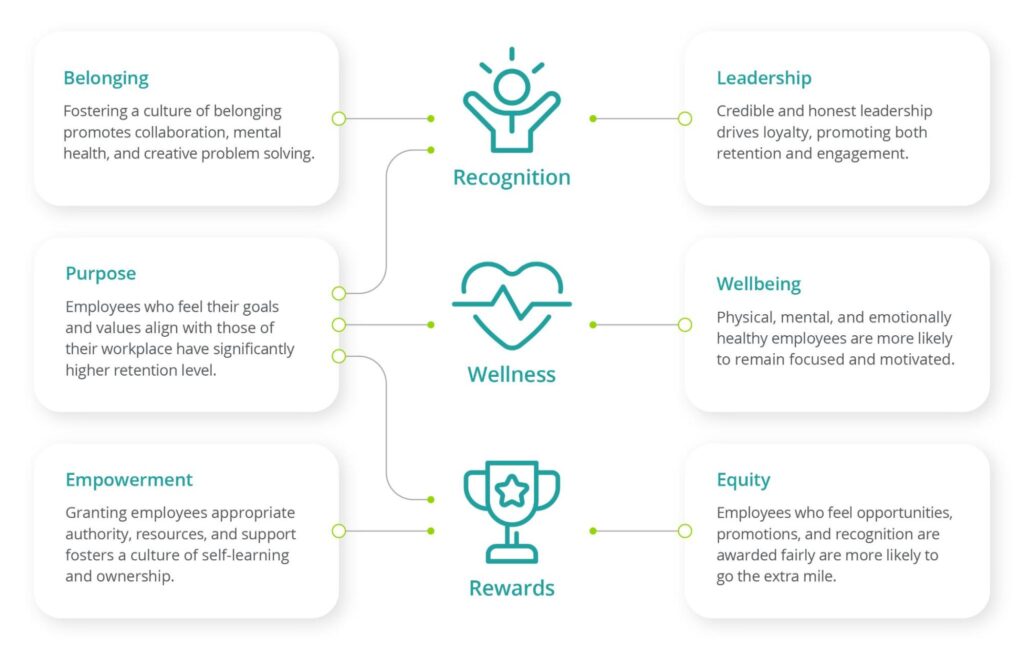
To understand what’s truly within an organization’s control, Terryberry’s culture model focuses on six key factors that shape how employees experience work every day:
- Purpose: Employees feel more fulfilled when they understand how their work connects to organizational goals and values—and when that work feels meaningful and contributes to fulfilling work.
- Empowerment: Having the right tools, authority, and support enables employees to do their best work and continue developing through opportunities like learning, autonomy, and personal growth.
- Well-being: Physical, mental, and emotional well-being are foundational to sustained fulfillment. When employees struggle with work-life balance, feel overwhelmed, or experience burnout, fulfillment becomes difficult to maintain.
- Belonging: Feeling included and accepted strengthens fulfillment by fostering collaboration, trust, and motivation within the broader organizational culture.
- Leadership: Fulfillment is shaped by how supported employees feel by their managers, including access to guidance, coaching, and meaningful mentorship.
- Equity: Employees are more fulfilled when they feel recognized for their contributions and see fair opportunities for growth and advancement.
These factors help explain how employees experience work and how fulfillment connects to engagement, commitment, and long-term retention.
6 Proven Ways to Improve Employee Fulfillment
Improving employee fulfillment requires a dedicated strategy that focuses on employee experiences. Below are six proven ways organizations can strengthen fulfillment by reinforcing recognition, progress, employee voice, and well-being over time.
1. Build an Always-On Recognition Culture
When effort and acknowledgment fall out of sync, employee fulfillment tends to break down. People can stay engaged and productive for long periods without regular recognition, but over time, the absence of feedback creates uncertainty, leading to questions like:
- Does my work actually matter?
- Am I making progress, or just staying busy?
- Is anyone paying attention to what I contribute?
An always-on recognition culture exists to eliminate that uncertainty. Rather than treating recognition as an occasional event, it makes appreciation a continuous part of how work happens. This allows recognition to occur in real time, such as when work is completed or values are demonstrated, rather than only during annual reviews, milestone events, or high-visibility wins.
For employee fulfillment, this matters because consistent recognition reinforces the experiences employees need to feel complete at work.
However, always-on recognition cannot be sustained through reminders or good intentions alone. It's difficult to maintain when recognition depends on individual managers remembering to give praise manually. It results in some employees receiving consistent acknowledgment, while others get overlooked.
This is where a centralized recognition system matters. Team members or managers can give recognition in the moment, so it’s visible by default and reinforced through automation. It allows organizations to keep peer recognition, manager recognition, and milestone moments in one place, so recognition is delivered on time and applied more consistently across teams.
Terryberry’s Social Recognition Platform can support this approach by integrating recognition with listening, rewards, and analytics.
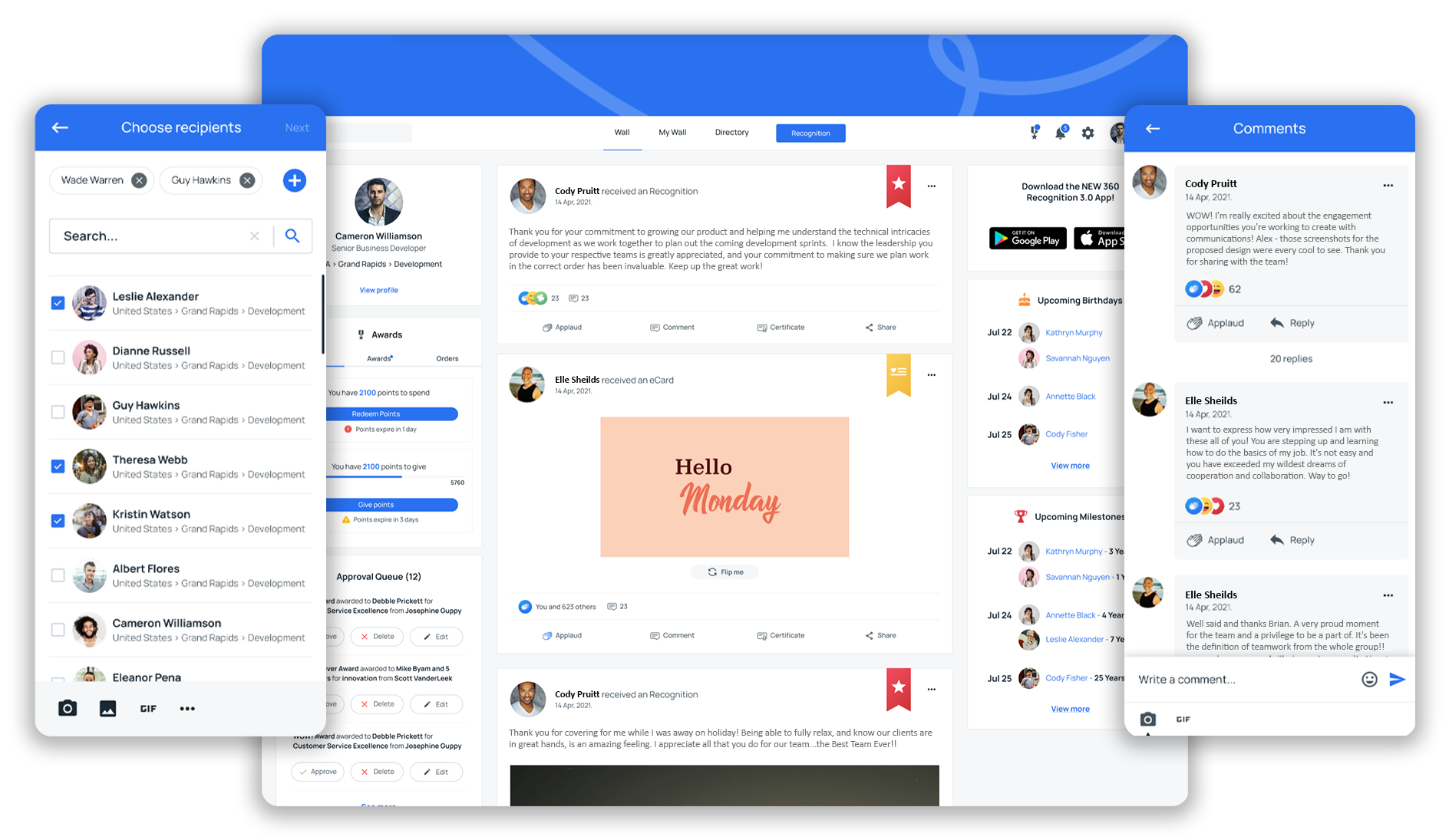
Recognition activity can be connected to employee feedback and engagement indicators, allowing organizations to understand where fulfillment is strong, where it’s lagging, and how recognition contributes to belonging, purpose, and retention.
2. Celebrate Progress and Milestones to Create Career Momentum
Most organizations want employees to feel like they’re growing in their roles, but many struggle to make that growth visible or felt through day-to-day results. Important milestones like service anniversaries, certifications, promotions, and key contributions can easily go unnoticed when they’re tracked manually or left to individual managers.
When these moments go unrecognized or are acknowledged late, employees can feel undervalued or uncertain about their professional growth. Organizations that automate milestone recognition typically see the highest levels of employee fulfillment.
It's a reliable way to ensure that meaningful moments are defined upfront, tracked accurately, and acknowledged at the right time without relying on memory or manual follow-ups. It also creates a more equitable work environment, where progress is celebrated consistently for all team members.
Terryberry’s Employee Service Awards provide an automated, structured way for organizations to recognize progress consistently throughout the employee lifecycle.
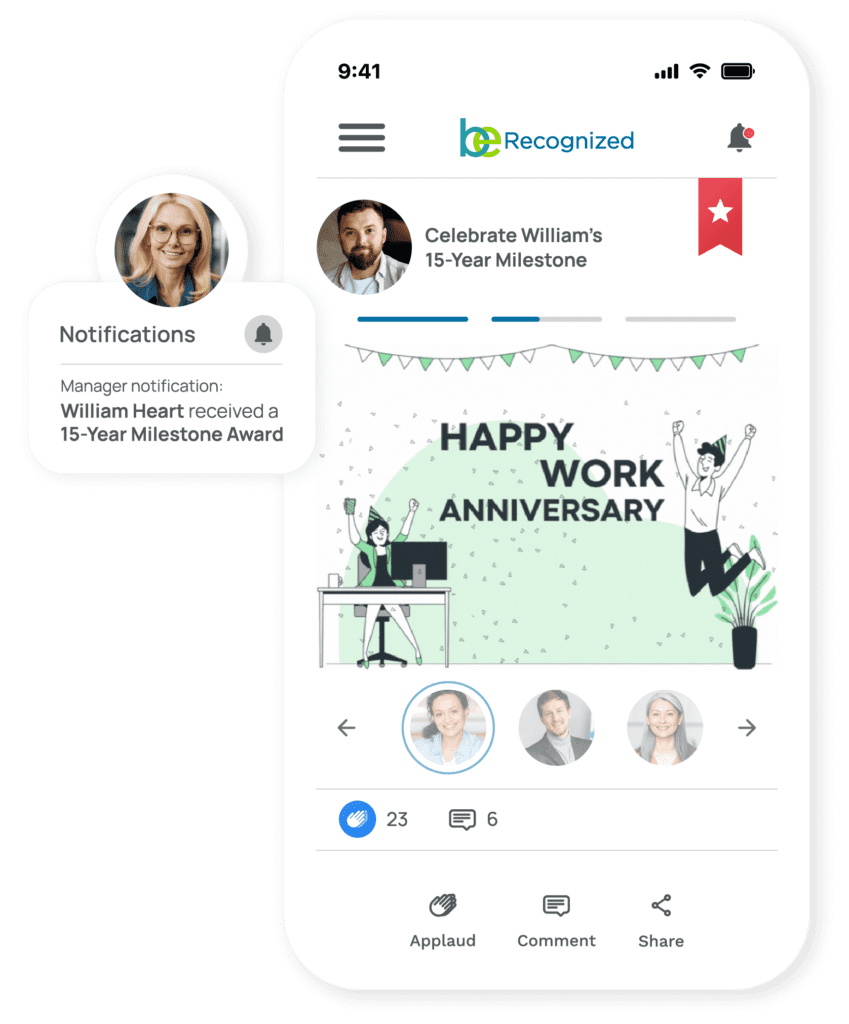
With the platform, organizations can:
- Track service anniversaries, promotions, certifications, and role milestones automatically
- Trigger recognition workflows so employees, managers, and teams are notified on time
- Invite peers to contribute messages and acknowledgments that add meaning to each milestone
- Monitor participation so recognition happens consistently across teams and roles
This makes progress visible to everybody within the organization. Employees don’t have to wonder whether their growth is noticed or whether their effort is leading somewhere.
Managers also gain visibility into who is progressing, which milestones are being reached, and where recognition may be falling short. That insight helps leaders support growth more intentionally and ensure recognition is applied fairly across teams.
When growth is consistently acknowledged, fulfillment becomes easier to sustain, and employees feel their efforts are leading to real, forward career momentum.
3. Give Employees a Voice Through Continuous Listening
It's difficult for many organizations to understand how employees actually experience their work. That's largely because feedback gets collected through annual surveys or exit interviews, meaning issues get identified months after they’ve already affected morale and fulfillment.
Even engaged employees can start to feel disconnected or unfulfilled when their concerns go unaddressed or their input is ignored.
Continuous listening is the most effective way to solve this. It allows organizations to gather frequent, targeted feedback that reflects real experiences as they’re happening.
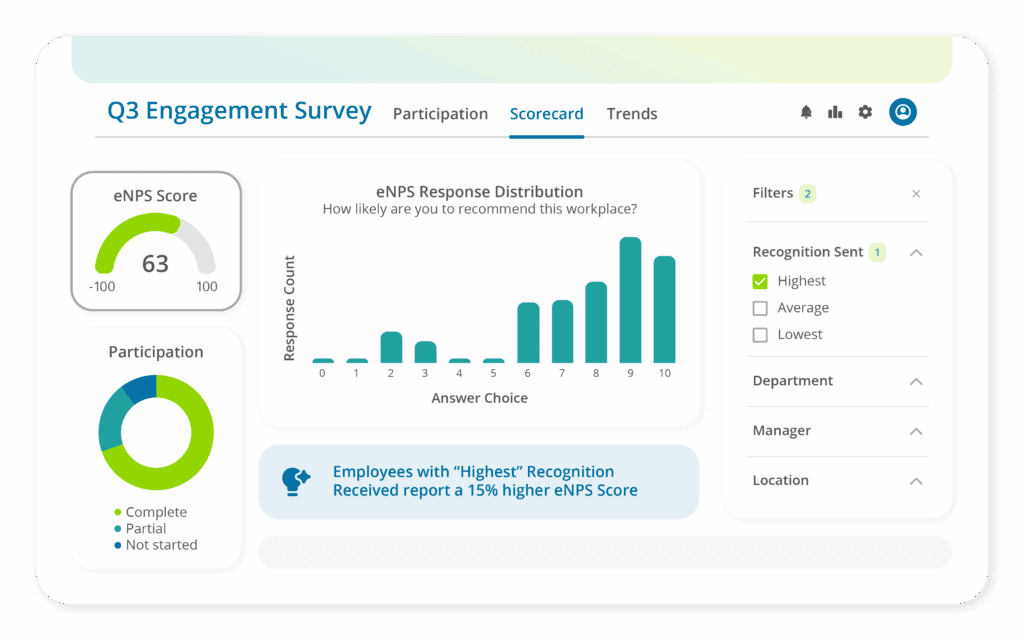
Terryberry’s employee listening tool, Be Heard, supports continuous listening by connecting employee feedback directly with recognition, rewards, wellness, and analytics in a single system. This makes it possible to gather feedback and actually put it into action.
With Be Heard, organizations can:
- Collect frequent, targeted feedback across the employee lifecycle. Use baseline, pulse, lifecycle, and ad hoc surveys to understand how employees experience recognition, leadership support, belonging, workload, and growth in real time.
- Break down sentiment by team, role, tenure, and location. Identify where fulfillment is strong and where it’s breaking down, instead of relying on company-wide averages that hide real issues.
- Connect feedback directly to action. Use listening insights to launch targeted recognition, reward, or wellness programs that address specific gaps employees are experiencing.
- Measure whether actions are actually improving fulfillment. Feed participation and recognition data back into future surveys to see whether changes are making a difference, not just how employees feel in the moment.
When you connect employee listening, analytics, and actions this way, employee fulfillment becomes much easier to sustain. Managers gain clarity into what their teams actually need and where support is breaking down, while employees are more confident that their input leads to real changes.
Over time, this creates a culture where people feel heard, supported, and confident that their experience at work is actively improving.
4. Use Incentives Intentionally to Support Culture
It’s common for organizations to use incentives as a way to motivate employees, but they often struggle to distribute the right incentives in a way that creates lasting impact. That’s because incentives are frequently disconnected from recognition and the behaviors the organization actually wants to reinforce.
When employee incentives are treated as standalone rewards, they tend to drive temporary effort rather than long-term fulfillment. Employees may appreciate the reward, but it doesn’t deepen their sense of purpose or belonging if it isn’t clearly tied to meaningful contributions.
The most effective incentive programs increase employee fulfillment by:
- Reinforcing the right behaviors. Incentives work best when they’re tied to actions that reflect your organization’s values, such as collaboration, growth, quality work, or meaningful contributions, instead of just output alone.
- Building on recognition rather than replacing it. Rewards are most effective when they follow genuine acknowledgment. This feels more like an extension of appreciation rather than a substitute for it.
- Giving employees choice and control. Allowing employees to select incentives that resonate with them personally makes rewards feel more meaningful than transactional.
- Supporting progress and growth. Incentives tied to milestones, development, and sustained contributions help employees see how their effort drives forward momentum over time.
Putting this into practice consistently requires structure. Without a system, incentives quickly become uneven, difficult to manage, or disconnected from the broader employee experience.
Terryberry’s Employee Reward Platform helps organizations apply incentives in ways that support culture. Rewards can be tied directly to recognition, milestone achievements, and performance objectives through an integrated, points-based approach. Employees can then choose rewards that align with their interests, rather than receiving one-size-fits-all perks.
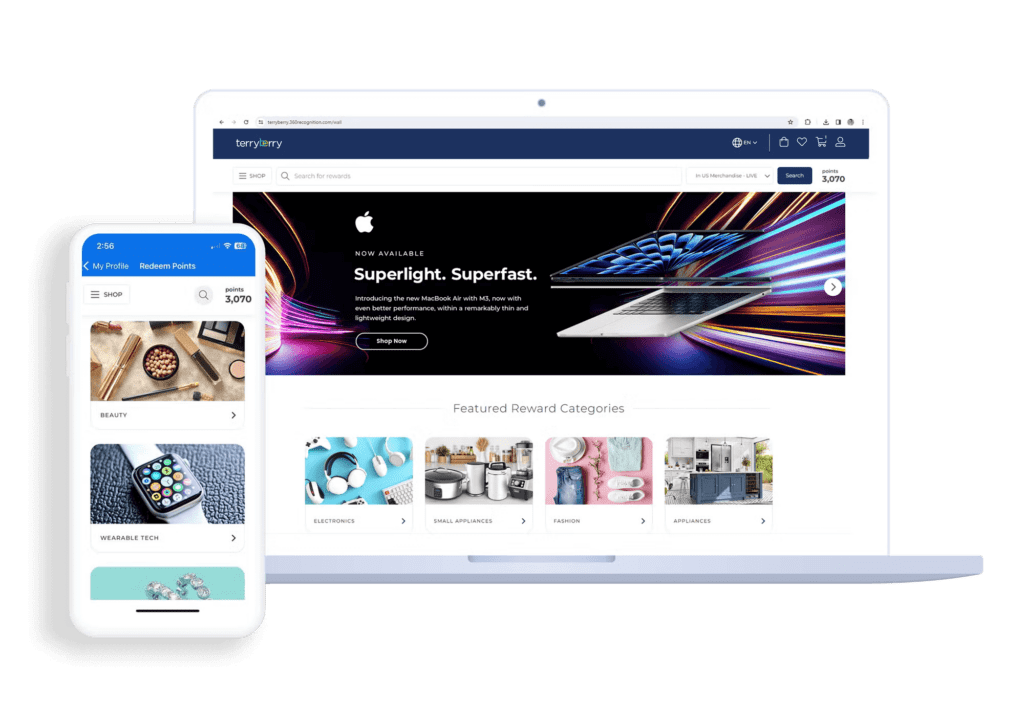
When incentives are intentionally used to reinforce the right behaviors, they strengthen fairness, purpose, and progress. That alignment is what allows incentives to contribute to employee fulfillment, not just momentary motivation.
5. Support Well-being with Inclusive Programs Employees Actually Use
In our experience, employee fulfillment weakens when work consistently draws from people without giving anything back. For instance, long hours, mental strain, and blurred boundaries don’t always show up in engagement scores right away, but they quietly drain energy, focus, and motivation.
While employees can still perform despite this, they're likely to feel depleted rather than fulfilled in their role. When employees believe their organization genuinely cares about their physical and mental health, work feels more sustainable and humane.
But the primary challenge for well-being initiatives is participation. Otherwise, they can fail when they feel disconnected from daily life or require too much effort to engage with.
Programs that succeed tend to be:
- Simple to participate in, with low barriers to entry
- Social by design, encouraging shared goals and connection
- Flexible, supporting different needs and preferences
- Visible, so effort feels acknowledged rather than private
With Terryberry’s Wellness and Engagement Platform, organizations can launch well-being programs that are integrated directly into the broader employee experience. Employees can participate in challenges, track personal progress, and support teammates—all while earning recognition for consistent effort.
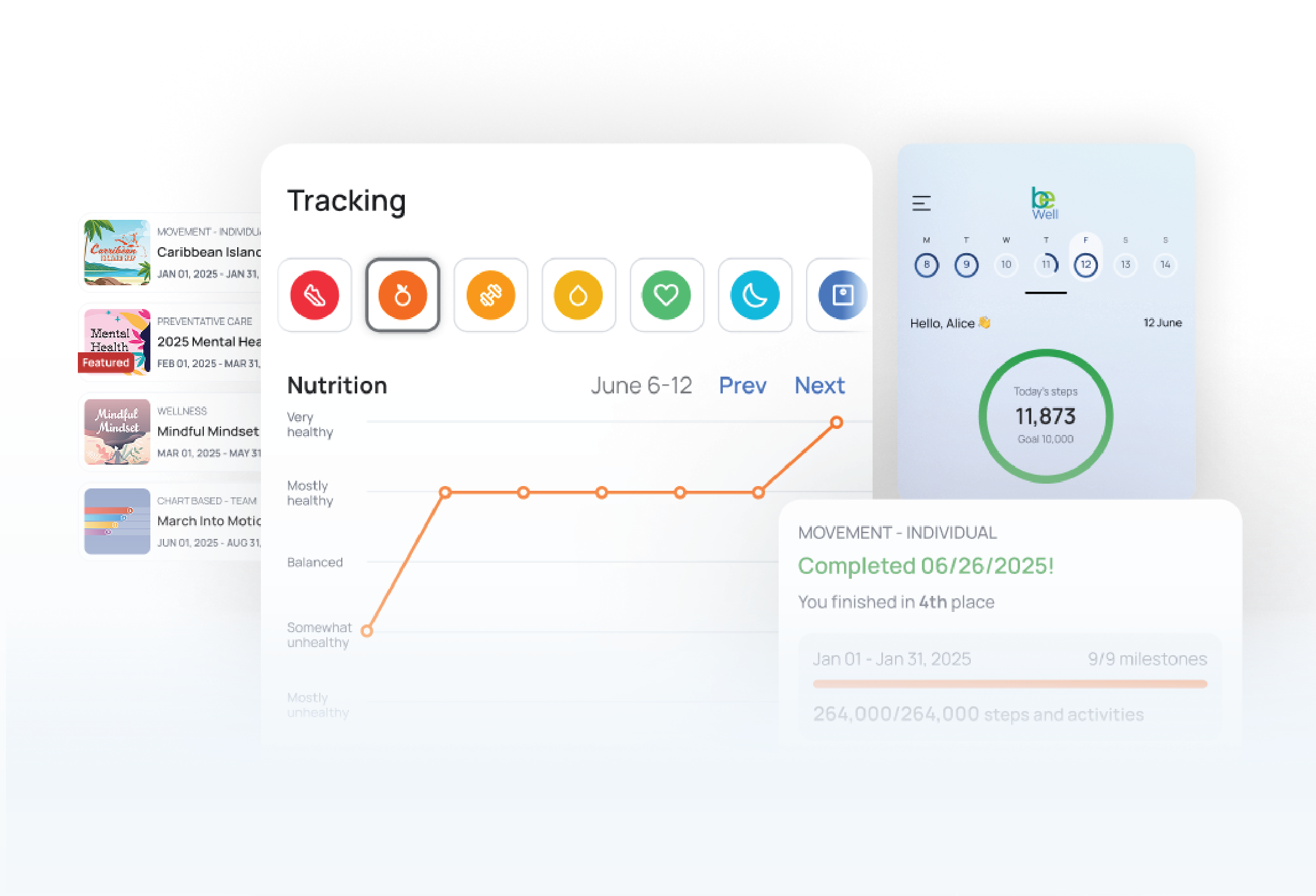
Because participation and outcomes are visible, leaders can see how well-being engagement connects to morale, recognition activity, and retention. Employees, meanwhile, experience well-being as part of the culture and not just an optional perk.
6. Turn Employee Feedback Into Visible Action
Collecting employee feedback is only half the job because when employees speak up and nothing changes, fulfillment can break down. Even well-intentioned initiatives can fail if they happen quietly or feel disconnected from what employees actually said.
This is why follow-through matters more than feedback volume. Employees don’t feel heard because they completed a survey, but when their input leads to changes they can see in their day-to-day work.
The most effective organizations turn feedback into observable action. This allows them to connect employee input directly to recognition, incentives, and well-being programs that reinforce the behaviors and experiences employees say matter most.
This approach works best when feedback drives action in a structured way:
- Identify specific gaps surfaced through listening, such as low belonging, weak recognition, or limited growth opportunities
- Launch targeted programs that address those gaps through recognition, rewards, or well-being initiatives
- Make participation visible, so employees can see changes taking place across teams
- Measure impact over time by linking program activity back to engagement and fulfillment indicators
With Terryberry, employee feedback is ongoing because listening data connects directly to recognition, milestone, incentive, and wellness programs. This allows organizations to act on what employees are asking for and reinforce those actions consistently.
For example, Freedom Financial Network discovered through employee listening that many employees felt disconnected from their contributions and uncertain about how their work was valued. After implementing a structured recognition program, they created clear, visible signals of progress and appreciation across the organization.
As recognition became part of daily work, employees gained greater confidence that their effort mattered and their growth was acknowledged. The program generated more than 100,000 recognition moments and helped improve retention in a high-turnover environment.
Improve Workforce Fulfillment with Terryberry’s Employee Engagement Platform
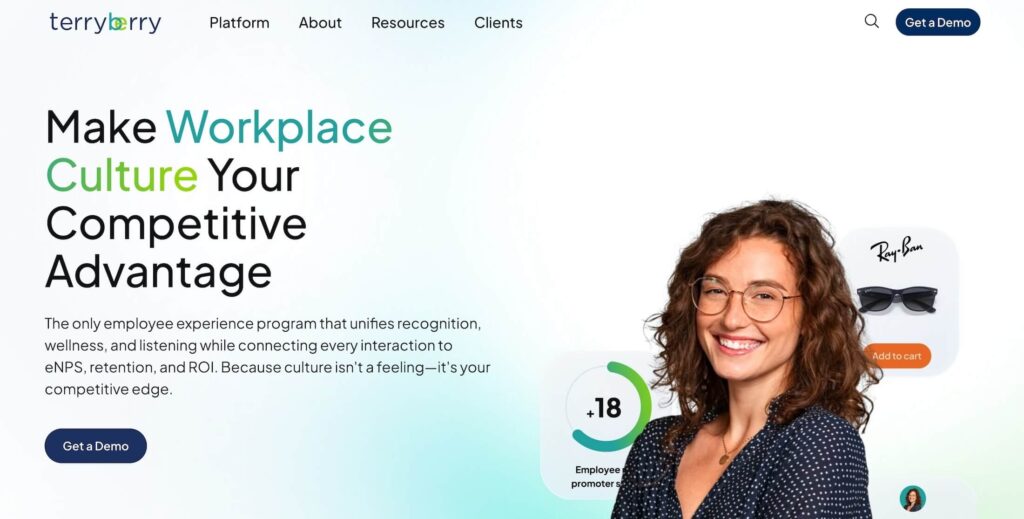
Terryberry’s employee engagement platform helps organizations strengthen fulfillment by connecting employee listening, recognition, rewards, and well-being into a single, integrated experience.
Instead of managing separate tools or one-off programs, teams can understand what employees need, take action consistently, and measure whether those efforts are actually improving fulfillment over time.
With Terryberry, organizations can:
- Launch recognition, milestone, and performance incentive programs: Reinforce core values, celebrate progress with service awards, and support performance objectives through structured, repeatable programs.
- Motivate employees with rewards they actually value: Tie points-based incentives to recognition and wellness initiatives so employees can access a broad rewards catalog through Terryberry's Amazon Business integration or custom award portals.
- Support physical and mental well-being through inclusive, team-based programs: Run activity, mindfulness, hydration, and wellness challenges that encourage participation and sustainable habits.
- Collect and act on employee feedback with Terryberry’s Be Heard: Use ongoing surveys to gather input, track participation in real time, and analyze sentiment and eNPS trends across teams.
- Measure fulfillment with centralized, actionable analytics: Analyze engagement indicators, eNPS, recognition participation, and sentiment trends across teams, roles, tenure, and locations in one dashboard so you can understand how employees actually experience work and respond with changes they can see and feel.
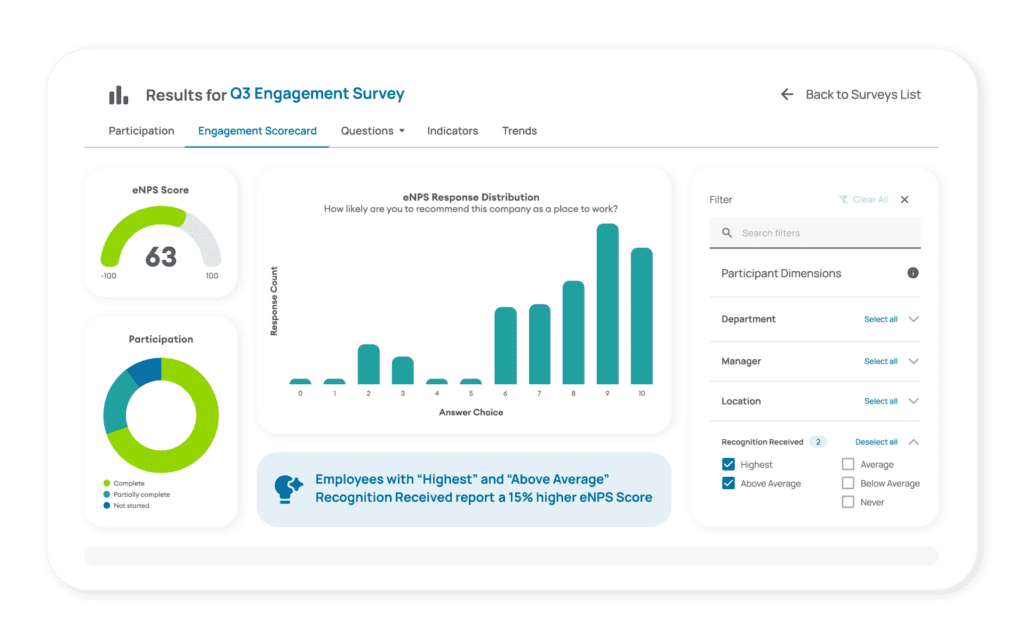
Unifying employee listening, recognition, rewards, and well-being with Terryberry helps organizations move beyond surface-level engagement and build workforce fulfillment that scales.
Build a More Fulfilled Workforce
Employee fulfillment is built when recognition, growth, well-being, and employee voice are reinforced consistently. It should also be supported by systems that make those experiences reliable as organizations grow.
With Terryberry, fulfillment becomes something employees experience every day through visible recognition, meaningful progress, inclusive well-being programs, and feedback that leads to real change.
Schedule a demo to see how Terryberry can help you build a more fulfilled workforce.