May 29, 2026


Choosing employee recognition software sounds straightforward until you realize how many platforms promise the same thing. Most tools can send a badge or automate an award, yet far fewer drive a tangible impact like consistent participation or helping employees feel genuinely valued in their day-to-day work.
The difference lies in a platform supporting behaviors that align with what your organization actually values.
This guide compares the best employee recognition software options for 2026, focusing on usability, participation, and program flexibility.
Key Takeaways
- The best employee recognition software supports culture, not just transactions.
- Recognition platforms vary widely in how they measure impact — some stop at participation, and others connect to engagement and retention.
- Recognition is most effective when it’s frequent, visible, and tied to company values.
- Platforms that connect recognition to employee sentiment provide stronger long-term value.
What Is Employee Recognition Software?
Employee recognition software helps organizations consistently acknowledge employee contributions. It supports everything from everyday appreciation to career milestones and values-based recognition.
Most solutions include:
- Peer-to-peer and manager-led recognition
- Service awards and milestone celebrations
- Rewards or points-based systems
- Nominations and approvals
- Reporting dashboards
- Integrations with HR systems and communication tools
Many software applications exist, but it’s important to choose the right one for your organization's needs in order to build a sustainable employee recognition program.

How to Choose the Best Employee Recognition Software
The best employee recognition software is a tool that aligns with your goals, workforce, and culture.
Clarify Your Recognition Goals
Start with the outcome you want to influence. Recognition can drive many goals, including improving retention, reinforcing company values, strengthening manager effectiveness, or increasing day-to-day engagement.
Many organizations try to solve all of these at once without prioritization, resulting in programs that feel broad but lack focus. Clear goals make it easier to evaluate whether a platform’s features will actually support the behaviors you want to see.
For example, if you want to drive increased participation by frontline employees, mobile access matters more than reward breadth.
Evaluate Recognition Features
Next, look beyond whether the right features exist and consider how they’ll be used. Features like service awards, nominations, and rewards only create value when they’re easy to use and reflect how your teams work.
Ask yourself questions like:
- Is peer recognition seamlessly integrated across everyday workflows and conversations?
- Can managers easily monitor recognition workflows?
- Are milestones treated as meaningful moments or automated notifications?
The most important features will depend on which specific team members are using them.
Consider Workforce Needs
Recognition programs need to reach the entire workforce, from in-office workers to remote or deskless employees. Staff at different locations of an organization might have different needs, too. Consider factors like mobile-first accessibility or multilingual support to ensure everyone can easily use the program.
Look Closely at Reporting and Analytics
This is where many platforms fall short. Some tools only report on:
- How often recognition is sent
- How many points are redeemed
Although these metrics are good indicators of activity, they don’t provide much information on impact.
Advanced solutions connect recognition data with engagement signals like eNPS, retention trends, and sentiment. This helps answer a more important question: is recognition changing how our employees feel about their work?
Without that connection, it’s difficult to justify investment or improve the program over time.
Review Pricing and Hidden Costs
Pricing models can vary widely. The biggest surprise for many buyers is how reward costs scale. Some platforms charge when points are issued, which often leads to paying for rewards employees never actually redeem. Terryberry charges when points are redeemed, so cost follows real usage and reduces wasted spend.
Look closely at:
- Point markups or reward inflation
- Shipping and fulfillment costs
- Administrative fees
- Pricing at redemption vs. when issued
An ideal platform scales predictably and ensures your budget is tied to real employee participation.
Check Integrations and Long-Term Scalability
Recognition should fit into your existing ecosystem. Look for platforms that integrate with your HRIS, as well as communication tools like Teams or Slack.
Recognition programs tend to evolve. The platform you choose should offer integration and advanced data and analytics capabilities to support your program’s growth without requiring a complete restart.
With those criteria in mind, here’s how the leading platforms compare.
Best Employee Recognition Software Platforms (2026)
There’s no single “best” platform for every organization. Each option below serves a different need.
Top platforms include:
- Terryberry
- Motivosity
- OC Tanner
- Kudos
- Bonusly
- Awardco
- Nectar
- Snappy
Based on the factors above, these platforms represent some of the strongest employee recognition software options for 2026.
1. Terryberry
Best for: Small to midsize organizations that want recognition paired with sentiment-driven analytics and a platform built to scale.
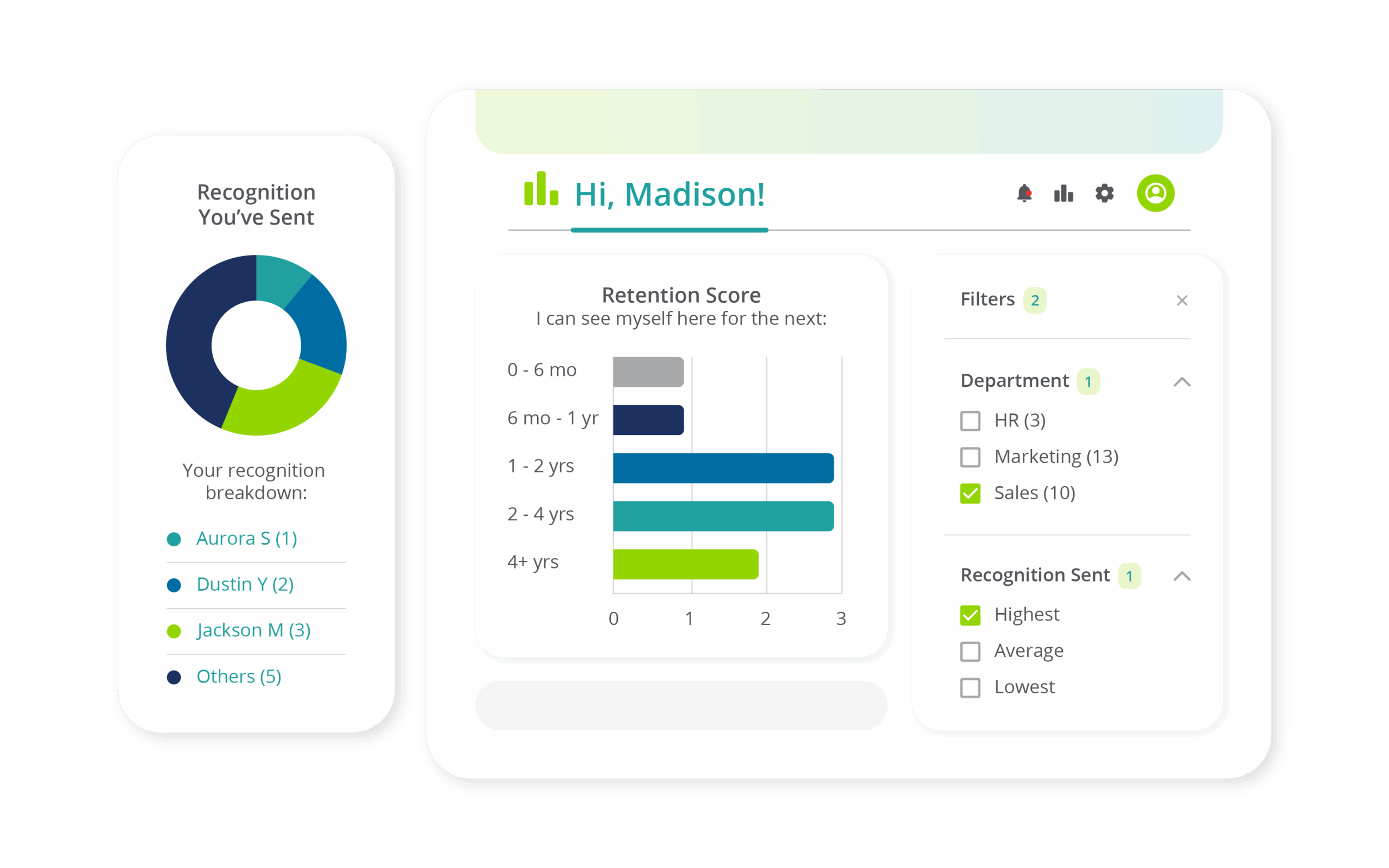
Terryberry’s platform goes beyond recognition alone. Its Be Engaged solution brings together recognition, awards, rewards, well-being, and employee listening in one system.
Sentiment-driven analytics help leaders understand what’s resonating and where the program is having an impact. That way, organizations don’t have to piece together disconnected data and instead can see how recognition activity directly ties to other trends or risks.
Modules include:
- Be Recognized (social recognition and milestones)
- Be Heard (surveys and analytics)
- Be Rewarded (flexible reward options; points charged on redemption vs issue)
- Be Well (wellness challenges and resources)
In addition to digital recognition, it offers custom symbolic awards crafted in-house that create more permanent, personal experiences for milestones and achievements.
2. Motivosity
Best for: Teams that want simple, social recognition with built-in feedback tools
Motivosity offers peer recognition, rewards, and lightweight engagement features. It’s approachable and easy to use, making it a strong option for organizations prioritizing adoption and simplicity.
3. OC Tanner
Best for: Large enterprises with a strong focus on service awards
OC Tanner is known for milestone and service award programs. It supports enterprise-scale deployments and combines recognition with custom awards and broader engagement features.
4. Kudos
Best for: Organizations focused on reinforcing culture and values
Kudos emphasizes social recognition and visibility. It helps organizations highlight values-based behaviors and build consistency across teams.
5. Bonusly
Best for: Small to midsize teams prioritizing frequent peer recognition
Bonusly is widely used for day-to-day recognition. Its micro-bonus approach encourages frequent participation and helps build habits around appreciation.
6. Awardco
Best for: Organizations focused on rewards flexibility
Awardco offers a large reward catalog and strong infrastructure for incentives and rewards. It’s often chosen by organizations prioritizing reward choice and scalability.
7. Nectar
Best for: Companies that want recognition with participation tracking
Nectar combines recognition, rewards and reporting. It provides visibility into usage and participation trends, which can help teams monitor program adoption.
8. Snappy
Best for: Teams focused on gifting and milestone recognition
Snappy specializes in curated gifting experiences. It’s often used for service awards, appreciation days, and periodic recognition moments.
Why Terryberry Stands Out
Terryberry makes recognition an integral part of the employee experience. It sustains long-term value as a system, not a standalone tool, with modules connecting data across custom rewards, social recognition, and employee surveys.
Recognition as Part of a Broader Employee Engagement Strategy
Recognition works best when it’s connected to how employees experience their work day to day. Terryberry brings recognition, well-being, and listening together in one program, helping organizations move from isolated initiatives to a more unified approach.
Measurement Beyond Participation Metrics
Many platforms stop at surface-level reporting. Terryberry connects recognition with employee sentiment data, allowing organizations to understand how recognition influences engagement, retention and culture over time.
67% of employees who receive meaningful recognition are more likely to stay with their organization, but only if recognition is consistent and well-designed.
Flexible Programs Built Around Company Culture
Recognition is more effective when it reflects how a company actually operates. Terryberry allows organizations to align recognition with their values, workforce structure and goals, rather than forcing a one-size-fits-all approach.
Symbolic Awards and Meaningful Recognition Moments
Not all recognition carries the same weight.
Terryberry combines digital recognition with symbolic awards crafted in-house that create lasting, tangible reminders of achievement. These moments often have a deeper emotional impact than points or cash equivalents — employees are 3x more likely to remember them, according to internal Terryberry research.
Build a Recognition Strategy That Supports Culture and Outcomes
Recognition can drive engagement, performance, and retention when it’s done well. But those results depend on consistency, visibility, cultural alignment — as well as using the right platform to scale your recognition program.
The best employee recognition software is the one that aligns with your goals and supports how your employees actually work. Some organizations need a lightweight recognition platform, while others need a solution that connects recognition to reporting, engagement, and long-term program success. Terryberry is a strong fit for organizations that want recognition to support a broader engagement strategy instead of a standalone tool.
Learn how Terryberry’s Employee Recognition Program turns recognition into a measurable employee engagement strategy.
Employee Recognition Software FAQs