April 6, 2026

Achievers is an employee recognition and rewards platform known for peer-to-peer recognition, points-based rewards, and a global marketplace that helps large organizations celebrate milestones and reinforce company values.
While it works well for companies that want a centralized recognition feed and broad rewards catalog, it can feel limited for organizations that need stronger frontline adoption, simpler program management, or clearer reporting tied to retention and engagement outcomes.
And many of the same complaints surface repeatedly when you look at customer feedback on platforms like G2, Capterra, and Gartner Peer Insights:
- The rewards system feels restrictive, and points don't go as far as employees expect: Many users report that point allocations are too limited to recognize meaningful contributions. Many items in the rewards catalog require more points than employees can realistically earn, and gift card values shift unexpectedly.
- Earning recognition is unevenly distributed: The ability to earn meaningful points is tied to leadership access and specific programs. This is a different approach from other platforms that make rewards more widely available across the workforce. Employees who don't have managers actively participating in the platform, or who aren't included in structured recognition programs, are effectively left out.
- Reporting is limited and fails to connect recognition to retention or engagement outcomes: A deeper frustration for HR teams is that Achievers' reporting tools are clunky and lack the flexibility needed to highlight meaningful insights. Users note that the platform's reporting capabilities have limitations, and the customization options don't go far enough for organizations that need to understand recognition beyond participation activity.
Many of these limitations push organizations to look for an alternative that better fits their budget and strategic goals. For example, Terryberry connects recognition data directly to employee sentiment, so HR leaders can show executives exactly how their recognition investment is reducing turnover and improving engagement — rather than pointing to participation rates and point redemptions like Achievers users are left doing.
This guide will compare seven Achievers alternatives — starting with Terryberry — to help you find the right recognition platform for your organization.
We cover the following Achievers alternatives:
- Terryberry
- Workhuman
- Bonusly
- Awardco
- Kudos
- Nectar
- WorkTango
Looking for a platform that connects employee recognition to real business outcomes? Schedule a demo with Terryberry today.
1. Terryberry
Terryberry is an employee engagement platform that connects recognition, employee listening, well-being, and rewards into a single unified system. This gives HR teams a complete picture of how recognition is actually influencing the employee experience.
Many recognition platforms like Achievers are built around a points-and-marketplace model that's primarily designed for large enterprise deployments.
Terryberry functions differently by prioritizing outcomes, so that every recognition program, milestone, and wellness initiative feeds into a central layer of engagement data. This allows HR leaders to see who's participating and whether participation is actually moving the needle on retention, belonging, and culture.
Engagement programs are highly configurable behind the scenes, while remaining simple for employees to use day to day. This flexibility helps reduce the inconsistency and uneven participation that often occur in more rigid recognition platforms.
Organizations like Ford, Unilever, Little Caesars, and Nuna Logistics use Terryberry to run both everyday recognition and structured milestone programs. In total, more than 40,000 organizations worldwide have used Terryberry to design and manage recognition initiatives.
Below, we’ll look at how Terryberry helps organizations:
- Bring recognition, employee listening, and wellness programs into one connected engagement platform
- Design recognition and milestone programs around your actual goals and workforce structure
- Use real employee engagement and sentiment data to prove to leadership whether recognition is improving over time
Centralize Employee Recognition, Listening, & Wellness in One Engagement Platform
Most organizations manage employee recognition, feedback, and well-being programs in separate tools. And because none of these systems integrate with each other, HR teams are left trying to piece together employee engagement from disconnected data sources that were never designed to work together.
Terryberry brings recognition, listening, and well-being into one connected engagement platform. Terryberry's social recognition feed supports peer-to-peer recognition, manager-led recognition, and milestone awards in one place.
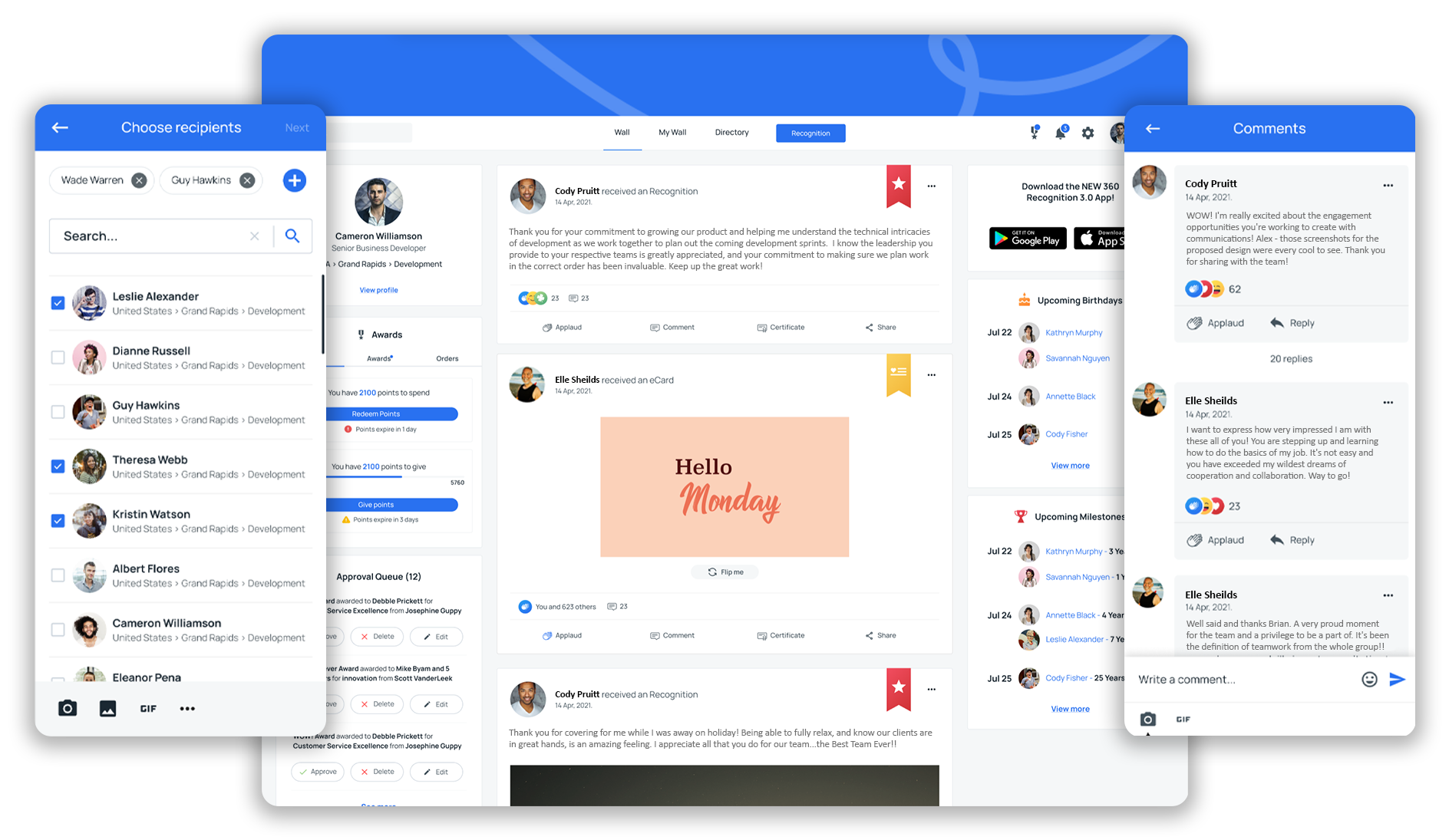
Employees can recognize colleagues in real time for everyday contributions, including collaboration, problem-solving, and living company values, without waiting for a formal review cycle or a manager to remember to act. Managers use the same feed to reinforce priorities from the top down, giving employees clear signals that leadership is paying attention.
This matters because one of the most consistent complaints about Achievers is that recognition becomes inconsistent when it depends on manager participation. With Terryberry, peer-to-peer recognition captures contributions managers don't always see, reflecting how work actually gets done rather than just who has the most visible or active manager.
Because all of this activity runs alongside feedback and well-being tools in the same platform, recognition becomes part of a continuous engagement loop. Appreciation, sentiment data, and well-being participation all inform each other, and HR teams can see the full picture.
Below, we'll show you an example of how Terryberry helped an organization implement an effective recognition program.
Nuna Logistics: Building a Recognition Program for a Distributed Workforce
Nuna Logistics faced a challenge many growing organizations recognize. With a distributed, field-based workforce and no consistent recognition system in place, recognition depended on individual managers remembering to act.
As a result, many everyday contributions went unacknowledged because milestones required manual coordination. And employees in remote locations had limited access to whatever recognition tools did exist.
After implementing Terryberry, Nuna unified peer recognition, manager-led recognition, and milestone awards in a single platform. Managers received funding to recognize employees on the spot, while peer-to-peer nominations ensured recognition could happen anytime, not just during formal review cycles.
Key outcomes over two years:
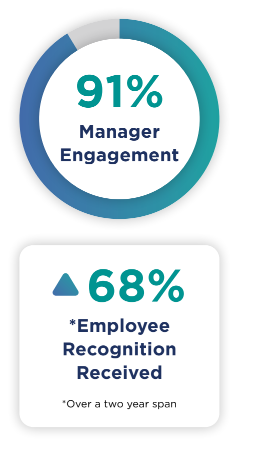
- 68% increase in employee recognition activity
- 91% manager engagement across leadership
- Positive employee feedback on the personalized nature of recognition
- Stronger connection between remote employees and the broader organization
Build Tailored Recognition Programs That Match Your Organizational Goals
In our experience working with thousands of organizations, recognition programs break down when they’re designed as one-size-fits-all. What motivates a frontline team with high turnover rarely matches what resonates with remote workers, sales teams, or long-tenured employees.
Despite this, many recognition platforms lock organizations into a single program structure with fixed rules around points, rewards, and participation.
Terryberry’s employee recognition software makes recognition programs highly configurable and tailored to your organization's specific goals. This makes it possible to support different recognition styles and incentives across the organization while still managing everything from one platform.
Teams use Terryberry to tailor programs around specific goals, such as:
- Reinforcing values and behaviors that the organization wants to see more often
- Improving recognition consistency in teams where manager participation is uneven
- Supporting retention in high-churn roles with more frequent, meaningful recognition
- Creating structured incentives for performance-driven teams without relying solely on point limits
- Strengthening connection and belonging for remote or distributed employees
And our platform makes it so these programs aren't locked in at implementation. As workforce needs change, HR teams can adjust program structure, eligibility rules, reward levels, and how recognition is delivered. That flexibility is what keeps programs active and participation consistent over time, rather than seeing engagement drop six months after launch because the program no longer feels relevant.
Connect Recognition to Real Engagement Data to Prove Impact to Leadership
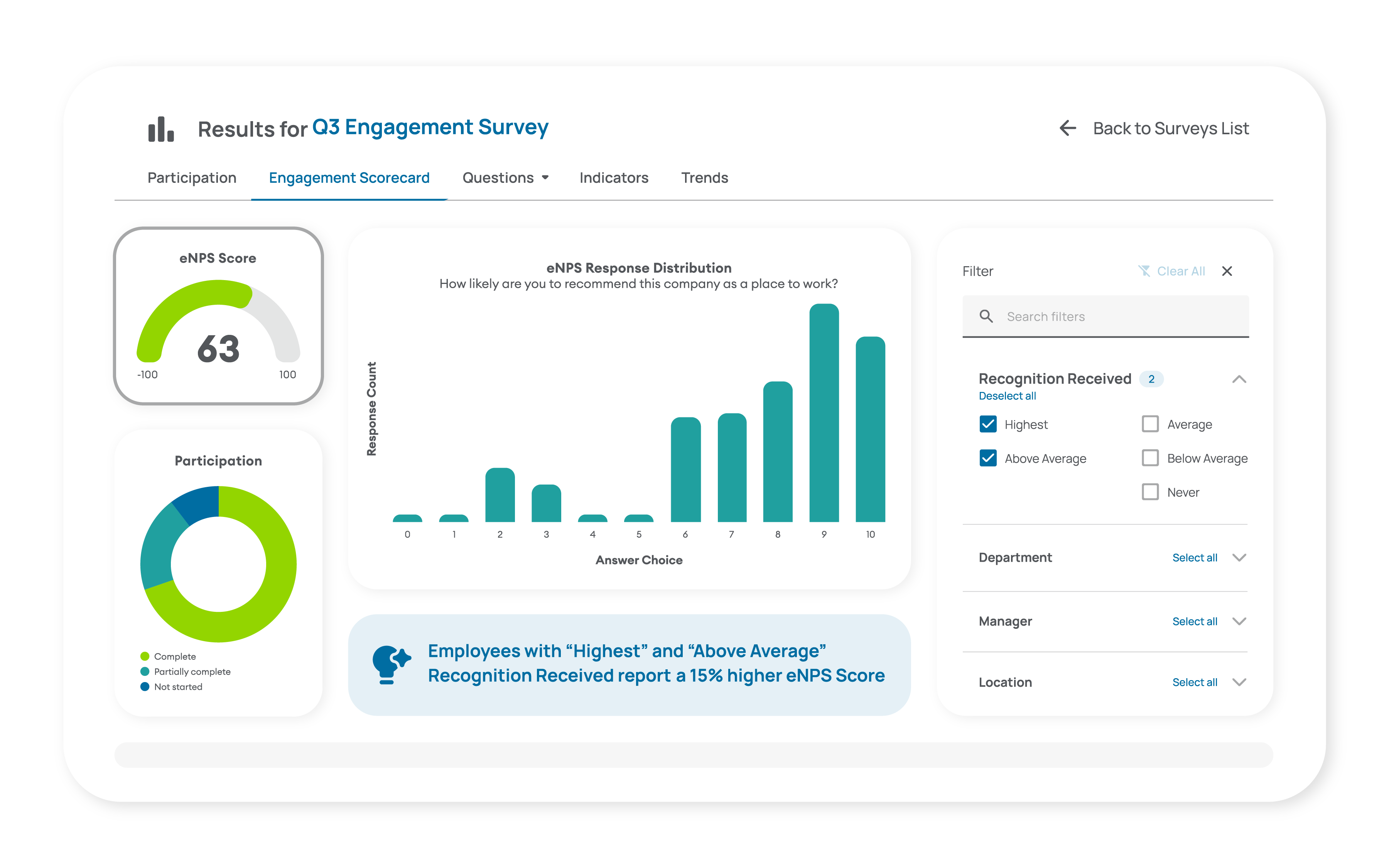
Achievers and many alternatives offer basic recognition analytics, focusing on surface-level insights such as the number of people participating in your program. But those activity metrics don’t answer the question leadership actually cares about: is recognition changing anything meaningful?
Terryberry is built to close that gap by connecting recognition behavior with employee sentiment and engagement data inside one platform. Our system pairs recognition analytics with built-in employee listening tools, including pulse surveys and engagement measurement. This allows HR teams to evaluate recognition alongside how employees actually feel about their work, leadership, and sense of belonging.
Terryberry measures engagement across six science-backed indicators:
- Belonging
- Leadership
- Equity
- Purpose
- Empowerment
- Well-being
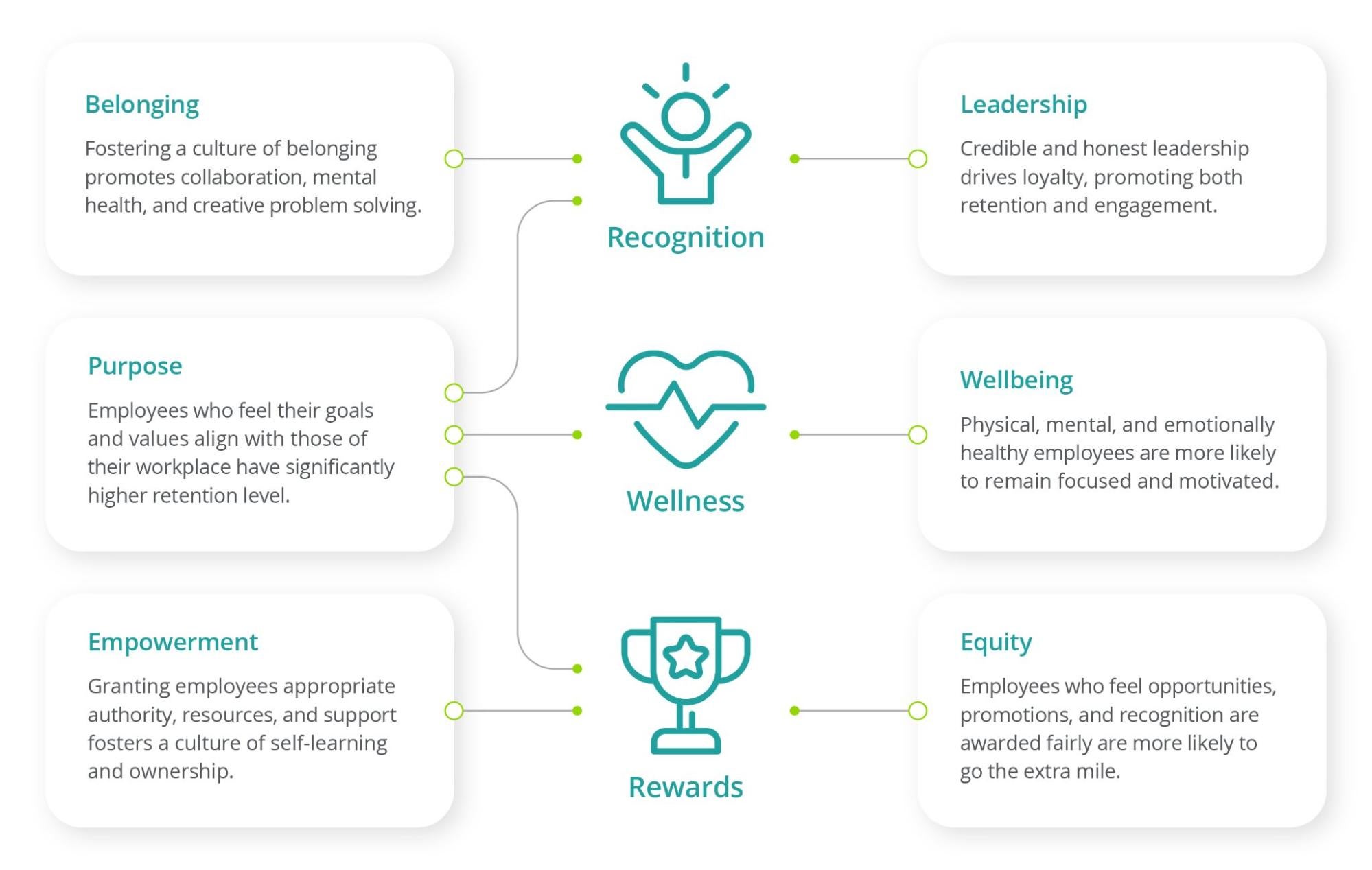
Because these indicators are analyzed alongside recognition activity, HR teams can answer more strategic questions, such as:
- Are employees who receive consistent recognition reporting stronger belonging and purpose?
- Do teams with higher manager participation in recognition show stronger leadership sentiment?
- Are highly recognized employees showing early signs of burnout or disengagement?
- Is recognition distributed evenly, or concentrated among a small group of employees?
- Has engagement shifted since launching a new recognition or wellness initiative?
Recognition data and listening insights are analyzed together in one system, so teams don’t need to export spreadsheets or manually review separate reports. This makes it easier to see patterns, compare cohorts, and track trends over time.
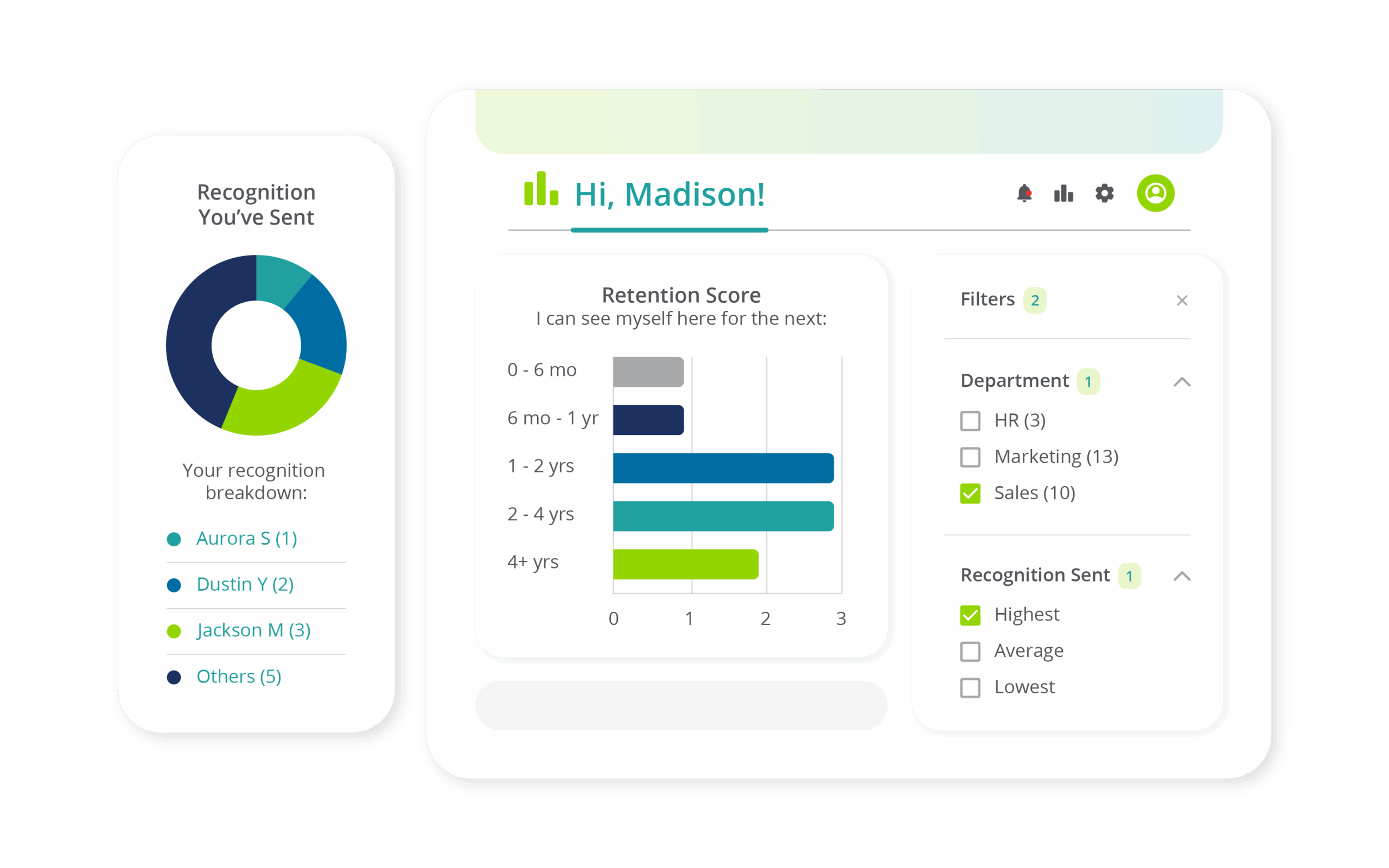
This is the difference between running a recognition program and managing one strategically. Leaders gain clearer visibility into what’s working, where recognition is breaking down, and how engagement initiatives are influencing retention risk and the overall employee experience.
Getting Started with Terryberry
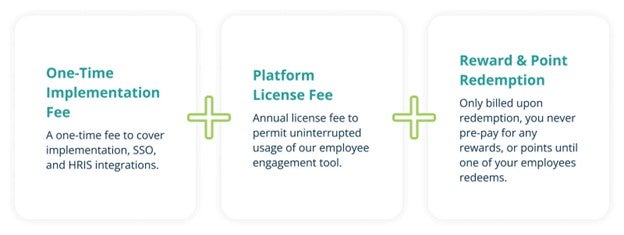
Terryberry is built around a pay-for-what-you-use model. Organizations are only billed when employees redeem rewards, so recognition budgets go directly toward employee experiences rather than administrative overhead or unused points.
Organizations can also start with only the features they need and add capabilities, like wellness programs, employee listening, advanced analytics, as recognition initiatives grow. There's no requirement to buy the full platform before you're ready to use it.
Schedule a demo to see how Terryberry would work for your organization.
2. Workhuman
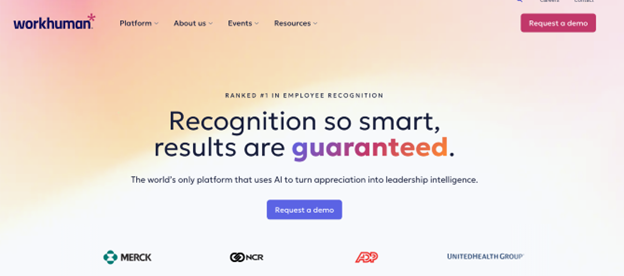
Workhuman is an enterprise employee recognition platform best known for service awards, milestone recognition, and formal recognition programs at large organizations.
It’s commonly used by enterprises that want structured, values-based recognition experiences tied to tenure, achievements, and company-wide initiatives. Compared to more flexible, lightweight tools, Workhuman is built for long-term, programmatic recognition rather than fast, everyday recognition across distributed teams.
Key features
- Life Events feature for recognizing personal and professional milestones
- Points-based rewards with a global catalog
- Social recognition feed with commenting and reactions
- Enterprise reporting and program administration tools
Workhuman does not disclose pricing publicly. It's an enterprise-first platform that requires a custom quote based on individual organizational needs.
3. Bonusly
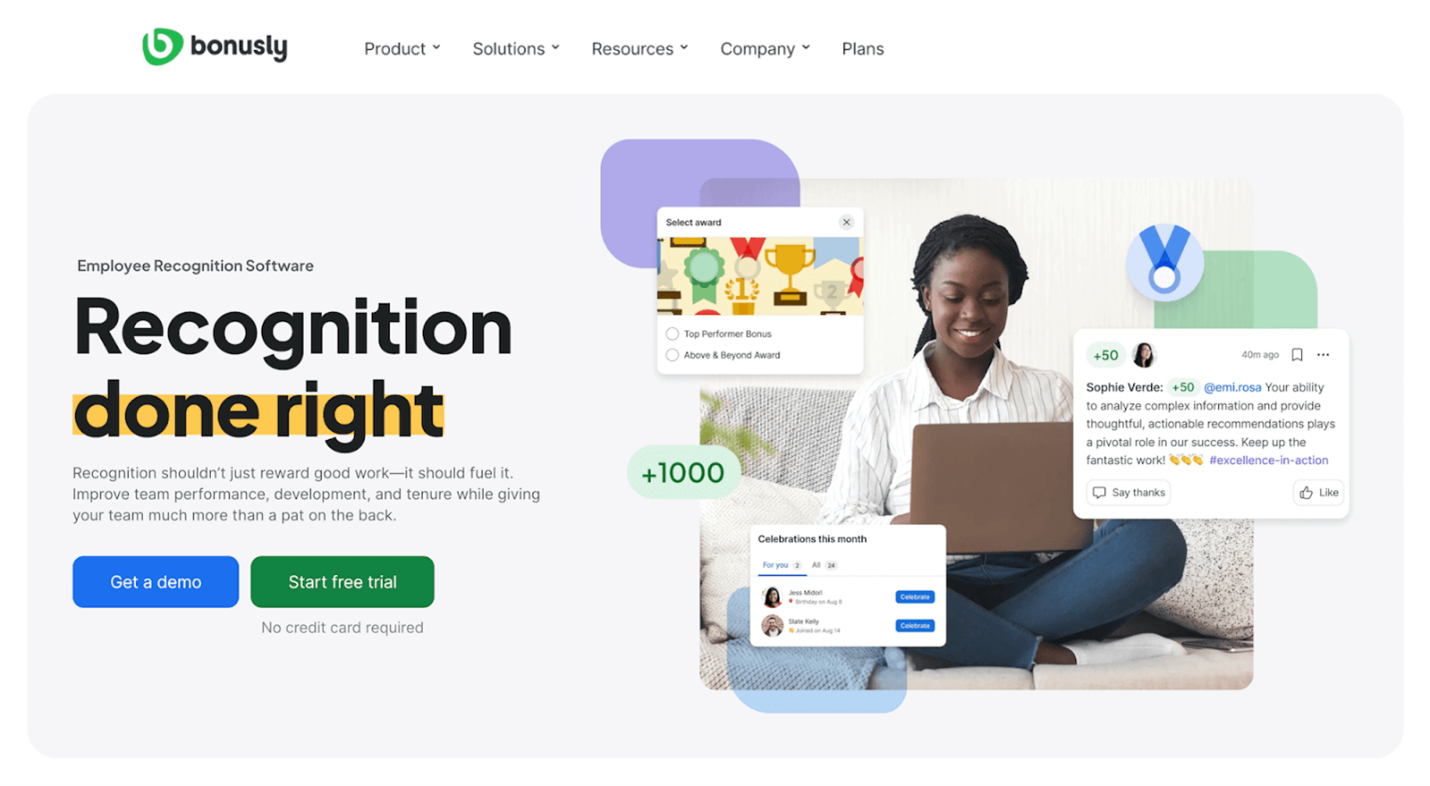
Bonusly is a peer-to-peer recognition platform that allows employees to award each other small point amounts for everyday contributions. All recognition on Bonusly is shared publicly inside tools like Slack and Microsoft Teams.
This is a tool built for small to mid-sized teams who prefer recognition to happen naturally in the flow of daily work rather than through formal programs or scheduled awards.
Key features
- Peer-to-peer recognition with small, frequent point allocations
- Public recognition feed integrated into Slack and Microsoft Teams
- Rewards redeemed through gift cards, donations, and custom options
- Manager tools for setting and managing recognition budgets
- Basic reporting on recognition activity and participation
Bonusly offers a free plan for small teams. Paid plans typically start around $3 per user per month.
4. Awardco
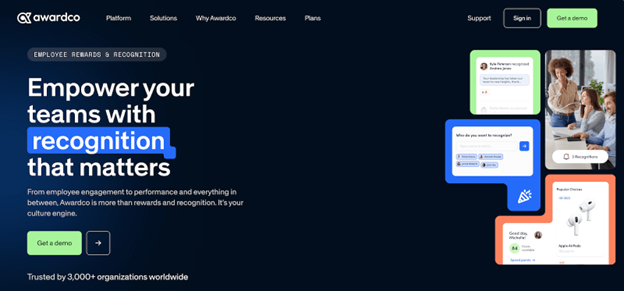
Awardco offers employee recognition and rewards features through an Amazon Business partnership. The platform gives employees access to millions of Amazon products at dollar-for-dollar point value with zero markups, alongside hotels, experiences, tickets, and charitable donations through a single redemption experience.
If you're looking for a platform with extensive rewards, Awardco is one of the best. However, the platform's social recognition and culture-building features are less developed than other alternatives on this list.
Key features
- Amazon Business integration with access to millions of products
- Dollar-for-dollar point redemption
- Celebrate module for milestone and service award programs
- Peer-to-peer and manager-led recognition with a social recognition feed
- Awardco Engage — an employee listening and survey tool
- Automated milestone reminders for birthdays, service anniversaries, and career events
Awardco offers three pricing tiers with custom pricing. All plans are customized based on organization size and feature requirements.
5. Kudos
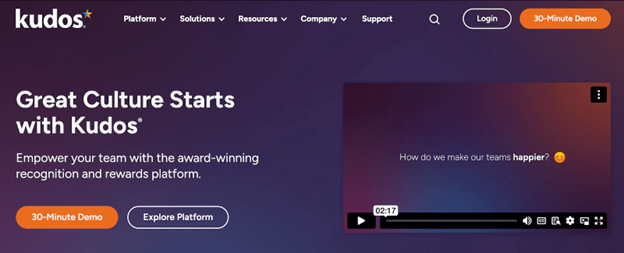
Kudos is a values-based employee recognition and culture analytics platform. It ties every recognition moment to company values and uses proprietary analytics methodologies to deliver insights on culture, performance, equity, and inclusion.
While the platform is great at handling employee recognition, many of the critical analytics features are only available in higher subscription tiers. It can be costly for organizations that want deeper cultural insights.
Key features
- Values-based peer-to-peer and manager-led recognition
- AI-powered Recognition Assistant
- Proprietary people analytics that measure culture, performance, equity, and inclusion
- Group eCards and milestone automation for birthdays, anniversaries, and career moments
- Pulse surveys built directly into the platform
- Gamification elements, including leaderboards and badges
Kudos pricing is custom only based on the number of users and subscription tier.
6. Nectar
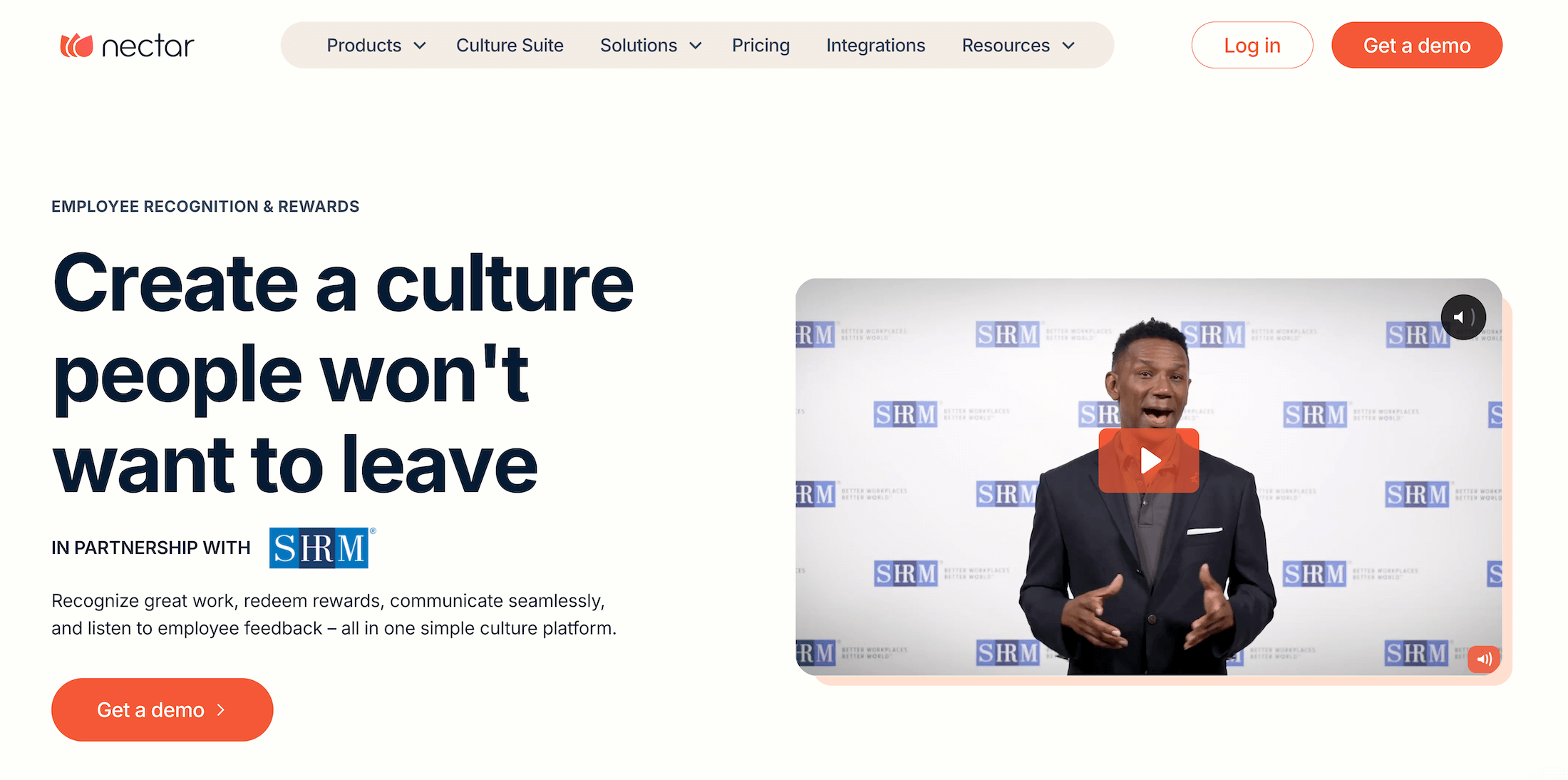
Nectar HR aims to help organizations build better culture through recognition initiatives like peer-to-peer shoutouts and reward redemptions. The platform focuses on day-to-day appreciation rather than structured recognition programs or deep engagement analytics.
It’s commonly used by small to mid-sized teams that want an easy way to send recognition and rewards through Slack or Microsoft Teams. It's not the best solution for organizations with complex program structures or a need for formal milestone programs.
Key features
- Social recognition feed with reactions and comments
- Points-based rewards redeemable through gift cards and branded swag
- Milestone and birthday automation
- Basic reporting on recognition activity and participation
- Integrations with Slack, Microsoft Teams, and other popular HRIS platforms
Nectar pricing requires a custom quote. But many users say there is a $4,000 annual minimum for recognition plans.
7. WorkTango
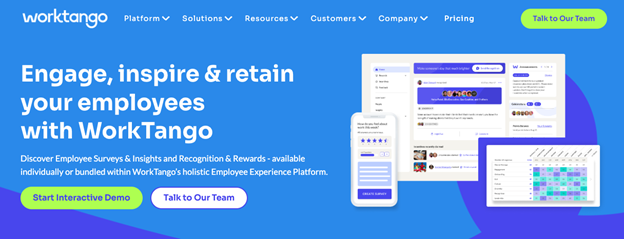
WorkTango is an employee recognition and engagement platform with built-in employee listening and survey tools. It syncs recognition and employee feedback, so HR teams have a more connected view of overall engagement.
That said, users who prefer a tool with a deep rewards catalog or robust wellness capabilities may find WorkTango a bit limited compared to other alternatives.
Key features
- Peer-to-peer and manager-led recognition tied to company values
- Points-based rewards with a global catalog
- Built-in employee engagement surveys and pulse tools
- Reporting that connects recognition activity to engagement data
- Goal-setting and performance feedback features
WorkTango pricing is custom only. Plans are personalized based on organization size and the number of features required.
Finding the Right Achievers Alternative for Your Organization
The right recognition platform depends on what's actually broken. If Achievers is falling short because of reward limitations, adoption friction, or an inability to connect recognition to outcomes that leadership cares about, the alternatives in this guide each address those gaps in different ways.
With Terryberry, organizations can address all three of those gaps in one platform. Recognition, employee listening, wellness, and rewards run together in a single connected system, so HR teams aren't patching together tools or trying to reconcile data from separate platforms.
Most importantly, Terryberry directly connects recognition activity to employee sentiment data. This helps HR leaders gauge whether their programs are influencing retention, belonging, and engagement over time.
Schedule a demo to see how Terryberry turns employee recognition into measurable business outcomes.