March 27, 2026


May is Mental Health Awareness Month, and for organizations looking to make a real impact on employee well-being, this guide delivers practical activities you can implement whether your team is on-site, hybrid, or fully remote.
The best part? You don’t need a massive budget or months of planning to get started.
Key Takeaways
- May is Mental Health Awareness Month, observed since 1949. Use it as a launchpad for workplace mental health initiatives that extend throughout the year.
- Start small with one or two activities during May 2026, then scale what works. Quality matters more than quantity.
- Activities should normalize mental health conversations and raise awareness—they don’t replace professional care, EAP services, or therapy.
- Leaders and HR must actively participate to reduce stigma and encourage employees to engage.
- Options range from low-cost discussion circles and meeting norm changes to structured programs like mental health first aid training and wellness challenges.
Why Mental Health Awareness Month at Work Matters
Mental Health Awareness Month has been observed every May since 1949. In 2026, the national themes emphasize collective responsibility and the power of open conversation.
Mental Health Awareness Month Themes for 2026:
- “More Good Days, Together” from Mental Health America
- “Stigma grows in silence” from NAMI
The workplace context makes this more urgent than ever. Mental health challenges like anxiety and stress directly affect retention, productivity, and healthcare costs. So much so, research has found:
- 1 in 5 U.S. workers (19%) rate their mental health as fair or poor
- 4 in 10 employees (40%) say their job has a negative impact on their mental health
- Workers with poor mental health take ~4x more unplanned absences than others
- 42% of employees worry their career would be negatively impacted if they talk about mental health
- Nearly half fear being judged for discussing mental health at work
- Only 13% told their manager their mental health was suffering due to work
- 1 in 4 employees have considered quitting due to mental health concerns
- 7% have actually quit for that reason
- 57% of employees are unsure or unaware if their employer offers mental health resources
- 45% of managers don’t know how to access mental health care through benefits
- Over 80% of employees say mental health training is important to workplace culture
However, dedicated mental health awareness activities in May can help reduce stigma around mental health issues, boost psychological safety across teams, and signal that mental well-being is a business priority.
10 Ways to Plan Your Mental Health Awareness Month Campaign
Treat May like a themed internal campaign with a simple, memorable slogan. Something like “May for Your Mind” or “Make Space for Mental Health” aligns with national messaging while staying accessible.
1. Get Organized
Start planning by breaking up May into weekly themes. From there, you'll be able to fit smaller initiatives within these themes accordingly. For example, a four-week calendar might look like:
| Week | Focus | Sample Activity |
|---|---|---|
| Week 1 | Awareness & Education | Flagship “Mental Health 101” session |
| Week 2 | Peer Support | Launch listening circles |
| Week 3 | Self-Care Practices | 21-day micro-habit challenge |
| Week 4 | Resources & Commitment | Resource fair, leadership commitment |
Form a planning group that includes:
- HR representative
- One senior leader sponsor
- 2–3 mental health ambassadors
- Representatives from major departments
Communicate the campaign in mid-April via email, intranet, and team meetings. Outline dates, formats, privacy commitments, and how to participate.
Before May, deploy a short anonymous pulse survey about stress levels, engagement, and resource awareness. This baseline data helps you measure real impact.
2. Host Awareness Events and Educational Sessions
Live and recorded learning events make mental health topics accessible and credible. They help spread awareness while providing valuable insights employees can apply immediately.
Recommended sessions:
- Mental Health 101 at Work (early May): Led by a licensed clinician or EAP partner, covering stress, anxiety, depression, and available mental health support.
- Lunchtime speaker series (four Fridays in May): Topics like burnout prevention, sleep and performance, and supporting coworkers in distress.
- Manager training (90 minutes minimum): Focus on recognizing warning signs, responding with empathy, and making reasonable workload adjustments.
Consider a panel where employees or leaders voluntarily share personal stories about their mental health journeys. Establish clear guidelines about confidentiality and psychological safety.
3. Use a Wellness App for Challenges for Employees
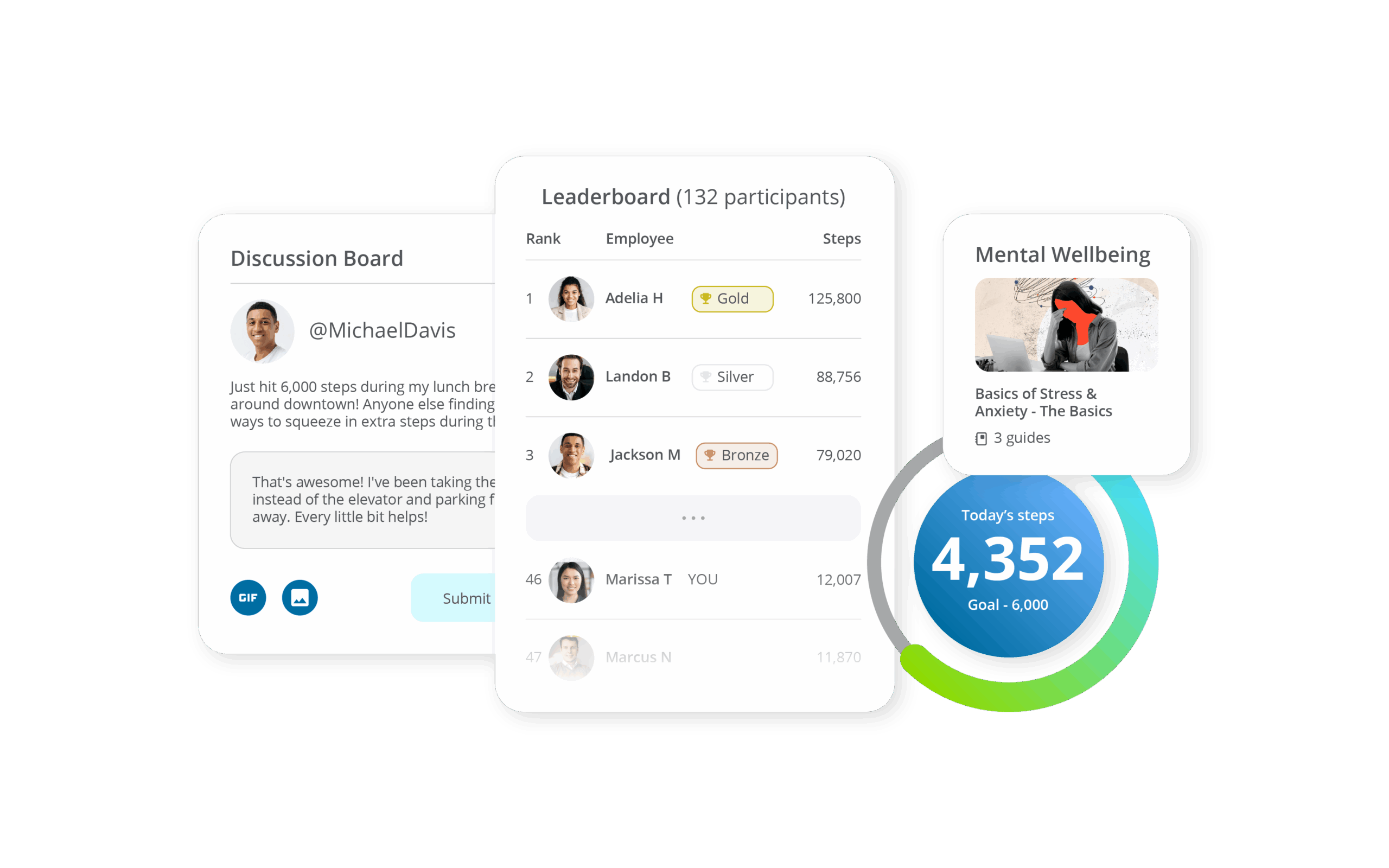
Practical, interactive activities help employees translate awareness into daily life behavior changes. Encourage participation while promoting mental well-being by bringing these initiatives into a dedicated space, like Terryberry’s Be Well platform.
A centralized wellness program helps employees stay engaged with challenges, track their progress, and build healthier habits together without adding extra complexity to their day.
Team wellness challenges: Include a range of challenges (both physical and mental), educational content, and competition.
- Hydration tracking challenge
- Step challenges
- Reflection prompts (cultivating gratitude, setting boundaries)
- Sleep hours tracked
- Mindfulness practices completed
21-day micro-habit challenge: Employees choose one small action—a 5-minute walk, breathing practice, gratitude note, or screen-free break—and track it throughout May. Micro-habits build momentum without overwhelming anyone.
Meeting-light afternoons: Block specific May dates (every Wednesday after 2 p.m.) as meeting-free to reduce feelings of Zoom fatigue and allow focus time.
Company-wide check-in day: Managers use a structured script at 1:1s: “How are you doing beyond work? What’s been good this week? What’s been challenging?”
4. Create Conversation Spaces and Peer Support
Peer connection and safe spaces for meaningful conversations are foundational to reducing stigma around mental illness.
Well-being circles: Small groups of 6–10 people meeting monthly with simple ground rules:
- Confidentiality (what’s shared stays in the circle)
- No fixing (listen and validate, don’t solve)
- Active listening (full attention, no multitasking)
Mental health coffee chats: Employees opt into 20–30 minute one-on-one virtual conversations to discuss coping strategies and check in on each other.
Ambassador network: Train peer volunteers to share resources, model healthy boundaries, and signpost colleagues to professional help. Ambassadors are not counselors—they connect people to appropriate support groups and services.
Remember, all peer initiatives must be voluntary, non-clinical, and clearly separate from performance evaluation.
5. Encourage Movement and Outdoor Time
Regular physical activity and fresh air are strongly linked to reduced stress, better mood, and improved concentration.
Walking meetings: Recommended for internal check-ins and brainstorming. Provide guidance on when walking works (collaborative sessions) vs. when privacy and note-taking are needed.
Weekly movement sessions: Host 15-minute desk stretches or gentle yoga suitable for all fitness levels, with seated options for employees with disabilities or chronic conditions.
“Out of Office for Outside” block: One May afternoon, encourage teams to step away for 30 minutes, spend time outdoors, and share photos on an internal channel.
6. Promote Mindfulness, Relaxation, and Digital Boundaries
Small pauses during the workday interrupt stress cycles and help improve mental health.
Guided meditation sessions: Offer daily or twice-weekly 10-minute sessions via live delivery or recorded audio. Note that mindfulness practices aren’t safe for everyone. For example, some people in certain stages of PTSD recovery may experience adverse reactions. Always make participation optional.
Teach relaxation techniques:
- Box breathing (inhale 4, hold 4, exhale 4, hold 4)
- Progressive muscle relaxation
- Grounding exercises (5-4-3-2-1 technique)
Digital Detox Hour: On one or more May Fridays, teams avoid internal email and non-urgent chat. This creates space for deep work and reduces notification fatigue.
7. Strengthen Policies, Resources, and Manager Support
Activities have the biggest positive impact when they're backed by clear policies, robust mental health benefits, and capable managers.
So consider reviewing workload norms, after-hours communication expectations, and PTO approval processes. Structural changes often improve mental health more than awareness activities alone.
Publish a “Mental Health at Work” guideline covering boundaries, confidentiality, accommodations, and flexible arrangements.
Senior leaders should publicly commit to using mental health days or PTO in May. When executives model work-life balance, it signals these practices are genuinely supported.
8. Provide Mental Health First Aid and Manager Training
Mental health first aid training teaches employees to notice signs of distress, listen non-judgmentally, and connect colleagues to professional help.
Managers need specialized training covering:
- Identifying early warning signs of burnout
- Handling sensitive disclosures
- Documenting performance separately from health issues
- Partnering with HR and legal when needed
Schedule at least one manager cohort training during May 2026. Include role-play scenarios tailored to your work environment, like a team member showing burnout signs or conflict triggered by stress.
Remind trained staff they’re not therapists. They must maintain boundaries and refer to mental health professionals when issues exceed their role.
9. Create Quiet and Restoration Spaces
For offices, designate at least one room as a calm space with comfortable seating, soft lighting, minimal noise, and clear signage.
Guidelines:
- Short time limits (20-minute bookings)
- No phone calls or meetings
- Optional resources: coloring books, calming music, mindfulness cards, gratitude journals
For remote teams, offer virtual equivalents: designated focus hours, camera-optional meetings, and scheduled guided meditation sessions.
These spaces particularly support neurodivergent employees, those with sensory sensitivities, and people recovering from illness—creating a more inclusive environment for all.
10. Measure Impact and Sustain Efforts Beyond May
Mental Health Awareness Month should launch ongoing culture change, not exist as a one-time event.
Utilize employee surveys to ask about perceived stigma, resource awareness, stress levels, and which activities should continue. Be sure to emphasize that these surveys are completely confidential, and never collect individual health data.
Track participation metrics like:
- Event attendance
- Challenge sign-ups
- Resource page views
Summarize wins in an internal report shared with leadership and employees. Include anonymized quotes and personal experiences that demonstrate impact.
Choose 2–3 successful activities to embed into regular operations: monthly well-being circles, quarterly workshops, or permanent quiet spaces.
Budgeting and Planning for the Next Year
Build mental health goals into annual people strategy, DEI plans, and leadership development roadmaps. Involve employees in co-designing next year’s mental health awareness month activities via suggestion forms or focus groups.
Consistent follow-through builds trust. It demonstrates that mental health isn’t a one-month campaign but a core organizational value that makes a lasting impact on emotional well-being and the challenges faced by your people.
Frequently Asked Questions
How many Mental Health Awareness Month activities should we run at work?
Quality matters more than quantity. Start with 3–5 well-planned initiatives: one flagship training, one challenge, one peer-support activity, and one communication series. Assess impact before scaling. A school counselor or lesson plans approach works in educational settings; corporate environments should focus on activities matching their culture.
What if some employees don’t want to talk about mental health at work?
Participation should always be voluntary. Design activities to respect privacy by offering anonymous resources, self-paced learning, and opt-out options for group sharing. Some employees prefer engaging with a bulletin board display or written materials rather than live discussions.
How can we support mental health in a fully remote or globally distributed team?
Focus on virtual options: online workshops, digital resource hubs, asynchronous challenges, and flexible working norms. Schedule duplicate sessions across time zones or provide recordings. Creative writing workshops, art therapy sessions, and music therapy can be adapted for virtual delivery to help americans living in different regions stay up to date.
Do we need special legal or HR approvals for these activities?
Coordinate with HR, legal, and privacy teams to ensure activities respect confidentiality, avoid collecting sensitive health data, and align with local laws regarding accommodations and mental health screenings. This protects both employees and the organization while ensuring you can share resources appropriately.
How do we know if our Mental Health Awareness Month efforts are actually helping?
Use a mix of anonymous surveys, EAP utilization data, qualitative feedback, and trends in engagement or turnover over time. Look for shifts in self awareness about available resources and comfort levels discussing mental health topics. Celebrate mental health awareness month successes while identifying areas for better mental health support through a comprehensive mental health strategy promoted by the national alliance on mental illness and similar organizations.