January 1, 2026


Most advice about employee gamification makes it sound overly simple. Just add some points, badges, or challenges for employees and expect your workforce to become more motivated.
But anybody who's managed a real workforce knows it doesn't exactly work like that. If people are tired, unsure about their growth, or disconnected from their team, game mechanics don't fix the problem.
This is why many gamification programs fail. They rely on tactics that don't match how different teams work or what they care about. For instance, an employee leaderboard might motivate one group but discourage another. This typically results in challenges getting attention for just a few days or a week before employees lose interest.
Real employee gamification uses game-like elements to reinforce the behaviors, habits, and outcomes that matter to your organization. When these elements are tied to clear goals, they make everyday work more engaging and give employees meaningful ways to participate and improve.
But gamified programs can still go wrong if they are not designed well. In our experience working with more than 40,000 companies, including brands like Unilever, Ford, and Little Caesars, poorly built programs often create unhealthy competition, discourage teamwork, and lead to burnout. The best programs encourage the right habits, motivate consistent participation, and align recognition with real goals.
This guide is designed to help you use employee gamification to achieve all these goals. We’ll take you over:
- Core elements of employee gamification and how to use them
- Best practices that help you understand what motivates your workforce and align gamification with your strategic goals
- 15 employee gamification ideas you can use to support retention, culture, performance, and safety
- Real examples of companies that have used gamified programs to improve engagement at scale
- The types of gamification tools available and how Terryberry helps you implement these programs
Book a personalized demo and discover how Terryberry can help you engage your workforce.
The Elements of Employee Gamification
The right mix of employee gamification elements can support your employee engagement programs by keeping people motivated, encouraging culture change, and reinforcing your strategic goals.
Here are the most common types of game elements—and why they’re useful:
- Achievement markers: These markers can be digital tokens or physical symbols (such as jewelry, pins, or badges) that recognize key contributions, distinguished achievements, or milestone moments.
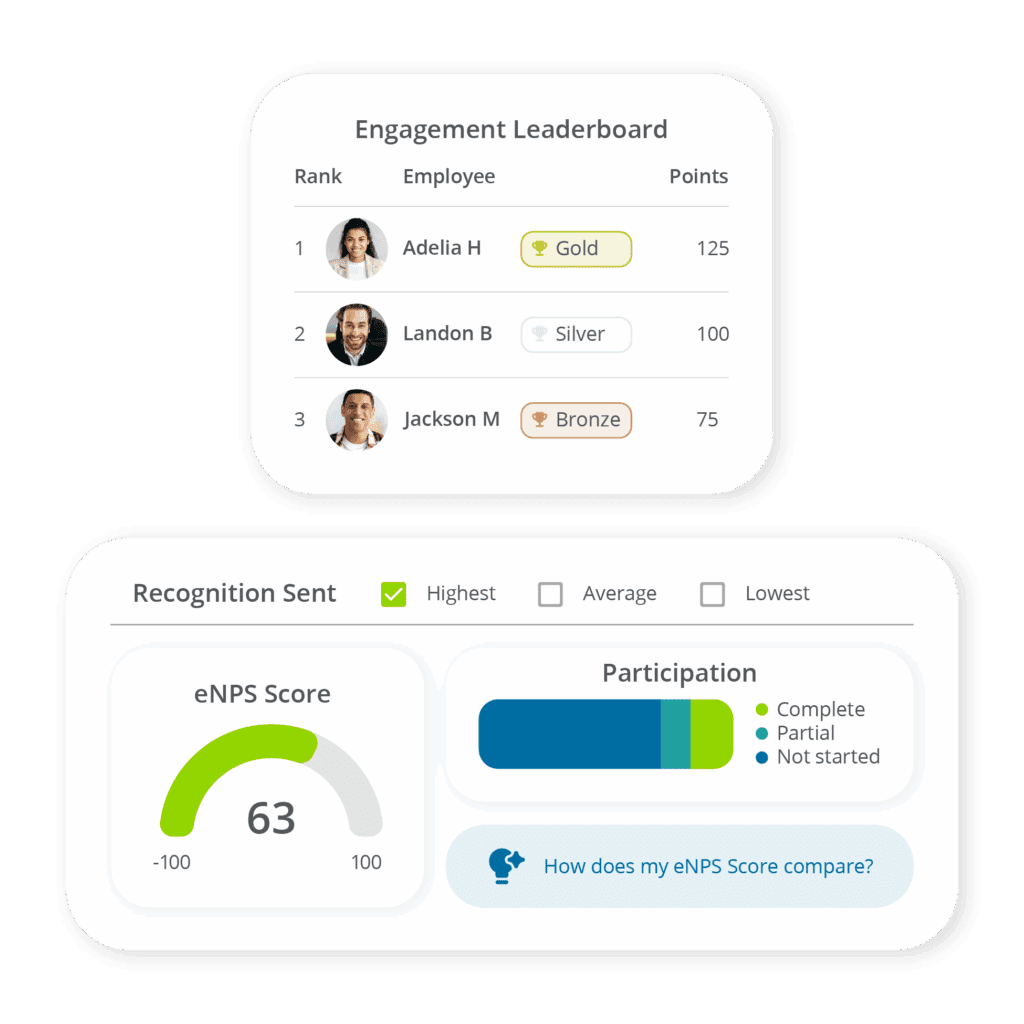
- Leaderboards: These create friendly competition by displaying ranked performance for individuals, teams, or both.
- Challenges: These break down employee engagement initiatives into manageable, routine tasks. For example, step challenges are a popular way to help employees build healthy habits.
- Progress tracking and levels: Progress bars keep employees motivated by showing how far they’ve come. You can set up “levels” for people to advance through as they progress.
- Points, incentives, and rewards: These tools boost participation by offering extrinsic motivation. Reward systems let you assign points for specific actions, such as completing training, reaching service milestones, or earning a team MVP nomination.
- Employee recognition: Recognition apps allow managers and peers to acknowledge achievements in real time. Managers can highlight team accomplishments, and employees can recognize one another’s contributions.
Most employee engagement programs mix and match these elements to keep people motivated while driving different goals.
How to Get Employee Gamification Right
Below, we’ll show you how to design gamification programs that drive real business impact—by linking game elements to employee motivations, aligning programs with your strategic goals, and keeping people engaged at every step.
1. Identify the Factors that Motivate Your Workforce
Many organizations introduce gamification programs with good intentions and aim to boost engagement and performance. These programs can backfire when they are not designed well. Common issues include unhealthy competition or encouraging employees to chase fixed KPIs while losing sight of what actually motivates them.
To design gamified programs that work, you need to understand the factors that influence success. Research on employee gamification consistently shows three patterns:
- The way the program is designed matters.
- Employees respond differently based on their motivations.
- Programs need to align with organizational goals and culture.
We cover program design and goal alignment later in this guide. First, it is important to understand what motivates employees and how motivation affects engagement.
These motivators can be of two types:
- Intrinsic motivators: These come from finding work enjoyable, meaningful, or personally rewarding.
- Extrinsic motivators: These are external factors like employee recognition, rewards, bonuses, and promotions.
The most successful employee engagement programs are designed to appeal to people’s intrinsic motivators while strategically introducing extrinsic motivators at the right moments. In fact, many programs link extrinsic motivators to intrinsic ones—e.g., employee recognition that’s tied to core values.
Programs designed around employee motivations have been linked to increased participation, engagement, and productivity. With this in mind, we developed our own model to help companies measure and quantify the underlying sentiments that drive employee engagement.
With the help of three independent PhD researchers, we developed this culture model. It uses six engagement indicators to contextualize the impact of your workplace culture on employee engagement:
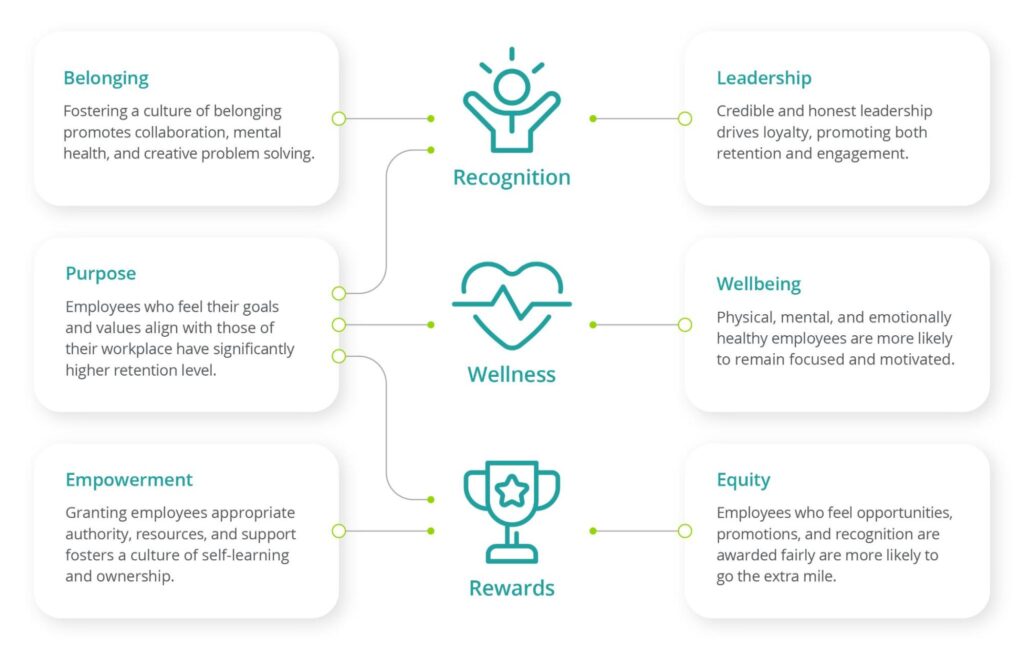
Each indicator reflects a specific aspect of engagement. For example, empowerment captures whether employees feel supported in their roles, while purpose reflects how strongly employees feel their work aligns with company goals.
Employee motivation also often varies across teams, roles, and managers. While no model captures every individual factor, identifying patterns across groups helps leaders focus on what actually needs to change.
To understand these patterns, organizations use employee listening tools such as engagement and retention surveys. These surveys provide early signals about where motivation is breaking down and which areas require attention.
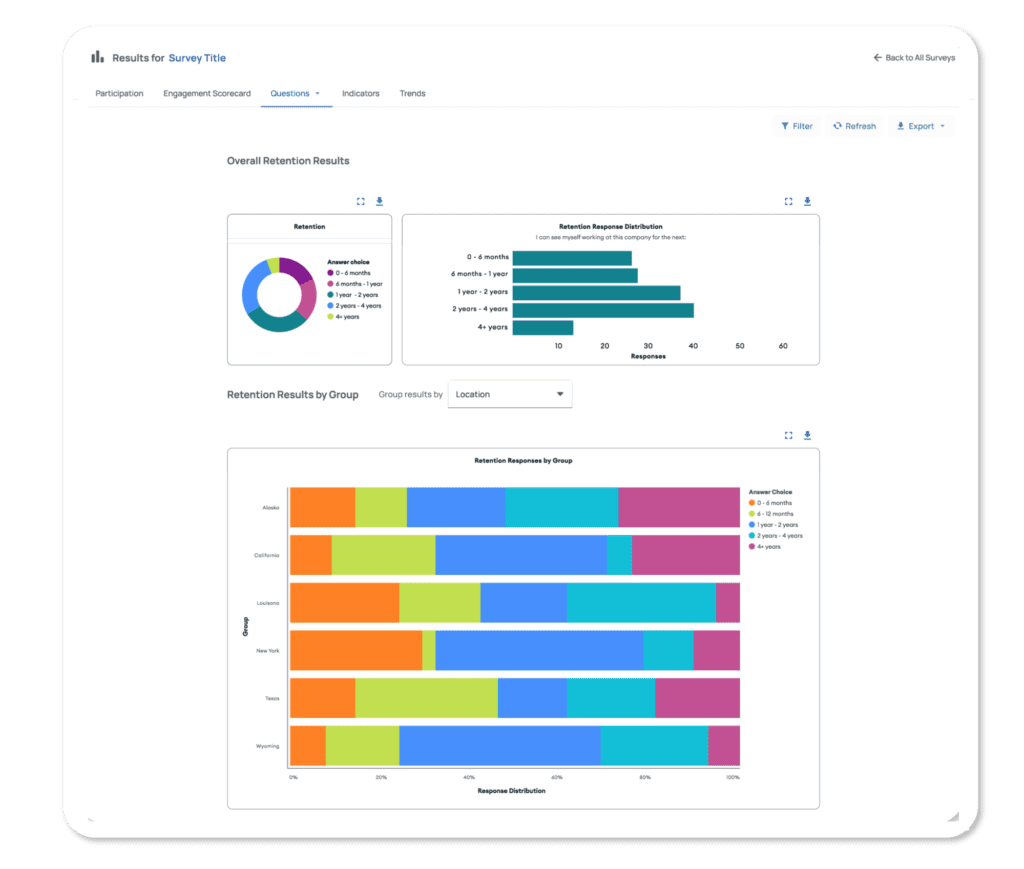
Survey insights become more powerful when combined with retention data and follow-up conversations, helping teams understand not just where engagement is low, but why.
Quantitative data should be supplemented with qualitative input, such as team feedback and manager discussions, to uncover root causes.
Gathering as much context as possible at the listening stage makes it easier to design engagement programs that directly address root causes.
2. Set the Right Strategic Objectives and KPIs
Most HR teams already have clarity on their high-level goals. You may want to reduce new-hire turnover, decrease absenteeism within a specific team, or make people feel more enthusiastic about their day-to-day work.
The challenge is translating those goals into programs that actually change outcomes. This is where employee listening plays a critical role. It helps you:
- Understand the factors that impact high-level KPIs. You may know retention or absenteeism are problems, but what are the root causes?
- Set overall program objectives. Maybe you don’t know which groups are most prone to turnover, or you lack specific insights into gaps in your workforce’s engagement.
Engagement indicator scores can also function as KPIs, much like eNPS. If a specific group is leaving because they do not see opportunities for growth, then equity and eNPS become the metrics that matter most.
Defining objectives this way keeps gamification focused on solving real problems instead of simply driving participation.
3. Design Programs that Motivate Employees and Support Your Goals
As we have discussed, the way you design engagement programs and apply gamification plays a major role in whether you reach your goals. From our experience, success comes down to two things:
- Choosing the right type of program and tailoring it to your objectives
- Maximizing participation across your workforce
When done well, gamification supports both, making your initiatives more effective and engaging.
Choosing the Right Type of Program
Most HR leaders already know which types of programs they need based on their findings from employee listening or gaps they’ve sensed themselves. Safety programs are a natural choice if your goal is to reduce incidents, recognition programs can boost retention, and L&D programs empower employees and support their growth.
If you’re tracking engagement indicators, the scores can help you decide which programs to prioritize. For example:
- Low empowerment scores → consider L&D programs
- Low well-being scores → consider wellness programs
- Low belonging scores → consider peer recognition programs
But things aren’t always this straightforward. For example, let’s say managers score low on well-being and empowerment because they don’t feel supported in their roles, which can fuel stress and burnout.
And maybe the root cause is systemic—perhaps managers are recruited internally, and employees aren’t given enough training beforehand. In that case, you’re not just looking at L&D programs—you may need to consider developing tailored career paths and performance management programs.
So when choosing which programs to invest in, the key takeaway is what we keep reinforcing: get as much context as you can by listening to employees and investigating the root causes.
Maximizing participation
Many companies come to us with engagement programs already in place but struggle to achieve strong, consistent participation, which severely limits their impact. We see this challenge across all types of initiatives, from step challenges to peer recognition and safety programs.
Getting participation numbers up comes down to four things:
- Removing friction: Programs should be easily accessible to all employees and give everyone a fair shot at participating. For example, can frontline workers easily participate in your recognition program (e.g., via mobile app and without requiring a corporate email ID)? Or, does your activity challenge accommodate different types of movement?Make sure you consider people’s schedules, device access, personal accessibility, and workflows when designing these programs.
- Motivating people with the right incentives: If you’ve tailored your programs to goals that resonate with employees’ motivations, you’ve already given them a big incentive to participate. Incentives can range from custom awards and charitable donations to paid vacations, electronics, and even wellness gifts. A rewards platform also lets you set up a points-based incentives system—where employees can earn points for their contributions and achievements, and exchange them for rewards.
- Smart gamification: Gamification elements can tap into both intrinsic and extrinsic motivators to encourage regular participation. For example, progress bars and personalized stats speak to people’s sense of self-achievement, while team leaderboards foster a collective sense of belonging and motivate people to win together. With the points system, you can also gamify everyday tasks and link them to tangible incentives. For example, employees can earn points for receiving recognition or completing safety missions.
- Getting leadership involved: Across all industries, leadership involvement has been directly linked to employee engagement and motivation. For example, Gallup shared this finding: “70% of the variance in team engagement is determined solely by the manager. Frontline managers, in particular, are the most crucial lever when it comes to engaging an organization's employees.” Meanwhile, extensive research into the U.S. public sector highlights the central role of senior leadership in employee engagement.
Our recommendation is to always look for ways to engage leadership in your programs—whether that means giving managers budgets to spend on employee recognition, asking senior leaders to present key milestone awards, or arranging lunch with senior executives for your top performers.
4. Measure Performance and Keep Iterating
The job’s not done yet. After your program goes live, it’s important to collect feedback, track KPIs, and review your analytics to identify any remaining gaps.
While tracking changes in metrics such as absenteeism and employee turnover can help you gauge progress, these alone don’t prove the impact of your programs. Maybe employee turnover is decreasing, but can you show leadership real data that proves your recognition program is the hero?
HR leaders commonly face this problem. They’re confident that the program’s working, and they can see some metrics or indicators improving—maybe eNPS is improving steadily or managers say their teams seem more engaged—but proving impact with consistent data remains elusive.
The fix here is to combine program participation data—top performers, total number of participants, manager participation, etc.—with insights from employee listening, such as eNPS and engagement indicator scores. Combining these insights lets you show tangible value, such as:
- The impact of employee recognition on engagement and retention. For example, do your more engaged groups show higher “purpose” and/or “belonging” scores? Are any indicators declining? You can do this by comparing eNPS and engagement indicator scores across:
- Your most- and least-recognized employees
- Teams with highly participatory managers versus teams whose managers rarely (or never) participate
- The impact of your wellness program on employee well-being. You can determine this by comparing employee well-being scores of your program’s top participants with those of the least engaged groups.
You won’t always see positive movement in engagement, retention, and other metrics across all groups—some may score lower in specific indicators and KPIs, and others might remain stagnant.
When you see these gaps, it’s essential to investigate the root causes using formal and informal employee listening techniques. For example:
- Have well-being scores decreased among your top-performing or most recognized employees? Can you attribute this to increasing responsibilities and stress?
- Are some groups underrepresented in your recognition program? Why are their participation numbers low, and what can you do to improve them?
While it’s important to highlight your program’s wins—building leadership confidence in the process—identifying gaps and planning how to address them contributes to continuous improvement.
15 Employee Gamification Ideas To Support Your Goals
Check out these fifteen practical gamification ideas to energize your workforce and support your various business goals.
1. Interactive Onboarding
Turn orientation into an engaging journey with personalized missions, quizzes, and rewards for completing training modules. You can set up levels that new hires unlock as they complete tasks—like reading company policies, joining communication tools, or meeting their team.
These missions can also be tailored to different teams, too—e.g., engineers get coding challenges, while customer service reps get simulated customer interactions.
2. Peer Recognition
Peer recognition programs transform regular employees from bystanders in your engagement programs to champions of your culture. Peers can publicly recognize one another for going above and beyond in their work or for demonstrating the company’s core values. You can gamify these programs by awarding employees points each time they’re recognized.
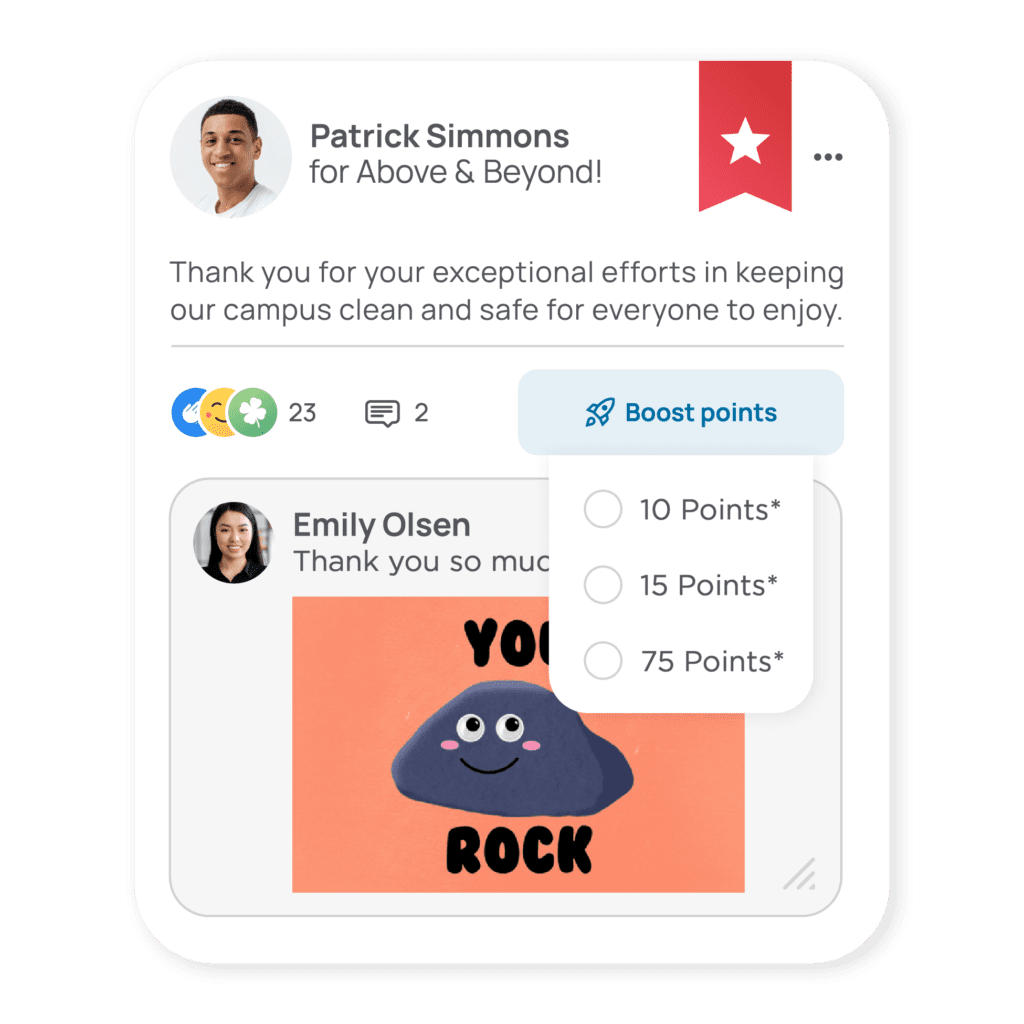
You can tailor recognition to different roles and goals. Warehouse teams might celebrate colleagues who help unload deliveries, store associates can thank peers for backing them up during peak hours, and care workers can recognize each other for assisting with patient transfers.
3. Manager Recognition Programs
As the name suggests, these programs empower managers to recognize employees on the spot for their achievements, contributions, and personal milestones. They’re especially effective in industries with large frontline workforces, where managers are the ones who see and appreciate daily efforts firsthand.
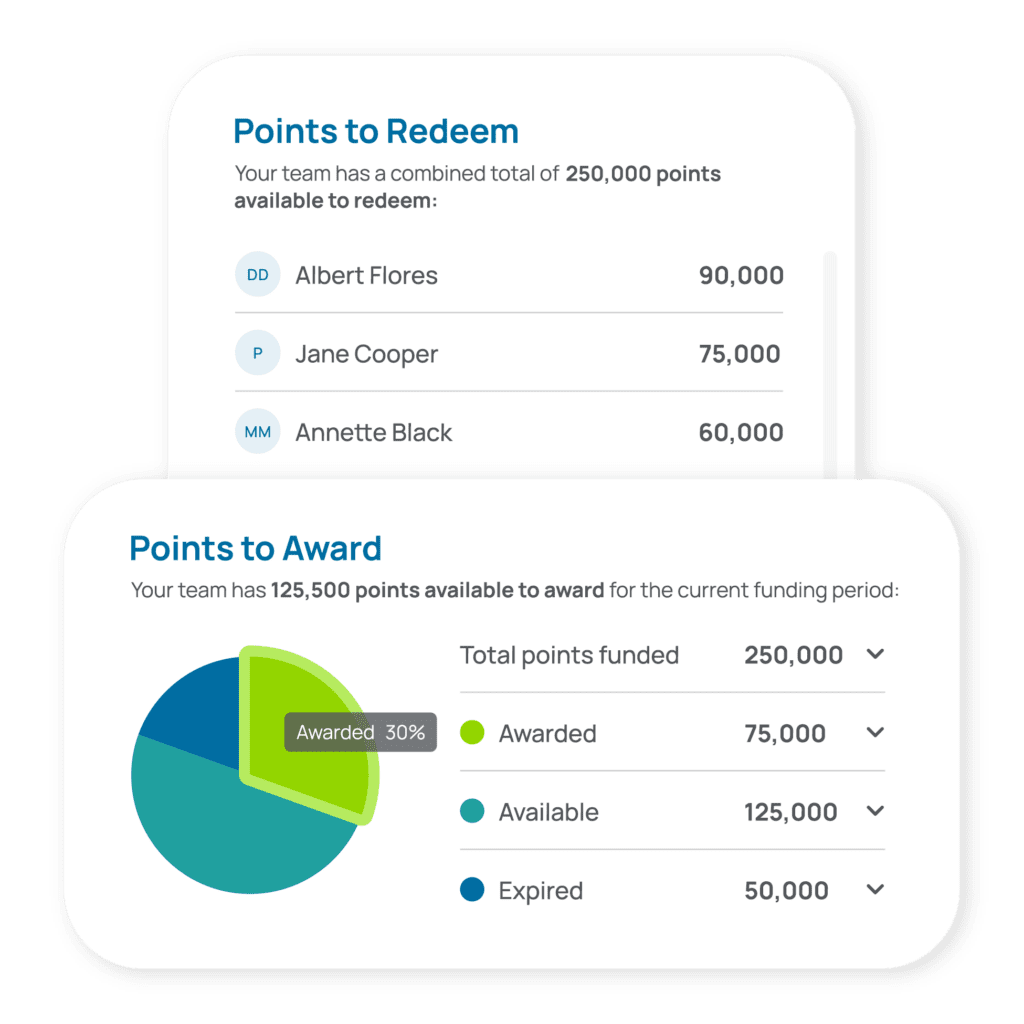
To boost employee engagement, you can even add a layer of friendly competition by using leaderboards that display how often each manager gives recognition and how much they’ve given overall.
4. Nomination Programs
Nomination programs are similar to peer recognition in how they encourage employees to celebrate each other’s contributions. The difference is that these programs use a voting-style setup to specifically recognize and reward people for their distinguished contributions or performance.
Companies typically use a mix of general nomination awards—such as “Team MVP,” “Best Mentor,” or “Employee of the Month”—and ones tailored to specific roles, such as “Customer Champion,” “Cashier of the Month,” or “Safety Hero.”
5. Performance Incentive Programs
Motivate teams to hit their KPIs and encourage healthy competition with performance incentive programs. You can tailor them to goals such as hitting revenue targets, meeting on-time delivery goals, and achieving high customer satisfaction scores.
These programs usually display leaderboards so everyone can see their progress and where they stand among their peers. Top performers are publicly recognized and receive custom awards, special gifts, or bonuses.
6. Celebrating Milestones
Recognizing minor and major milestones makes employees feel seen and valued. You can set up milestone programs to celebrate everything from birthdays to work anniversaries and personal achievements (such as marriage or a first baby) with shout-outs, custom awards, or personalized gifts.
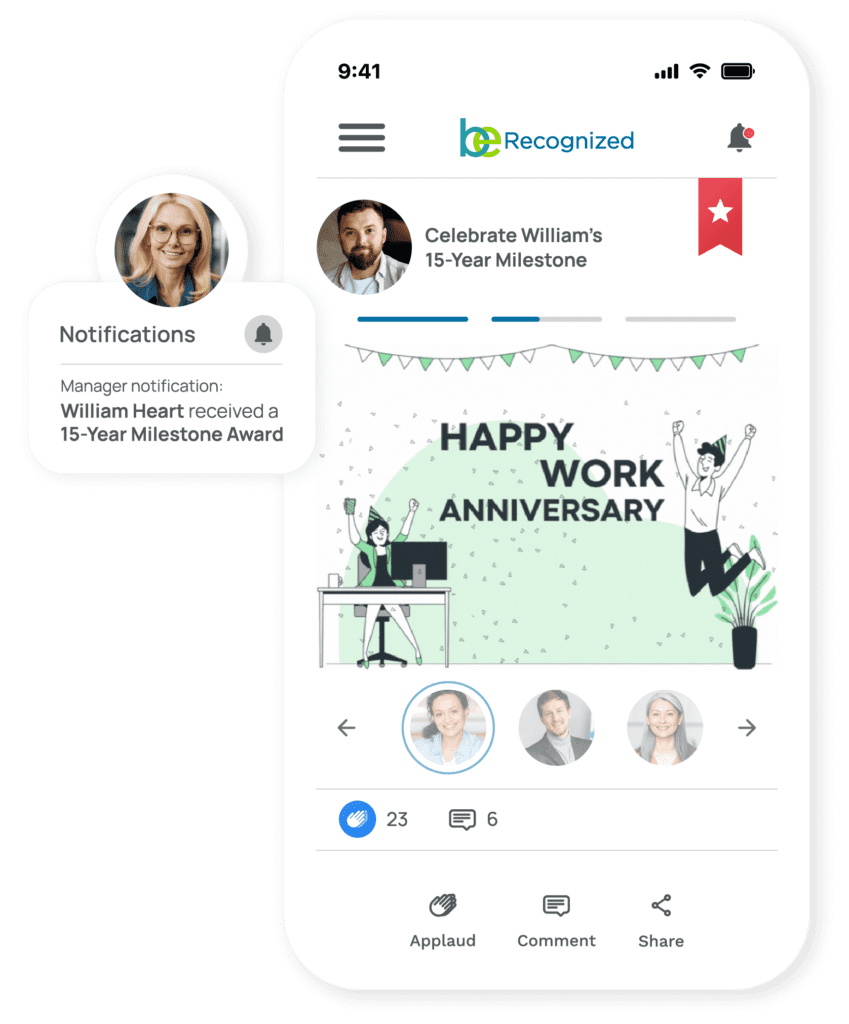
Years-of-service award programs are a popular choice for companies specifically looking to boost long-term retention. These programs celebrate key service milestones—such as first-, third-, fifth-, and tenth-year anniversaries—and usually offer progressively higher reward tiers.
For example:
- First year: Company swag, like a mug or thermos
- Third year: Personalized plaque signed by leadership
- Fifth year: Luxury or lifestyle guides, such as custom jewelry or a spa retreat
- Tenth year: A paid family vacation
Service awards programs work best when they’re tied to meaningful recognition—i.e., you recognize the individual’s unique contributions and achievements. For example, maybe someone’s a great mentor to new hires, or consistently demonstrates your core values of integrity and discipline.
7. Customer Feedback Programs
When an employee receives exceptional customer feedback, the news often only reaches their manager—or, at best, their team. You can set up a feedback program where:
- Employees receive points from their manager each time they receive outstanding customer feedback. The feedback is also shared publicly—displayed on a bulletin board, broadcast on an internal comms tool or recognition app, or communicated via company newsletter—for everyone to appreciate.
- Employees who receive the most positive feedback in a specific period (e.g., quarter) receive personalized gifts. You can also award them badges such as “Customer Hero.”
These programs keep customer-facing teams motivated by celebrating the great work they do every day.
8. Team Activities
Use gamified challenges to strengthen teamwork and communication with initiatives like trivia contests on company knowledge or collaborative missions where teams earn points by completing shared goals. You can customize these missions to different teams, professions, departments, and facilities.
For example:
- Cross-shift groups can work together to reduce overall downtime.
- Nurses can work together to perform successful patient transfers.
- Manufacturing teams work together to meet production goals.
- Inventory teams help each other across zones to meet demand during peak season.
9. Wellness Challenges
Motivate teams to build healthy habits together with various wellness challenges, such as:
- Activity: Encourage physical activity with step‑count competitions and other fitness challenges, such as mobility drills or workout reps.
- Sleep: Reward employees for tracking healthy sleep habits, promoting rest and recovery.
- Hydration: Encourage employees to stay hydrated throughout the day with regular reminders.
These programs typically provide personalized progress tracking and team leaderboards, helping individuals monitor their own habits while fostering friendly competition that keeps everyone motivated.
10. Safety Missions
Encourage workers to contribute to a safe workplace through gamified missions that promote safety practices and protocols, such as hazard reporting and completing safety drills. Employees can earn “Safety Hero” badges for proactive contributions.
You can also track safety streaks—such as zero-accident and zero-injury days, weeks, and months—and celebrate shared milestones together.
11. Training Quests (Learning Milestones)
Turn routine employee training (e.g., safety, compliance) and upskilling into interactive quests with levels, badges, and rewards for mastering new skills. You can add progress bars that show people how many modules they’ve completed or the overall remaining percentage of the course.
Depending on the type of training program, you can also set up modules corresponding to experience or seniority levels—such as “beginner,” “intermediate,” and “expert”—motivating employees with another measure of progress.
Learning quests can also be tailored to different roles. For example, customer service reps may practice handling common customer issues through simulations or role-plays.
12. Innovation Challenges
Keep ideas flowing with innovation challenges tailored to different teams—encourage employees to pitch new ideas or develop creative solutions to persistent business problems. These programs don’t just promote creative problem-solving—they also boost engagement by involving employees in decision-making processes.
You can award points or prizes for creativity, problem-solving, and collaboration.
13. Knowledge Sharing Quests
Reward employees for sharing knowledge with their peers and helping each other grow into their roles and responsibilities.
You can set up peer mentoring programs where top mentors are publicly recognized and rewarded, and receive badges like “Knowledge Builder” or “Mentor Master.”
14. Sustainability Missions
Promote sustainability practices by gamifying eco‑friendly actions, such as reducing paper use, recycling, or conserving energy.
You can add gamification elements, such as personal stats and leaderboards, to keep people motivated, and award “Green Champion” badges and points to employees who consistently follow sustainable practices.
15. Cross‑Department Collaboration
Break workplace siloes down by encouraging cross-collaboration across different teams and departments. There are many ways to motivate both individuals and entire teams here through gamification.
For example:
- Leaderboards that track which teams and individuals have supported other departments the most.
- Personalized badges, such as “Bridge Builder,” can recognize employees who frequently support other functions.
- Shared rewards for teams that collectively lead the way in cross‑functional support.
3 Real-World Examples of Gamified Employee Engagement Programs
We’ve helped over 40,000 companies successfully implement gamified employee engagement programs that follow the best practices we’ve covered above. Below, we discuss three of these programs and explain how gamification elements were used to motivate people and support strategic goals.
1. Chelsea Groton Bank’s Acorn Rewards Program
- Program type: Peer recognition tied to core values
- Key result: Participation numbers that are double the industry average
Chelsea Groton Bank is the largest mutual bank in Eastern Connecticut, operating across 15 locations and employing over 200 people. When their team approached Terryberry, they already had a milestone awards program in place to celebrate special moments.
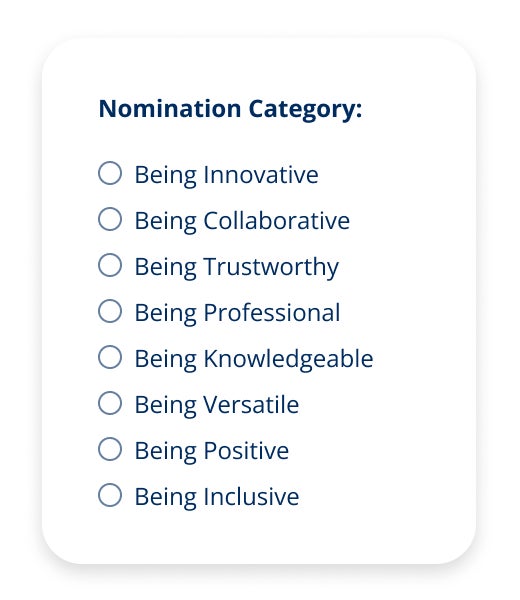
As Chelsea Groton’s operations grew, the bank wanted to expand its recognition program to also appreciate day-to-day contributions and promote the company’s seven core values: being innovative, collaborative, trustworthy, professional, knowledgeable, versatile, and positive.
The Acorn Rewards Program
Chelsea Groton Bank approached us with an idea for a gamified peer recognition program called “Acorn Rewards”. The program was tailored to the company’s core values and used the theme of collecting acorns.
So, team members could recognize each other with a “Purple Acorn Award” when they observed a peer demonstrating one of the bank’s core values or going above and beyond in their work.
We set this up using Terryberry’s peer recognition program. When an employee wants to recognize a peer, all they need to do is select the core value:
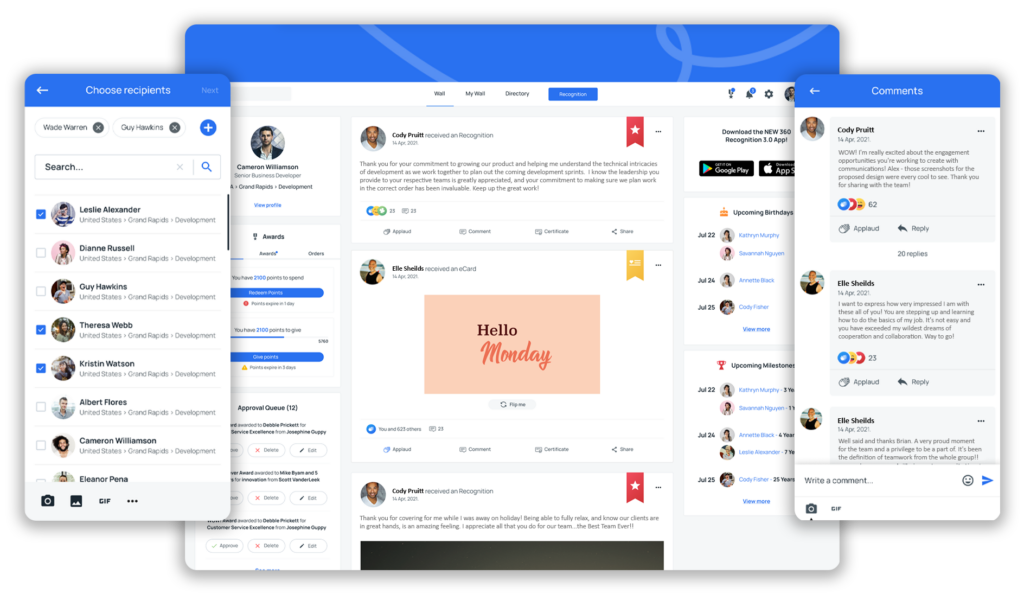
The recipient receives a Purple Acorn, and Terryberry’s culture hub displays the recognition moment for the whole company to see:
Chelsea Groton’s team also wanted to implement a tiered rewards system, where people unlock more rewards as they collect acorns. Employees receive a themed plush toy—a “Happy Squirrel”—after collecting their first 10 Purple Acorns. Then, for every additional 10 Purple Acorns received, they receive points that can be redeemed for luxury and lifestyle rewards.
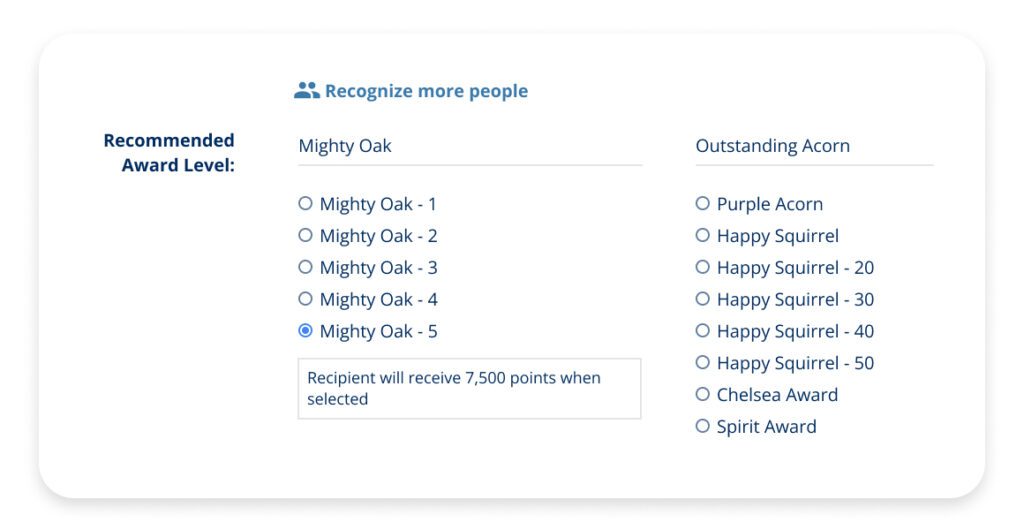
Employees who receive the highest level of recognition in the program—the Mighty Oak Award—are invited to attend one of the bank’s senior team meetings, where they’re recognized in front of their manager and senior leaders. They also receive points.
The bank used Terryberry’s Recognition analytics to track monthly participation in their gamified program—and discovered that it was more than double the industry average for financial organizations.
Rachel Evrett, Chelsea Groton’s HR specialist, thanked us for tailoring Terryberry to the company’s needs:
“Having the team from Terryberry behind the scenes has really helped our program succeed. Alex, Donna, and Arvid have always been very helpful in providing anything that we ever need, whether it’s reports, research or modifications to the site. That’s another reason for the level of success that we’ve seen.”
2. Moda Health’s Step Challenge
- Program type: Activity challenges
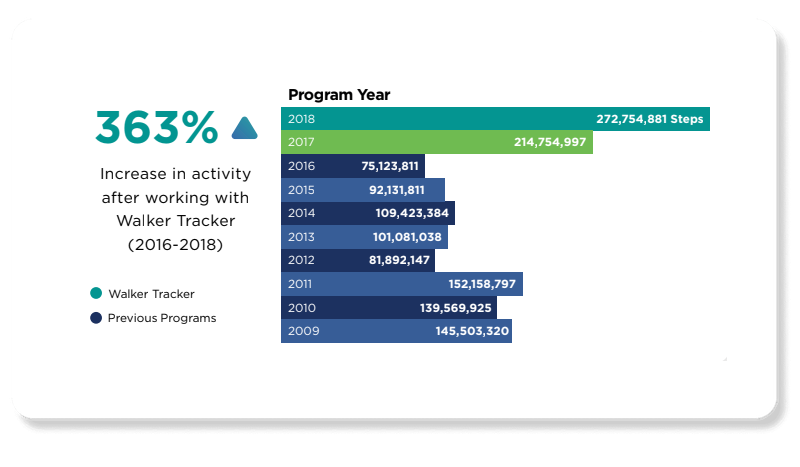
- Key result: 210% increase in employee participation in just 2 years
Moda Health is a Portland-based health insurance company that offers a comprehensive wellness plan for its 1,400+ employees, including fitness and mindfulness challenges.
When Moda Health approached us in 2016, they already had running and annual walking challenges in place that promoted wellness and charity fundraising. However, employee participation and activity levels flatlined across these initiatives.
Program managers also struggled to measure the program’s successes and where they were going wrong because they lacked detailed insights, including participation and step data.
Moda Health approached us to boost participation in their challenges through workplace gamification, streamline admin work, and provide managers with actionable insights into the program’s performance. We configured Terryberry’s wellness platform, Be Well, to achieve these goals.
After launching the step challenge with Be Well, participation in Moda Health’s program increased by 210% in just 2 years.
Using Be Well, we:
- Made the programs more interactive with gamified elements that track progress. Our challenge map included milestone markers and fun facts related to real-world destinations, providing employees with regular encouragement and keeping them engaged. Be Well (formerly Walker Tracker) also emails employees their weekly step stats so they can see their progress.
- Made it easy for everyone to participate. Employees can connect their different fitness devices and apps to track their steps conveniently. The activity challenges also support people who move differently, thanks to Be Well’s activity tracker, which converts other types of movement into steps.
- Helped Moda Health launch new types of challenges—including team challenges. Moda Health’s team uses Be Well to run different activity challenges throughout the year, including team challenges that motivate people to work towards shared goals.
3. Amteck’s Years of Service Milestones Program
- Program type: Milestone recognition tied to core values
- Key result: 85% retention rate among employees with 10 or more years of service
Amteck is a family-owned construction company that boasts excellent employee retention rates, thanks to its strong culture.
As the company expanded its workforce to over 1,000 employees across offices in 13 states, leadership noticed people were losing their connection to the company’s core values and, by extension, its culture. This put their substantial retention numbers at risk—which is why Amteck’s team reached out to us about launching a recognition program.
We helped Amteck develop a years-of-service awards program to build loyalty and cultivate its culture across its large, distributed workforce. The program:
- Tied recognition to loyalty and core values. Employees are recognized on their service anniversaries for the core values they’ve demonstrated. This led to a 65% increase in employees articulating core values within just 3 months of launching the program.
- Added custom incentives that symbolize tenure. We manufactured custom rings for Amteck’s program, each with an embedded gemstone corresponding to the recipient’s years of service.
- Engaged leadership in key recognition moments. Executives and senior leaders personally acknowledge employees’ contributions and award them with the custom rings on their service anniversaries.
Amteck’s years-of-service awards program helped the company achieve an 85% retention rate among employees with 10 or more years of service. Using Terryberry’s recognition platform also reduced the program’s administration time by 70%.
Employee Gamification Tools: Are They Right For You?
Employee engagement software can help you launch all the different initiatives we’ve discussed above—safety missions, sustainability initiatives, activity challenges, milestone programs—you name it. The main types of tools are:
- Onboarding gamification tools: For designing interactive onboarding experiences. You can set up customized missions that include a mix of tasks. These tools also let you create custom paths—where new hires unlock levels or earn points/badges as they progress.
- Employee recognition software: To set up manager, peer, performance, and milestone recognition programs. You can customize nominations, set up automated milestones, let peers send kudos and shoutouts, allow managers to recognize people on the spot, and more.
- Employee wellness tools: These apps support employees’ physical, mental, and emotional well-being in different ways. They offer activity challenges, health tracking dashboards, and access to mental health or meditation resources.
- Employee safety tools: You can create safety missions, develop gamified compliance checklists, and launch safety milestone programs.
- Learning and development tools: These include various gamification elements that make learning fun and engaging. For example, personalized learning paths with progress bars, simulations, scenario-based challenges, learning badges, and more.
If you plan to launch employee engagement programs at scale, these tools are essential—especially if you’ve got a larger workforce. They:
- Automate program administration. Setting up and running these programs involves lots of administrative tasks—including tailoring programs to strategic objectives, onboarding employees to the program, tracking participation, managing budgets and rewards, etc.The right employee gamification platforms include built-in tools to manage and automate all these tasks, freeing HR teams to focus on the more strategic aspects of driving engagement.
- Bring your programs directly to your employees. For example, via mobile app or through the tools they use to communicate. This is especially important for busy frontline teams that are always on the go.
- Centralized analytics. While standalone gamification tools only share participation metrics, all-in-one systems like Terryberry also let you track budgets and the impact of each program on employee engagement and retention.
Up next, we’ll show you how to manage gamification programs—from identifying people’s motivations to setting up gamification and adding incentives with Terryberry’s fully integrated system.
Terryberry’s Employee Gamification and Engagement Platform
Terryberry’s employee engagement platform provides all the tools you need to uncover your workforce’s intrinsic motivations, launch gamified programs, add incentives, and measure their performance and impact over time.
1. Measure Employee Motivations and Sentiments
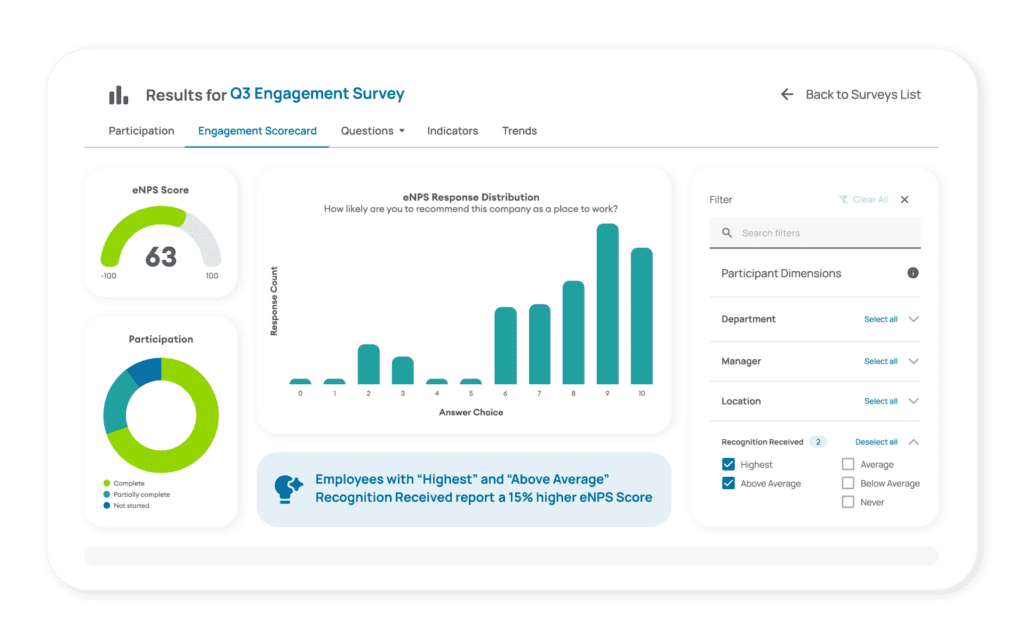
Our native employee listening tool—Be Heard—streamlines survey administration, automates admin work, and allows you to measure and track engagement and retention over time. It features:
✅ Dozens of ready-made, science-backed surveys. Measure employee engagement and retention using engagement and eNPS surveys, and add context using various others—such as employee satisfaction, integration, exit, and stay surveys.
✅ Multi-channel survey delivery. Be Heard delivers surveys across your preferred channels—such as desktop, mobile app, kiosk, via QR codes, and even paper-based—so you can capture responses that reflect your whole workforce’s sentiments.
✅ Participation tracking and follow-ups. Track the evolution of engagement indicator and eNPS scores across different groups over time, and send follow-up surveys to the same groups while protecting their anonymity.
✅ 6-response minimum threshold for anonymity protection. Program admins can’t drill down into the responses for groups with fewer than six participants (although the data is still included in aggregate scores). Our third-party encryption ensures individual responses can’t be traced.
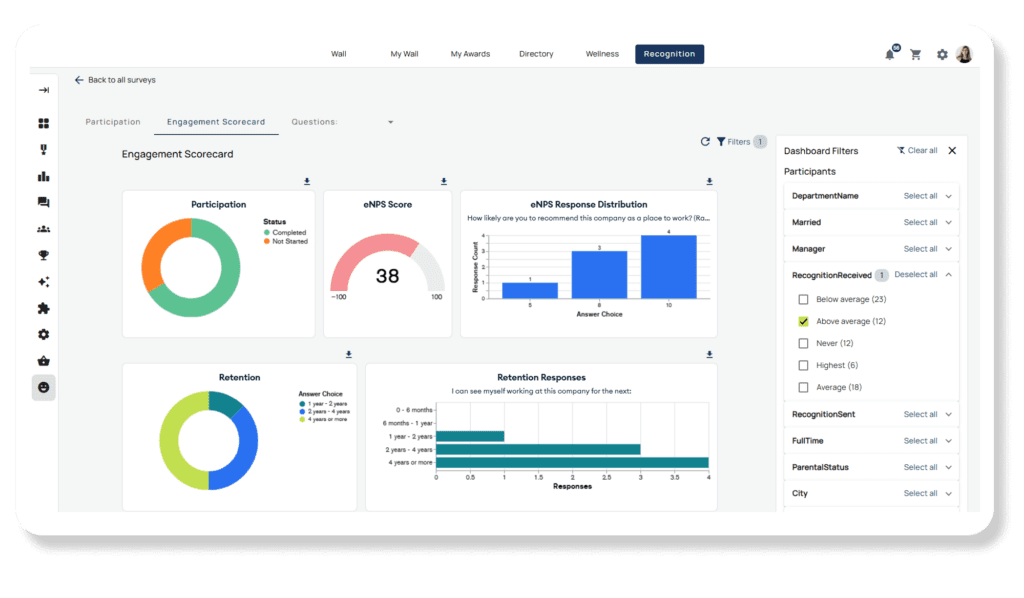
✅ Cohort analysis and actionable insights. Use Be Heard to track engagement trends with various participant filters—including ones for departments, age, gender, generations, facilities, job titles, seniority levels, and more. You can easily slice and dice this data and analyze it from different angles using multiple score views, including visual response distribution charts with scoring from -100 to +100.
2. Launch Gamified Engagement Programs Tailored to Your Goals
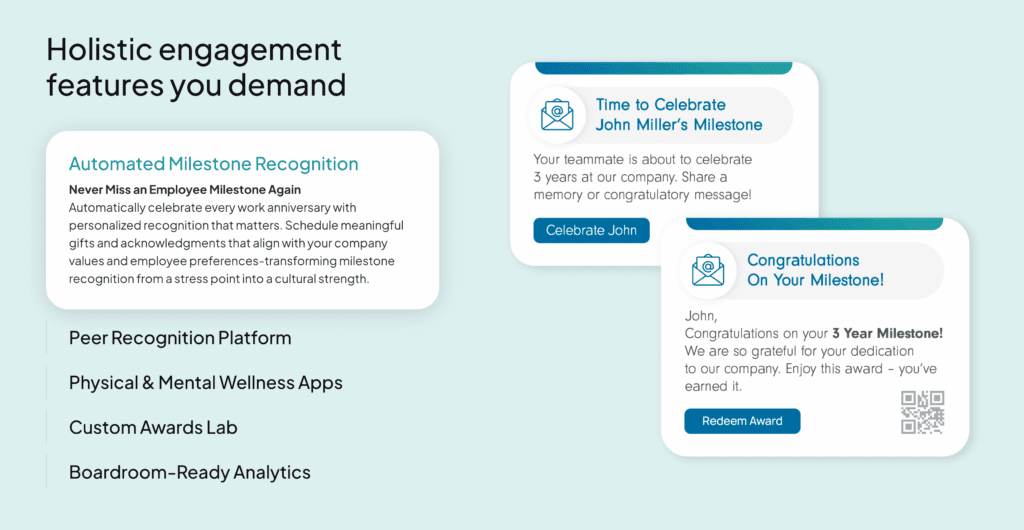
Terryberry offers native employee recognition, wellness, and rewards systems for launching gamified programs like those from Amteck, Moda Health, and Chelsea Groton Bank. You can:
✅ Tailor engagement programs to your strategic goals. Set up recognition, incentive, wellness, and safety programs using the same fully integrated system and tailor them to strategic objectives—such as promoting core values, celebrating service anniversaries, or achieving safety milestones.
✅ Add gamification elements. Customize nominations, add automated milestones, set up manager and team leaderboards, and enable managers and team members to recognize peers on the spot. Employees can easily see their personal progress—such as recognition received or steps logged—via Terryberry’s mobile app. You can also set up tiered reward systems where individuals unlock higher tiers as they progress.
✅ Add incentives directly to programs. Terryberry lets you set up points-based reward systems and link them to your programs. You can also configure tiered reward systems where individuals unlock higher tiers as they progress through.
✅ Give employees access to various types of rewards. Terryberry’s Premium Awards catalog lets you build custom shopping portals and ship rewards to employees worldwide through our network of local fulfillment partners. You can also access the largest selection of rewards in the U.S. market via Terryberry’s partnership with Amazon Business, and have custom awards manufactured by us (such as trophies, jewelry, and plaques).
✅ Make programs easily accessible to your whole workforce. We bring your engagement programs directly to employees—wherever they are, and however they work. Terryberry offers mobile and desktop apps, seamless integrations with Microsoft Teams and Outlook, offline rewards and recognition options, and customizable setups like kiosk programs to ensure accessibility for everyone.
3. Track Participation, Performance, and Impact with Centralized Analytics
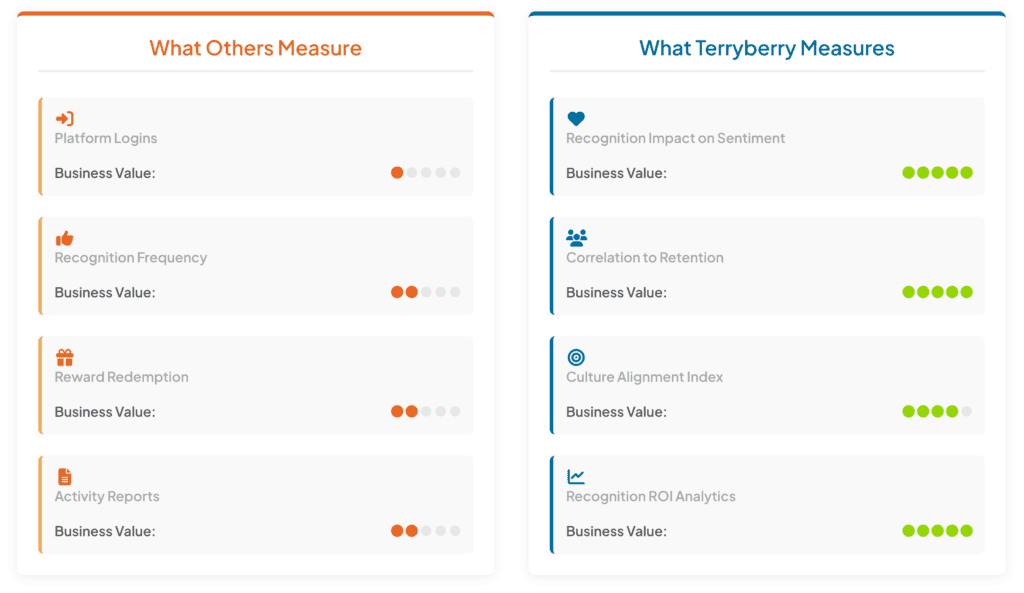
Terryberry combines participation metrics across all your engagement programs with insights from employee listening—namely, engagement indicator and eNPS scores. This allows you to track the impact of these programs on specific engagement indicators and retention over time.
For example, you can track the impact of recognition on engagement using filters to compare the engagement indicator scores of your “most” and “least” recognized employee groups.
If scores like “purpose” and “belonging” are higher among your most recognized employees, it shows the positive impact of your program. Combining these insights with eNPS scores can help you prove business value by showing the impact on employee retention.
Our centralized analytics dashboard lets you track trends across specific groups using participant filters and provides detailed insights into participation and retention:
Getting Started with Terryberry
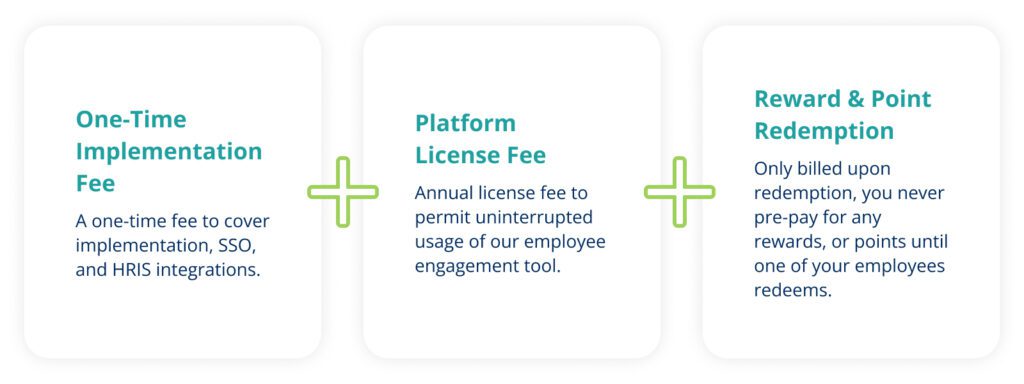
Terryberry lets you run a variety of gamified employee engagement programs within a single, fully integrated system. Our admin fees are 30-40% below the typical market average, and we only charge you for points that employees actually exchange for rewards.
Book a personalized demo and start launching gamified employee engagement programs with Terryberry.
Turn Employee Gamification Into Lasting Engagement
Employee gamification isn’t just about adding points, badges, or leaderboards and calling it a day. The most impactful programs use elements like these to engage employees in work that connects with their motivations and supports the business’s strategic goals.
The key to success lies in deeply understanding your workforce’s motivations, tailoring programs to these motivators and your strategic objectives, and continuously improving these programs over time.
By combining intrinsic motivators like purpose and belonging with extrinsic rewards such as recognition and incentives, organizations can create programs that engage their whole workforce and demonstrate real business value.
An all-in-one employee engagement platform like Terryberry lets you design impactful programs that remain fun and engaging. Schedule your personalized demo today.