February 23, 2026
 dashboards Reporting tools The best performance management software bundles all these solutions into one easy-to-use platform, facilitating the […])

Performance management systems turn stereotypically tedious employee reviews into data-backed growth narratives. They measure, monitor, and improve employee engagement with modern tools like:
- Real-time data
- 360 feedback
- Goal setting
- Employee recognition
- Peer-to-peer feedback
- Key performance indicator (KPI) dashboards
- Reporting tools
The best performance management software bundles all these solutions into one easy-to-use platform, facilitating the entire performance cycle and promoting user adoption, but choosing the right software to meet your company’s needs can be tricky.
You can find dozens of options, but you don’t need a one-size-fits-all solution—you want one tailor-made for your business and employees. The best performance management software should also ensure seamless connection with existing HRIS and collaboration tools to prevent manual data entry.
Finding that system is easier said than done, but that’s why we’re here to help. Below, we’ve compiled a list of the best performance management systems in 2026.
We’ll walk you through everything you need to know about these solutions to find the best platform for your unique needs.

What Is a Performance Management System?
Imagine tracking all your employees in a Google Doc. Things would get messy pretty quickly, especially if you have dozens (or hundreds) of employees with different wants, needs, goals, struggles, and opinions.
Fortunately, modern solutions solve that problem. Modern performance management systems can facilitate ongoing feedback, strategic goal alignment, and comprehensive performance evaluations. They transform dreaded annual reviews into platforms for ongoing support and real-time insights.
HR professionals like effective performance management systems because they streamline work and make their jobs easier—and employees love them because they feel more seen, heard, and recognized. Everyone wins.
Why a Good Performance Management System Matters
Performance management processes might start in a spreadsheet, but that’ll quickly become unsustainable. As you build your workforce and invest in employees, you’ll need a dedicated system you can trust to scale with your business.
Here’s why your business needs a performance management system:
- Boosts Employee Engagement: A good system keeps everyone in the loop, gives shoutouts for well-done jobs, and keeps team spirit high. This means more energy, more passion, and more productivity. Recognizing efforts and providing rewards can also boost employee morale and reduce turnover.
- Skyrockets Productivity: When your team knows the score (where they’re smashing it and where they’re falling short), they’re primed to perform better. Real-time feedback and clear goals keep everyone moving towards those big company wins.
- Fuels Talent Development: People stick around when they see you’re invested in their growth. A strong system doesn’t just track performance, it fuels career development and supports employee growth. It helps map out skills to develop, set meaningful goals, create effective training programs, and drive long-term organizational success.
- Improves Talent Retention: Employees who feel appreciated and see a clear path to personal and professional growth are more likely to stay with your business. Less turnover, more team stability, better work—it’s a pattern you want.
- Aligns Individual Goals with Company Objectives: Individual goals and company priorities shouldn’t be separate concepts. Performance management systems help you (and employees) see the big picture and set everyone up to win. Effective alignment leads to improved performance and supports professional performance for both individuals and the organization.
Performance Management Cycle
The performance management cycle is at the heart of every effective performance management process. Rather than being a one-time event, it’s a continuous loop that helps organizations and employees grow together. By following this cycle, companies can align employee goals with broader organizational objectives, improve employee performance, and boost overall job satisfaction.
Here’s how the performance management cycle works:
1. Planning: This stage sets the foundation. Managers and employees work together to set clear, measurable employee goals that support organizational objectives. This is where expectations are defined, priorities are set, and everyone gets on the same page about what success looks like.
2. Monitoring: Once goals are in place, it’s time to track progress. Regular check-ins and ongoing feedback ensure that employees stay on course and have the support they need. Monitoring performance data helps managers spot potential roadblocks early and provide constructive feedback to keep things moving forward.
3. Developing: Development is all about helping employees grow. This stage focuses on providing resources, training, and development plans to enhance employee performance and support career growth. Investing in employee development not only improves performance but also increases job satisfaction and retention.
4. Reviewing: Performance reviews are a key component of the cycle. Here, managers and employees reflect on achievements, challenges, and areas for improvement. These performance evaluations are an opportunity to celebrate wins, address gaps, and realign goals as needed.
5. Rewarding: Recognizing and rewarding good performance is essential for motivation and engagement. Whether it’s through formal recognition programs or informal praise, acknowledging employee contributions reinforces positive behaviors and drives ongoing improvement.
By following the performance management cycle, organizations create a culture of continuous improvement. This approach ensures that employee performance is always aligned with business objectives, leading to higher engagement, better results, and a more satisfied workforce.
Factors to Look for in a Performance Management System
Not all performance management systems are created equal. Some prioritize different aspects of the management cycle, while others cut features to make them more budget-friendly. When evaluating a performance management solution, it's crucial to identify the key components and key elements that will drive effective implementation and employee engagement.
Once you start looking through your options, these are the primary factors you’ll want to consider:
- Features: Make sure it provides all the features you need to improve your team’s performance and keep them engaged. Prioritize key features such as continuous feedback loops, multi-rater feedback, and robust analytics to ensure your performance management solution delivers actionable insights and supports ongoing development.
- Price: Look for a system that offers transparent pricing without hidden costs. Whether it’s a monthly subscription or a one-time purchase, it should fit your budget and provide a ROI.
- Scalability: Can the system grow with you? Find a tool that scales with your business to accommodate more users and evolving needs.
- Ease of Use: Performance management systems should not feel like rocket science. The system should have an easy-to-use interface that everyone can navigate without a manual.
- Customization: One size doesn’t fit all. Look for a system that lets you tweak settings, modify processes, and configure features to align perfectly with your structure and workflows.
- Integrations: A robust performance management system should play nice with other software you’re using—be it HR, payroll, or project management tools. The last thing you want is more open tabs.
- Analytics and Reporting: Data is great, but you don’t just want more numbers—you want insights. Your system should provide analytics and reporting to help you make informed decisions. Look for dashboards that provide real-time insights and easy-to-read data. Robust dashboards in performance management systems offer visual summaries of performance trends and help identify high performers.
Selecting the right performance management system is essential for aligning your organization's strategic goals with employee performance. Involving managers in the selection process can increase adoption rates by up to 60%.
Choose a software provider that can demonstrate impact, offer a robust performance management system, and integrate seamlessly with your existing HRIS and other platforms. This ensures your performance management solution supports continuous improvement and delivers measurable results.

15 Best Performance Management Systems of 2026
A quick Google search will send you down an endless rabbit hole looking for the best performance management system.
We’re here to simplify your search.
We’ve done the work to find, research, and evaluate the best solutions on the market so you choose the employee performance management software that enhances employee performance, engagement, and management.
From budget-breaking software with all the bells and whistles to minimalist platforms perfect for startups—there’s something here for every type of team and company.
1. Engagedly
Engagedly is an AI-enhanced comprehensive performance and talent management platform that combines continuous feedback, goals, 360° reviews, engagement tools, recognition, and integrated learning — all enhanced with AI insights.
They're best for medium to large companies, especially those with 50–5,000+ employees looking for a full performance and talent solution. Most users of Engagedly fall into this range, and it’s commonly adopted by growing enterprises rather than very small teams due to its pricing and feature set.
Key Features:
- Continuous feedback & check-ins
- 360-degree performance evaluations
- SMART goal setting & tracking
- AI-powered insights & analytics
- Integrated learning and development
- Employee surveys & engagement tracking
- Recognition & rewards system
2. BambooHR
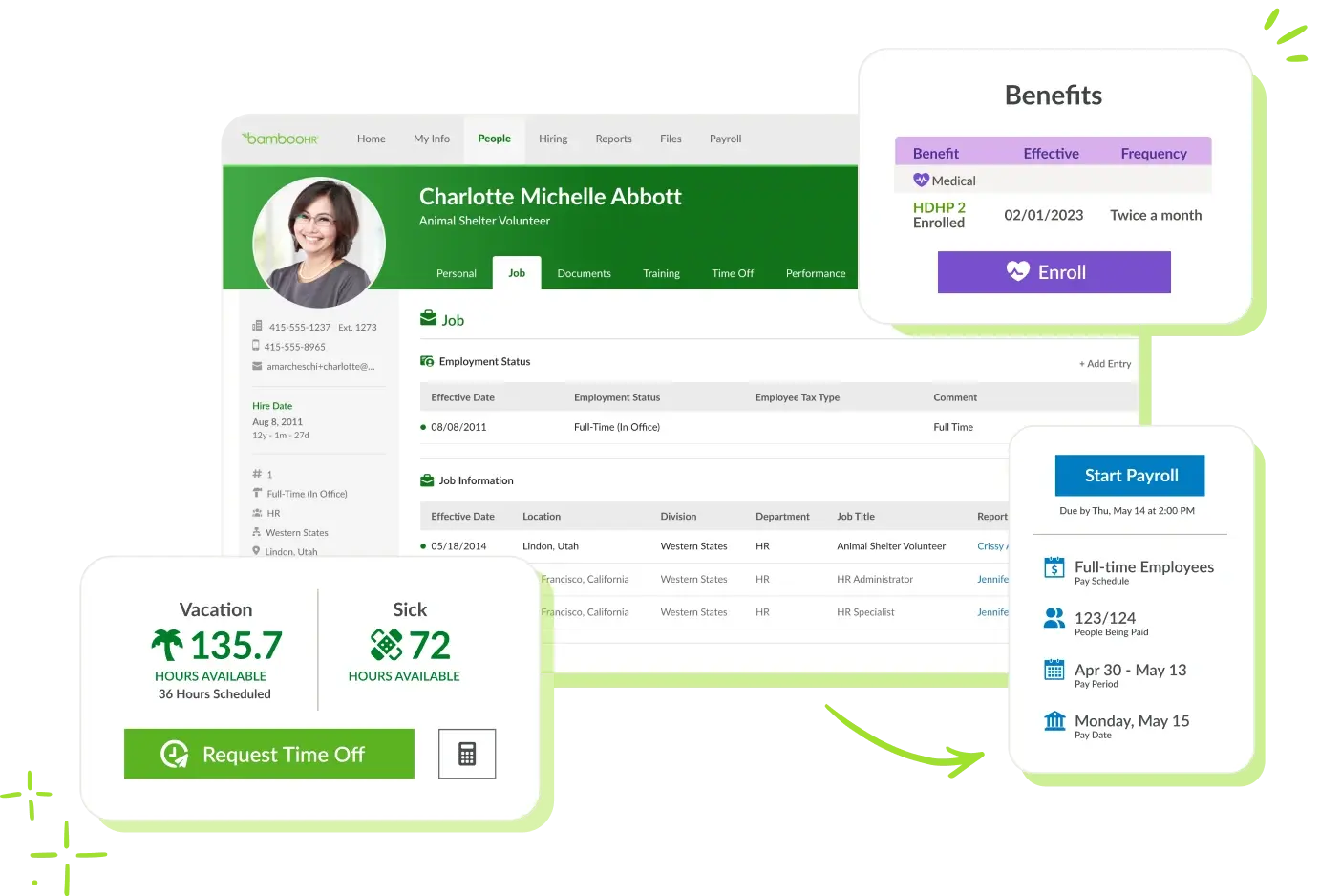
BambooHR is a simple, easy-to-use, effective performance management system designed for medium-sized businesses. Its focus on simplicity and streamlined processes make it perfect for small teams that want to do more with less.
BambooHR isn't the most robust or feature-rich tool on the market, but it's one of the easiest to use. They're best for small and mid-sized organizations (roughly ~20–500 employees) and are a great choice for teams that need to replace manual HR processes (Excel, email) with a centralized digital system.
Key Features:
- Employee Self-Assessment: Encourages employees to engage actively in their own performance evaluations.
- Automated Performance Reviews: Simplifies the review process with customizable templates and automated reminders.
- Goal Tracking: Lets employees and managers set and track progress on short and long-term goals.
- Peer Feedback: Creates a culture of open communication by allowing peer-to-peer feedback within the team.
3. Betterworks
Betterworks is an enterprise-focused performance enablement platform centered on goal alignment (OKRs), real-time feedback, coaching, and calibration — built to scale with global workforces and complex organizations.
They're best for large enterprises and mid-market organizations and is built to scale with complex, distributed organizations — including those with multiple departments, regions, and hierarchical layers — making it especially strong for mid-sized to large companies (often 1,000+ employees) with structured performance needs.
Key Features:
- OKR and goal alignment across teams
- Continuous performance reviews & feedback
- AI-assisted goals & feedback tools
- Calibration and talent assessment tools
- Integrated discussions and 1:1 conversation workflows
- Real-time analytics and reporting
- Integrations with Slack, Teams, Outlook, etc.
4. 15Five
15Five takes a different approach to performance management. It uses a psychologically intelligent framework to support continuous employee feedback and development. It focuses on weekly check-ins and finding ways to align individual goals with company objectives.
15Five transforms the traditional performance management platform into less performance appraisal and more performance conversations.
Key Features:
- Weekly Check-Ins: Enables regular communication between employees and managers to discuss successes, challenges, and feedback.
- Objective and Key Results (OKRs): Helps teams set and track strategic goals that align individual achievements with company objectives.
- High Five Recognition: Allows team members to publicly recognize each other's contributions and create a positive workplace culture.
- 1-on-1 Toolkits: Supports effective one-on-one meetings with guided agendas and conversation starters.
- Performance Review Automation: Streamlines the review process with customizable review templates and scheduling tools.
5. Lattice
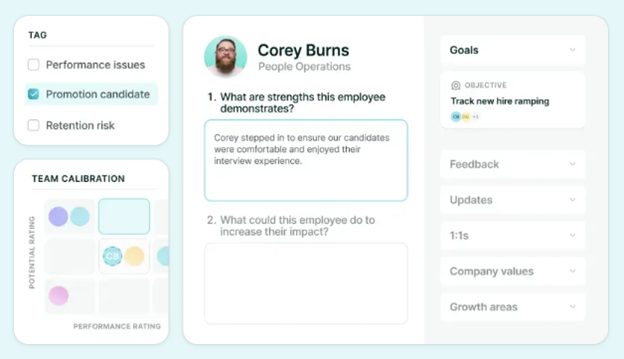
Lattice combines continuous performance management with development tools to focus on growth and feedback. HR teams utilize performance management systems like Lattice to improve workforce effectiveness and streamline HR processes. Lattice is all about feedback—it wants to give everyone a voice and an actionable growth plan.
It accomplishes this through employee surveys, peer reviews, goal-setting, and career development frameworks. Ongoing training and development are critical for enhancing employee growth and job satisfaction, and Lattice supports these initiatives.
Key Features:
- Goal Management: Helps employees set and manage SMART goals that align with organizational objectives.
- Feedback Tools: Provides feedback mechanisms like surveys, peer reviews, and manager assessments.
- Career Development Framework: Includes tools for career pathing to help employees understand and pursue their career objectives within the company.
- Engagement Surveys: Offers customizable surveys to gauge employee satisfaction and engagement.
- Integrations: Integrates with popular HRIS systems and productivity tools to keep all employee data connected.
6. ClearCompany
ClearCompany is a unified performance and talent platform that merges performance reviews, goal management, and engagement surveys into one solution with automation to support managers and HR.
Best for small to mid-sized companies, ClearCompany is commonly used by organizations in the ~50–1,000+ employee range that want structured performance management alongside recruiting and onboarding tools in one system. It appeals especially to HR teams who need integrated talent processes without overly complex enterprise tools.
Key Features:
- Structured performance review templates
- Goal setting & OKR tracking
- Engagement and pulse surveys
- Continuous feedback loops
- One-on-one management tools
- Analytics dashboards
7. Culture Amp
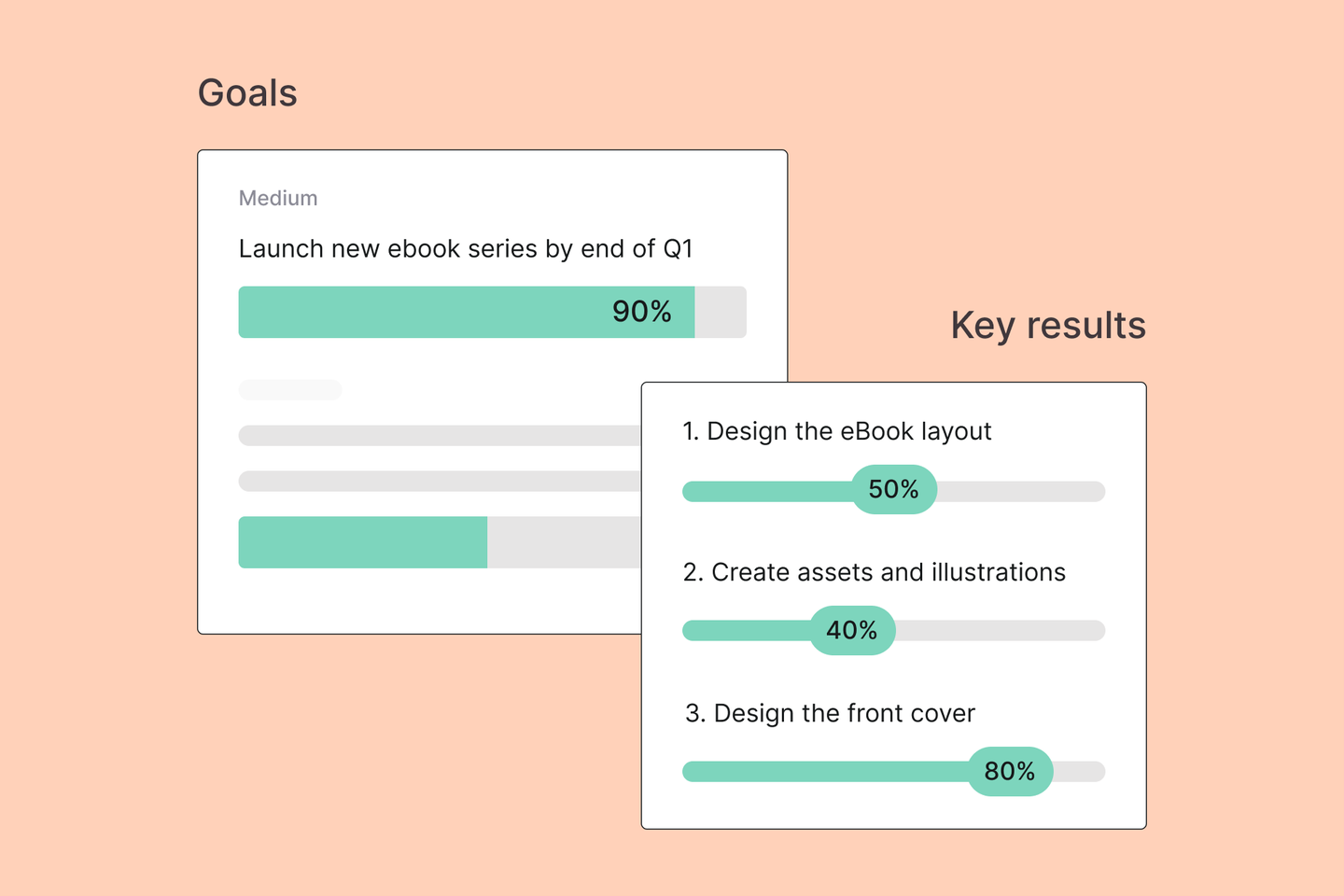
Culture Amp leverages cultural analytics and historical data to drive development and performance. Its reporting and dashboards make it easy for management to spot (and address) trending issues and concerns before they escalate.
It's easy for HR managers and stakeholders to build employee surveys, and employees can take them (and even leave feedback on the survey itself) with little to no hand-holding.
Culture AMP is all about providing your business with the insights it needs to make data-driven decisions regarding culture and organizational performance.
Key Features:
- Employee Feedback: Uses continuous feedback tools to give employees a voice in their development and the broader company culture.
- Customizable Surveys: Provide simple survey tools to measure engagement and inclusion.
- Performance Analytics: Delivers deep insights into individual and team performance through comprehensive analytics.
- Actionable Insights: Generates clear, actionable reports that help managers with decision-making.
- Integration Capabilities: Connects with other HR tools to provide a cohesive management experience.
8. Reflektive
Reflektive is a performance management tool built for continuous improvement, offering real-time feedback, goal management, and performance analytics that help teams stay aligned and engaged.
Integrating performance management with intranet platforms creates a more seamless and interactive experience for feedback and communication. Management by Objectives (MBO) is a performance management system that establishes clear objectives in partnership with employees and reviews them regularly.
Key Features:
- Real-time feedback mechanisms
- Goal setting/OKRs and tracking
- Continuous check-ins
- Employee engagement analytics
- Recognition features
- Simple review workflows
9. PerformYard
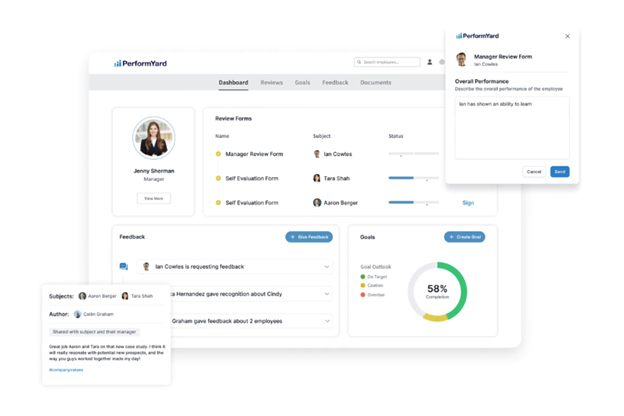
PerformYard provides everything from goal-setting and feedback to 360 reviews and performance evaluations—all without the rest of the clutter and complexities that come with some other platforms. PerformYard utilizes employee ratings to evaluate individual performance and influence company decisions; however, it's important to note that ranking employees can sometimes foster overly competitive environments.
It’s an excellent solution for small businesses that want to focus on performance management without the messiness of broader HR responsibilities.
Key Features:
- Streamlined Performance Reviews: Simplifies the creation, execution, and analysis of performance reviews with customizable templates.
- Goal Management: Allows precise tracking of employee goals with regular updates and progress reports.
- Continuous Feedback: Supports a culture of ongoing feedback with more timely and relevant performance discussions.
- 360 Reviews: Provides comprehensive feedback from multiple sources, including peers, managers, and direct reports.
10. Peoplebox.ai
Peoplebox.ai is an AI-powered performance and talent platform that brings together goal alignment (OKRs), performance reviews, continuous feedback, surveys, and one-on-one support — often integrated into Slack or Teams.
Performance management systems like Peoplebox.ai also support succession planning by helping organizations identify and develop future leaders, ensuring talent development aligns with business continuity.
Key Features:
- OKR & goal management
- Automated performance review cycles
- 360° feedback and calibration
- Auto-scheduled 1:1 meetings & agendas
- Engagement surveys & sentiment tracking
- Real-time analytics dashboards
- Seamless integrations with HR tools and communication apps
11. Workleap
Workleap is a performance management platform (formerly Officevibe) that helps teams run review cycles, collect continuous feedback, set goals, and gain performance insights — built to be flexible and intuitive for modern work environments.
Workleap also supports ongoing development, a continuous process integral to employee training, skill enhancement, and long-term organizational success.
Key Features:
- AI-assisted review cycle generation
- 360° performance feedback
- Customizable goal setting & alignment
- Continuous feedback loops
- Dashboard analytics & insights
- Development plan support
- HRIS and tool integrations
12. Small Improvements
Small Improvements is a flexible, user-friendly performance management tool aimed at growing teams, combining customizable reviews, 360° feedback, continuous praise, and engagement insights.
Small Improvements helps organizations manage employee performance by facilitating goal setting, providing feedback, monitoring progress, and coaching.
Key Features:
- Customizable performance review templates
- 360° feedback collection
- Lightweight goals & objectives
- Real-time feedback & praise modules
- 1:1 meeting agendas and notes
- Pulse surveys & engagement insights
- Integrations with Slack, HRIS, Google apps
13. Deel
Deel is a global HR platform with performance and feedback. Part of a broader global HR suite, Deel’s performance management tools help companies set goals, run 360° reviews, provide continuous feedback, and gain analytics — all tightly integrated with HR, compensation, and talent development workflows.
These tools are designed to promote alignment, motivation, and productivity across the entire organization, ensuring that performance management benefits every level of the company.
Key Features:
- Goal setting & OKR tracking
- Customizable 360° performance reviews
- Continuous feedback loops
- Development plans & competency mapping
- 9-box talent grid and analytics dashboards
- Skills gap analysis & competency profiles
- Integration with HR and compensation systems
14. Leapsome
Leapsome provides a comprehensive platform for performance management, employee engagement, OKRs, and development. Leapsome helps set clear performance expectations and align individual efforts with organizational goals, ensuring that employees understand how their work contributes to broader company success.
Leapsome is a great option for companies looking to integrate employee feedback with performance metrics to create a continuous improvement loop. The Balanced Scorecard is another example of a strategic performance management system that focuses on improving organizational performance in finance, customer, internal processes, and learning and growth.
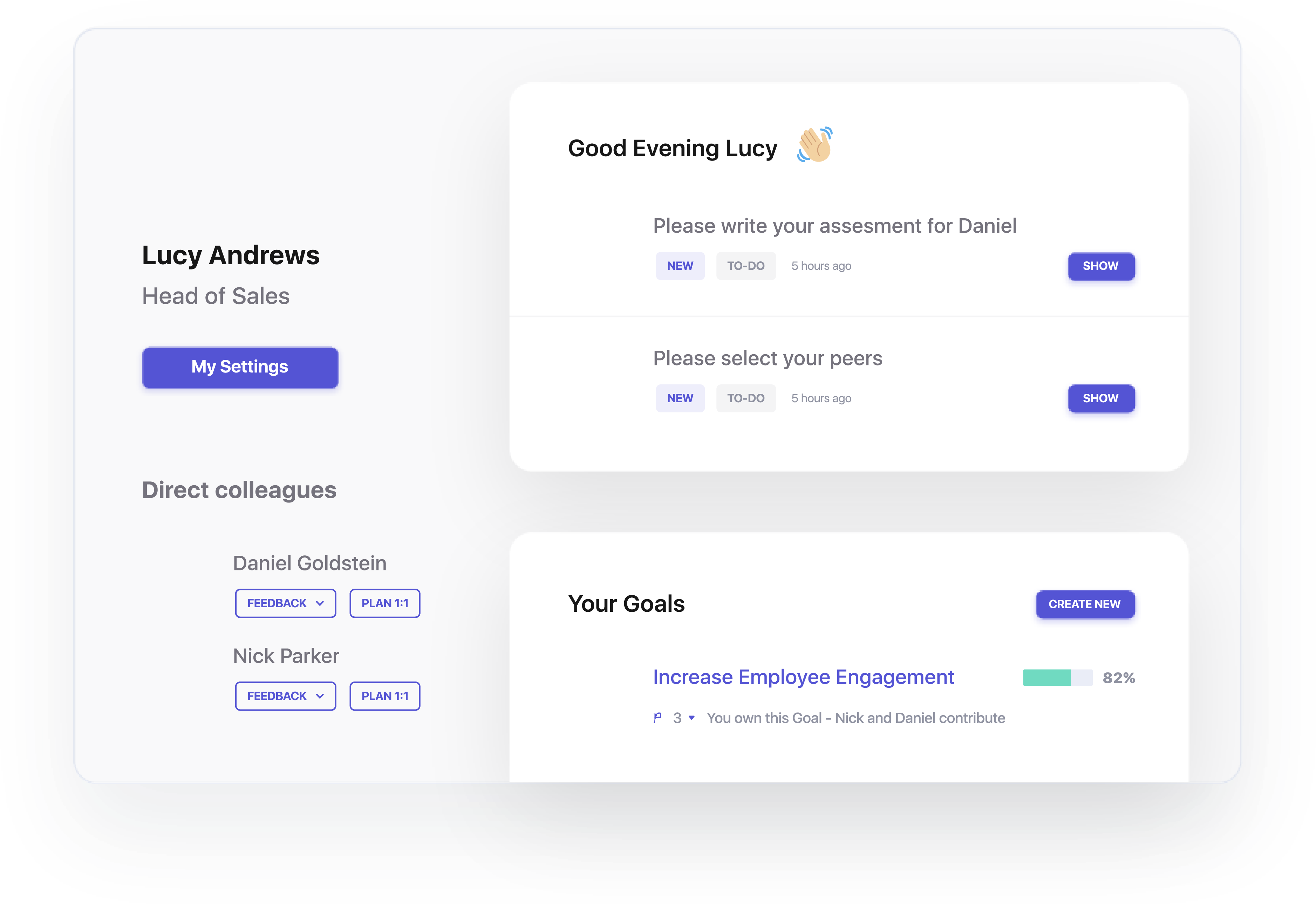
Key Features:
- Performance Reviews: Automates and customizes performance review cycles to fit your company's needs.
- Smart Goal Setting: Helps employees and managers set goals—and provides a way for you to be more accountable and transparent.
- Learning and Development Modules: Integrates learning directly into the performance management process.
15. ThriveSparrow
ThriveSparrow is an AI-enabled people success platform that combines performance management with continuous feedback, engagement tracking, sentiment analysis, team recognition, and goal tracking.
ThriveSparrow is best for mid-sized to larger organizations with complex performance needs. They're often chosen by companies with 200–10,000+ employees that want structured performance reviews, engagement insights, and alignment at scale.
Key Features:
- 360° feedback & review cycles
- Goal tracking & performance metrics
- Real-time analytics & sentiment insights
- Continuous feedback mechanisms
- Peer recognition & rewards features
- Actionable development plans
- Customizable surveys & integrations

How to Implement a New Performance Management System
Now, it's time to get your new system up and running. Here's a quick step-by-step guide to setting up your performance management software for success:
Plan Your Rollout
First impressions matter—both for your backend managers and end-user employees. Think about timelines, training sessions, and support to get everyone on board and up to speed. Communicate with your team about what's changing, why it's changing, and what's in it for them.
Train Your Team
Set up training systems to help managers, HR, and employees learn how to use the new system. This helps get buy-in from your teams and guarantees everyone feels comfortable and confident with the change.
Launch and Iterate
Launch your new system, but keep the lines of communication open. There's always a learning curve, and feedback will be your best friend during this phase.
Use it to tweak and improve the system. Remember, very few things work perfectly right out of the gate—expect to make adjustments as you go.
Evaluate and Improve
After your team has had some time to get acquainted with the new system, take a step back and evaluate how things are going.
Are you seeing the improvements you were aiming for? Are there unexpected challenges? Use this insight to refine and improve your approach.
Get Help When You Need It
Your performance management system shouldn't just be a software solution, it should include active help from real-life professionals who want to make your life easier (and know how to do it).
Reach out to your system's support team to get answers to your questions. They might know shortcuts, workarounds, or even custom solutions.
Partner with Terryberry to Transform Your Company's Culture Through Engagement & Recognition
While performance management software is important, in order for companies to reach their full potential, they need a holistic approach to the employee experience - and engagement and recognition is more critical now than ever.
That's where Terryberry comes in.
Our customizable program lets you start small and dream big. Begin with what you need now, with the flexibility to build more as your engagement and recognition goals evolve. Craft the perfect mix of employee surveys, recognition, rewards, swag, step challenges, and wellness programs - all in one place.
See for yourself. Schedule a demo with one of our experts to see firsthand how Terryberry can transform your employee engagement with one powerful platform.