March 23, 2026


Construction companies face some of the toughest engagement challenges of any industry. Crews are commonly spread across job sites, schedules typically change unexpectedly, the work is physically demanding, and many workers often feel disconnected from leadership once they step onto the field.
This usually results in increased burnout, higher turnover rates relative to office-based teams, and lower overall employee engagement. That's why organizations need employee engagement software that can handle these construction-related issues.
Specifically, the software should be able to:
- Engage employees where they actually work. Construction crews aren’t sitting at desks or checking email throughout the day. Engagement tools need to work on job sites and on mobile so participation doesn’t depend on office access or downtime.
- Standardize recognition and safety reinforcement across job sites. Engagement can become much more consistent and fair when programs are standardized. This approach helps make sure strong performance and safe behavior are recognized consistently across crews and locations.
- Highlight morale and retention issues early on. Most construction companies don’t realize engagement is declining until people leave or the number of incidents increases. Engagement software should identify early warning signs so leaders can address issues before turnover and safety problems escalate.
- Make it easy to reward employees for milestones and performance. Both engagement and recognition are more effective when they’re backed by meaningful rewards. Built-in rewards make it easy to recognize tenure, safety milestones, and strong performance without manual tracking or additional administrative work.
These challenges don’t affect every employee the same way. For instance, a foreman on a long-term project may feel connected and supported, while newer crew members or rotating workers feel invisible.
For these reasons, construction companies can’t rely on one-size-fits-all engagement programs borrowed from desk-based industries. They need engagement programs built for construction workforces and a platform that supports those programs with the flexibility to tailor recognition, feedback, and engagement by job site, role, and seniority level.
To help you evaluate your options, we've put together a list of the top six employee engagement software solutions for the construction industry, including:
- Terryberry: An all-in-one employee engagement platform that combines employee listening, recognition, rewards, and engagement programs in a single system.
- Blink: An employee communication and engagement platform focused on mobile messaging, news feeds, surveys, and recognition.
- UKG (Ultimate Kronos Group): HCM and workforce management platform with employee communication, feedback, and collaboration tools.
- Culture Amp: Employee engagement and listening platform with surveys, feedback, and engagement analytics.
- Beekeeper: A mobile employee app for frontline teams with built-in communication and engagement features.
- Connecteam: A mobile-first workforce management app with communication, scheduling, time tracking, and basic engagement tools.
1. Terryberry: All-In-One Employee Engagement Software for Construction
Terryberry enables construction companies to build engagement programs and connect them to employee listening, recognition, and incentives on a single, centralized platform.
More specifically, you can:
- Measure engagement and retention risk at the individual and crew level. Launch science-backed employee surveys and eNPS to quantify morale across job sites. Uncover patterns by role, tenure, and location in real-time to identify early warning signs of burnout or turnover before they impact project delivery.
- Run safety- and performance-based recognition programs across the organization. Reinforce safe behaviors, productivity, and core values with structured recognition programs that managers can apply consistently across crews, shifts, and locations—without relying on manual tracking or one-off rewards.
- Reach your employees where work actually gets done. Maximize participation by making engagement and recognition accessible on job sites. Terryberry's mobile app is easy to use, and our platform includes integrations with MS Teams and Outlook. You can make logins passwordless or add offline-friendly options so field teams can participate without needing corporate email or desk access.
- Connect engagement activity to real outcomes with centralized reporting. Instead of focusing just on participation metrics, tie survey results and recognition activity to changes in morale, retention risk, and well-being. Use this data to show leadership what’s working across job sites and where targeted intervention is needed to improve decision-making.
In the next sections, we’ll show you how to use Terryberry to measure engagement across job sites, take action with tailored recognition and incentive programs, and prove the impact of those programs on retention, safety, and morale.
We’ll also share real examples from construction and frontline organizations that have used Terryberry to drive measurable improvements, including:
- Nuna Logistics, a heavy civil construction contractor, achieved 91% manager engagement and a 68% increase in employee recognition after rolling out Terryberry across remote job sites.
- Amteck, a multi-state construction company, saw a 65% increase in core values adoption within three months and a 70% reduction in program administration time with Terryberry.
Measure Construction Employee Engagement with Employee Listening
In many cases, construction companies struggle because they either don't collect feedback or the feedback they do collect is delayed, incomplete, or difficult to compare across job sites and crews.
With Terryberry, you can set up employee listening in a way that reflects what’s happening on the ground. Our platform helps gather consistent feedback from crews across projects, identify patterns in morale and retention risk, and assess how leadership, workload, and safety practices affect engagement.
The most effective employee listening programs in construction have three things in common:
- They run on a predictable cadence. That means using science-backed engagement surveys to track engagement regularly so changes in morale don’t go unnoticed between projects or seasons. Teams can also use eNPS surveys to measure loyalty and more accurately predict churn.
- They make employee participation easy. If your surveys require desk access or excessive login requirements, response rates are likely to drop. Participation needs to fit into a job-site routine to achieve the best results.
- They generate actionable insights that point to specific fixes. The goal is to understand which employees or crews need additional support, what’s driving the issue, and where leaders should intervene. This comes down to choosing the right software that collects sufficient data to surface specific patterns rather than just company-wide averages.
Here’s how Terryberry helps construction companies turn employee feedback into clear, measurable insights that highlight engagement issues at both the employee and leadership level.
Track and Quantify Engagement Across Your Organization with a Science-Backed Model
Terryberry’s employee listening tools help construction companies understand what’s actually driving morale. Our platform uses a science-backed engagement model designed to capture the core factors that influence how employees experience work.
These engagement indicators include leadership, belonging, fairness, purpose, empowerment, and well-being—all of which tend to manifest differently in construction environments than in office settings.
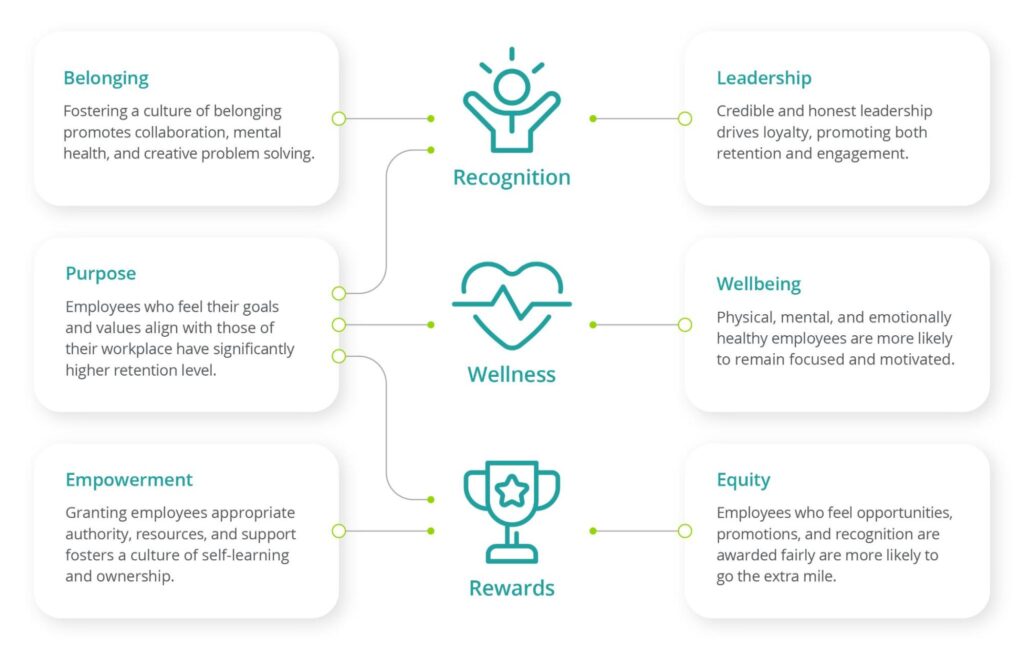
For example:
- Low leadership scores at a specific job site may indicate gaps in communication or support from foremen.
- Declining well-being scores can signal fatigue, excessive overtime, or unsafe working conditions during demanding project phases.
- Weak belonging scores often indicate that newer or rotating workers feel disconnected from the broader organization.
Engagement surveys are scored using consistent rating scales, making it easy to compare results over time and see changes as they occur. With this, construction leaders gain better visibility into whether engagement is improving, holding steady, or trending in the wrong direction.
To add more context, construction teams can pair engagement surveys with eNPS surveys to better understand retention risk. When specific crews or roles show low loyalty scores, leaders can quickly identify which engagement factors are contributing to potential churn and take targeted action.
Generate Advanced Analytics and Insights to Better Engage Employees
Our employee listening platform's analytics dashboard can help you find hidden engagement trends across your construction sites and understand the sentiments of specific groups, such as field crews, project teams, or regional offices.
Terryberry offers participant filters that make it easy to segment participants by age, trade or role, gender, project site, foreman or superintendent (including the crews under them), tenure, skill level, and more.
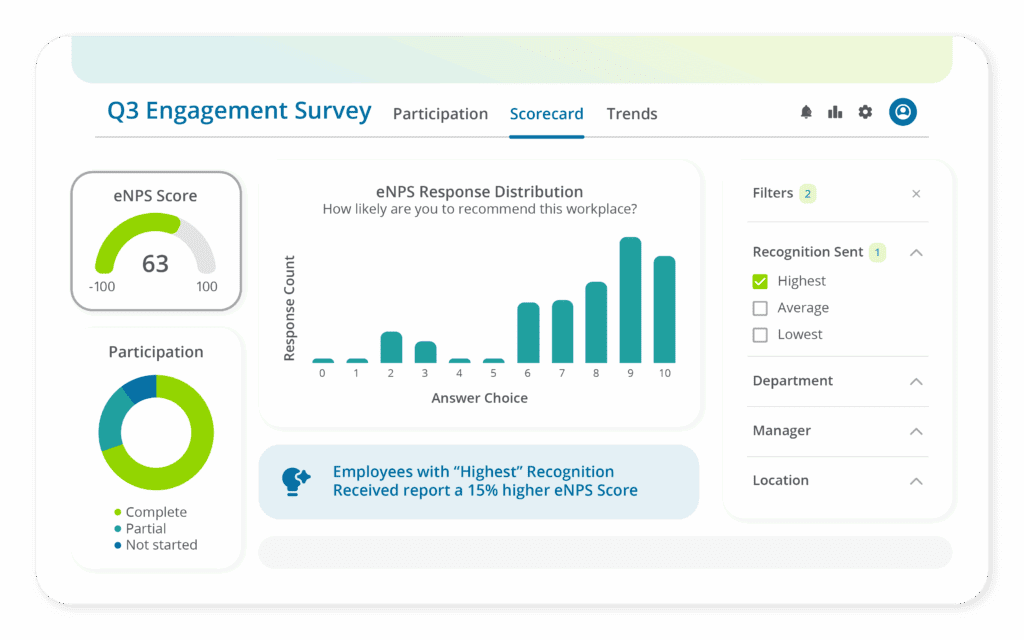
Segmenting data by cohort reveals actionable patterns that help you deploy resources where they'll make the biggest impact. For instance, imagine you filter by "trade" and "shift" to examine the experience of night-shift electricians and notice they report significantly lower scores in team communication, equipment access, and job satisfaction.
Through targeted follow-up conversations, you discover that these workers feel disconnected from daytime leadership, face delays in receiving tools and materials, and rarely receive recognition for their contributions.
Our analytics dashboard creates a number of other strategic opportunities:
- Identify which project phases correlate with engagement dips, then proactively address common pain points prior to escalation.
- Track safety culture scores across crews led by different foremen to identify high-performing leaders whose practices can be replicated.
- Detect geographic patterns—such as consistently higher engagement at sites with on-site facilities versus those without—to inform future project planning and resource allocation.
Streamline Data Collection and Analysis for Construction Operations
If your employee listening process becomes too difficult to maintain, then you're likely to see drops in crew survey participation, and operations teams won’t act on feedback if it takes forever to organize and interpret the data.
Both problems create the same outcome: feedback comes in too late to be useful. By the time insights reach leadership, the crew has moved on to the next project, morale has already dropped, or people have left.
Terryberry reduces friction for field teams submitting feedback and for leaders responsible for turning that feedback into action by:
- Reducing manual work for operations and HR teams. Instead of trying to do everything manually, Terryberry automates survey scheduling, distribution, and result processing. Responses are organized into dashboards that show trends by job site, crew, supervisor, and tenure. This enables leaders to quickly identify where morale is slipping.
- Making it easier for employees to participate on job sites. Response rates drop when surveys require desk access or the login process is complicated. Terryberry supports mobile access and flexible distribution so crews can provide feedback without stepping away from the job. Surveys can be shared digitally via simple links that managers can distribute on-site, with offline options available when connectivity is limited.
Launch Customized Recognition, Safety, and Incentive Programs
Once you've identified engagement gaps across your organization, the next step is designing tailored programs that resonate with construction workers and align with your operational objectives.
There's no single program that fixes morale, retention, or safety on its own, and the right approach depends on what your data reveals and what you're trying to accomplish across your projects.
But in our experience, a few patterns tend to show up across successful construction teams:
- The most effective companies run multiple programs over time. For example, one program may focus on retaining experienced workers through service milestones, while another reinforces safety behaviors on active job sites. Some teams layer in peer and manager recognition to strengthen workplace culture, then add wellness or manager training programs to address burnout during peak project periods.
- Programs need to fit the realities of your crews and projects. Even when two construction companies launch “recognition programs,” the way those programs work can look very different. A heavy civil contractor running long-term infrastructure projects will design incentives differently than a commercial builder rotating crews across short-term jobs. What matters is that the program fits how your teams actually work.
- Strong programs share three traits, regardless of format. The programs that move the needle in construction are tied to clear business goals (such as retention or safety), use incentives that employees value, and are reinforced by leadership—not just rolled out by HR.
Next, we’ll look at how construction and field-based teams have put these principles into practice with Terryberry. You’ll see how their programs were set up, what made them work, and how you can model similar programs for your own team.
How Nuna Logistics Built a Culture of Recognition Across Remote Job Sites
Nuna Logistics operates heavy civil construction projects across remote locations, making it difficult for leadership to consistently recognize crews and reinforce company values. With limited face time between managers and field teams, many employees felt disconnected and under-recognized on the job.
Nuna’s safety team rolled out Terryberry’s social recognition program, formerly Give a WOW, to make recognition more visible and personal across job sites. Managers were encouraged to recognize safety behaviors and strong performance, while recognition moments were reinforced in team meetings. Platform training was also built into onboarding, so new hires understood how recognition worked from day one.
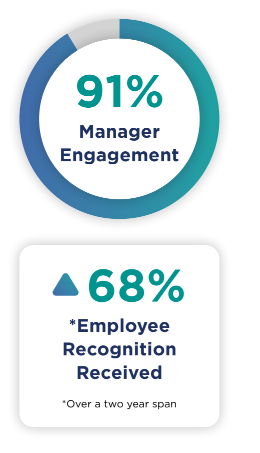
Results:
- 91% manager engagement
- 68% increase in employee recognition
- Higher participation and a stronger perception of feeling valued across teams
How Amteck Reinforced Core Values with a Years-of-Service Program
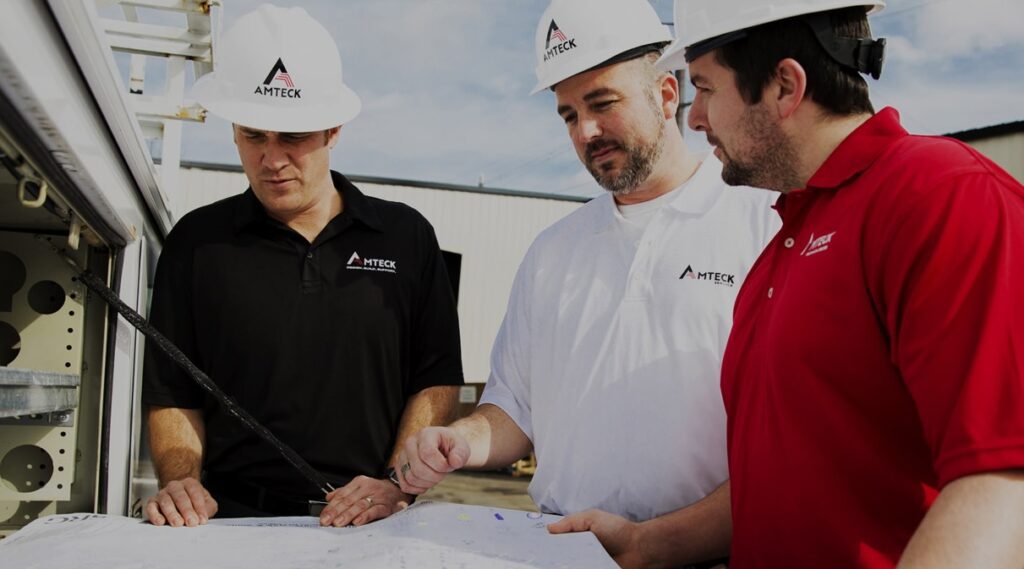
Leadership at Amteck began to notice that employees were becoming less connected to the company’s core values as it expanded across 13 states. In a high-turnover industry, this loss of cultural connection created risk for long-term retention.
Terryberry helped Amteck launch a years-of-service awards program that tied tenure recognition directly to core values. Leaders personally presented awards to employees for service milestones, reinforcing the company culture and recognizing long-term contributions. Custom awards were used to make recognition feel meaningful and consistent across locations.
Results:
- 65% increase in employees articulating core values within three months
- 85% retention among employees with 10+ years of service
- 70% reduction in program administration time
- 95% participation among eligible employees
“The reactions were incredible. People stood straighter, smiled wider, and often became emotional. It surprised me just how much of an impact it had.”
— Matt Noble, Marketing and Communications Manager, Amteck. Read the full case study here.
Show Leadership What’s Working With Analytics and Actionable Insights
Engagement programs can fall apart when leaders can't see what’s actually changing on job sites. Participation numbers alone don’t tell you whether recognition is improving morale, whether safety incentives are reducing burnout, or whether managers are making a difference in the day-to-day.
Basic metrics can still be useful as signals. For example, if foremen consistently use their recognition budget to reward safety behaviors on active job sites, that’s a good sign the program is being adopted. But you'll need to go deeper to prove the programs' impact.
Construction leaders need data-driven visibility into how engagement activity connects to outcomes like morale, retention risk, and well-being to understand what’s really working. But many tools fall short here because they either:
- Track only one type of program (for example, recognition without listening or wellness data), which limits what you can analyze
- Split data across separate modules or systems, making it hard to see relationships between programs and outcomes
Terryberry works differently by unifying engagement data across programs so leaders can connect listening insights with recognition and wellness activity. This makes it possible to answer questions like:
- Does recognition actually improve morale on job sites? Compare engagement scores between crews that receive consistent recognition and those that don’t.
- Are certain supervisors driving stronger engagement and retention? Analyze how employees working under highly engaged foremen score on leadership and belonging compared to teams with less active managers.
- Is participation masking burnout? Look at well-being scores alongside recognition activity to identify the most engaged employees who may still be at risk of fatigue or burnout during demanding project phases.
- Which job sites need intervention first? Compare engagement and eNPS scores across locations to prioritize where leadership should focus support.
With this level of visibility, construction leaders can focus on targeted changes like coaching specific supervisors or reinforcing recognition on certain job sites.
Getting Started with Terryberry
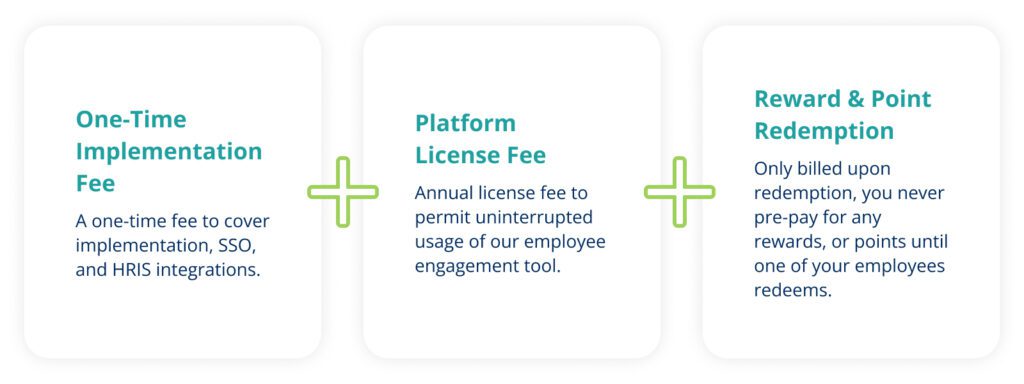
Terryberry’s pricing is customized based on your workforce size, program mix (listening, recognition, rewards, wellness), and how you want to budget incentives.
Admin fees are typically 30–40% lower than the market average, with no markups on rewards. Terryberry also uses a pay-as-you-go rewards model, so you only pay when employees actually redeem gifts.
Request a demo to get a tailored quote and see exactly what Terryberry would cost for your construction workforce.
2. Blink
Blink is a frontline communication and employee engagement platform that primarily connects distributed teams through a mobile app. The app can essentially centralize all company news and offer secure messaging, polls, surveys, and recognition features in one place.
Many users say Blink is easy to roll out and simple to use, even for non-desk workers with limited tech experience. That helps with adoption, but finding older messages can be difficult due to limited search, and notification controls aren’t very customizable, which can make alerts feel overwhelming or distracting during the workday.
3. UKG (Ultimate Kronos Group)
UKG is an HR and workforce management platform that includes employee communication and collaboration tools alongside payroll, scheduling, time tracking, and benefits management.
It offers features like company announcements, targeted messaging, and mobile access that help connect construction teams and office staff. The platform is relatively easy to use with an intuitive mobile app, schedules, and communication tools. However, for some organizations, engagement-specific analytics are limited compared with other systems.
4. Culture Amp
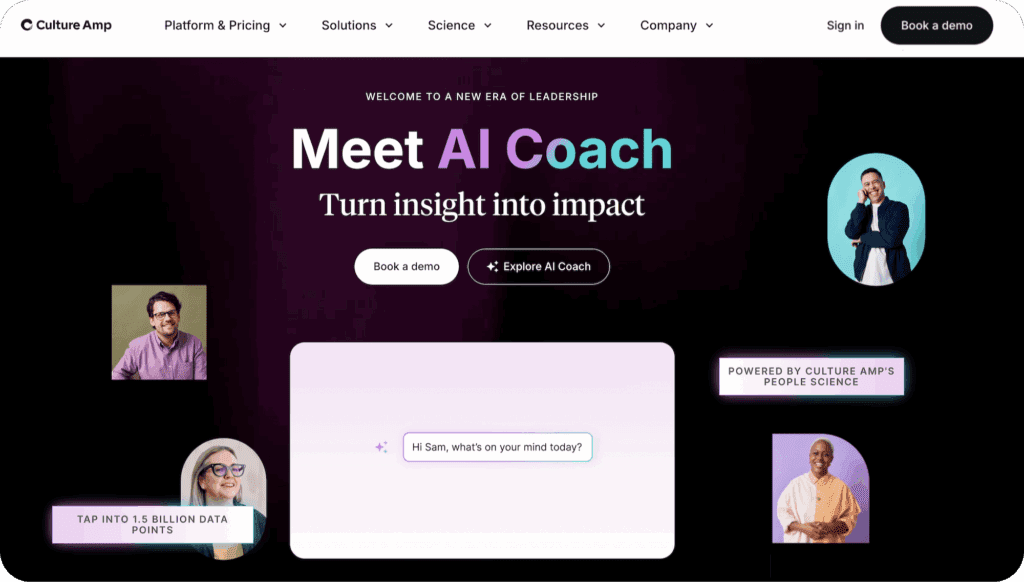
Culture Amp is an employee listening and performance management software that organizations use to measure morale, collect feedback, and uncover engagement and retention trends.
Key features include pulse surveys, engagement benchmarks, and tools that help managers understand team sentiment and development needs. Culture Amp offers intuitive survey design and insightful analytics, but it does not include built-in recognition or rewards.
5. Beekeeper
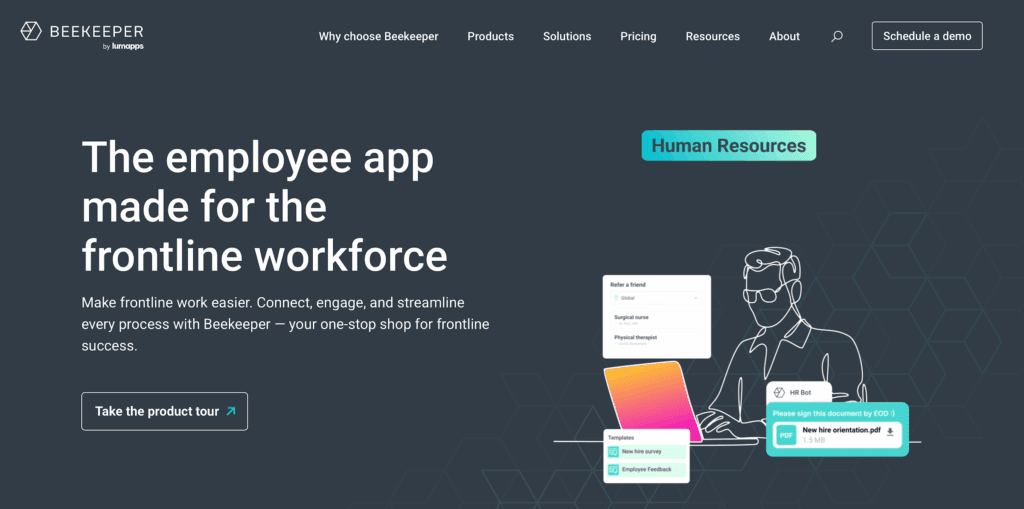
Beekeeper is a mobile-first communication and engagement platform. It centralizes company news, messaging, and essential resources like schedules and training materials in one app. Workers can access it using a QR code or single sign-on.
Companies usually see improved communication across distributed teams when using Beekeeper. Plus, it supports multilingual messaging and workflow automation. But keep in mind that the platform's employee recognition features are available as add-ons or via custom workflows, so it’s stronger as a communication hub than a full engagement suite.
6. Connecteam
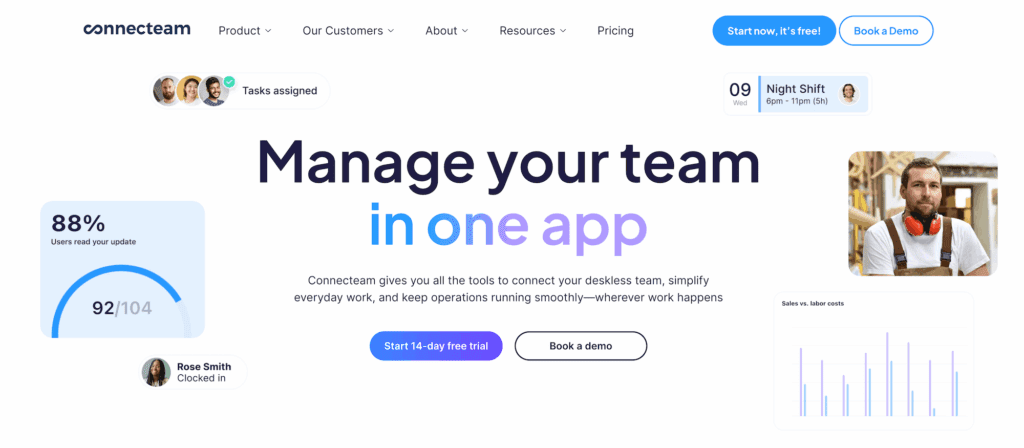
Connecteam is a mobile-first workforce management and engagement app for non-desk workers, specifically in industries like construction.
The platform includes internal communication features, basic engagement tools, scheduling, time tracking, and task management. Some construction companies use Connecteam to keep crews connected through in-app chat, announcements, and updates, while also managing day-to-day operations like shifts and job assignments.
Connecteam also includes lightweight engagement features such as surveys, feedback, and recognition, but its core strength is keeping employees connected rather than structured engagement programs.
Keep Your Construction Workers More Engaged with Terryberry
Terryberry gives construction companies everything they need in one system to measure engagement, run programs, and improve retention. With Terryberry, you can:
- Identify engagement and retention risks using employee listening and cohort insights by job site, crew, tenure, and role.
- Reinforce safety, performance, and core values on the job site with recognition and incentives that employees can access in the field.
- Prove what’s working to leadership by connecting engagement data to recognition activity, participation, and retention trends.
Terryberry also makes it easy for employees to adopt the system with mobile access, QR codes, offline options, and simple logins for crews without corporate emails.
Book a demo to see how Terryberry helps construction teams build a stronger culture across every job site.